Department of Gastric Surgery, Fudan University Shanghai Cancer Center, Shanghai, China.
Department of Oncology, Shanghai Medical College, Fudan University, Shanghai, China.
Front Immunol. 2022 Jul 29;13:934221. doi: 10.3389/fimmu.2022.934221. eCollection 2022.
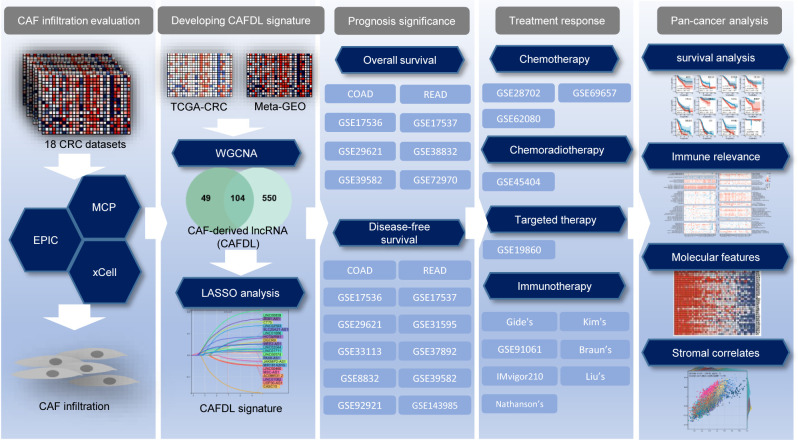
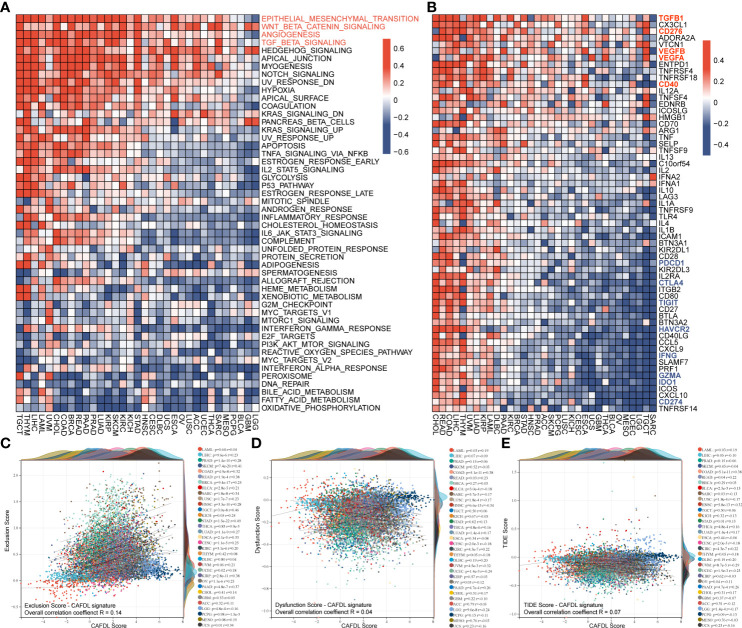
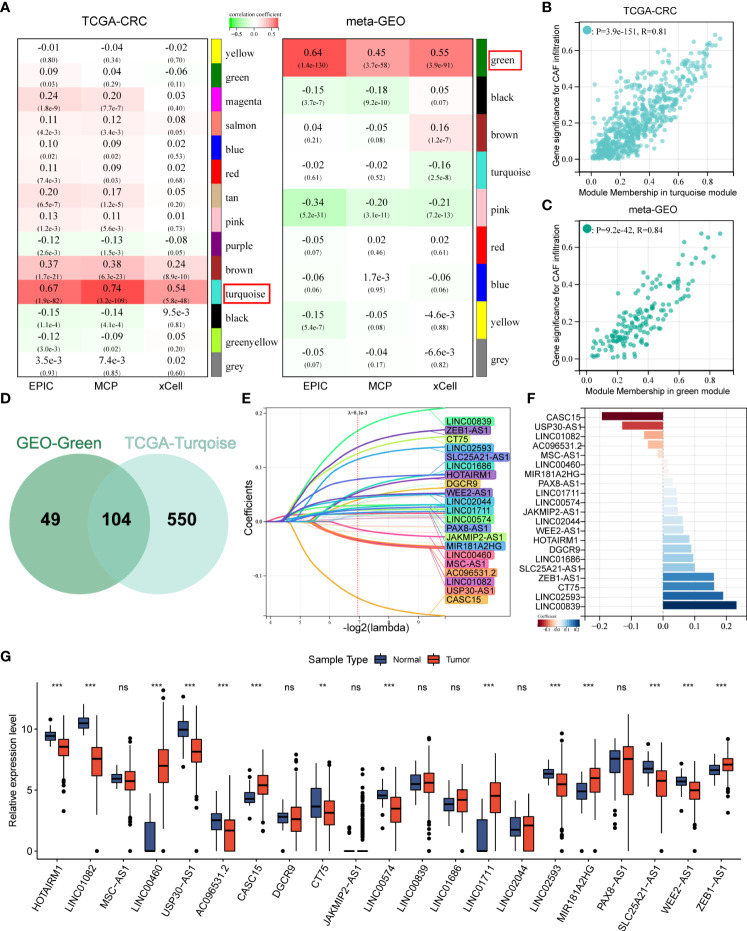
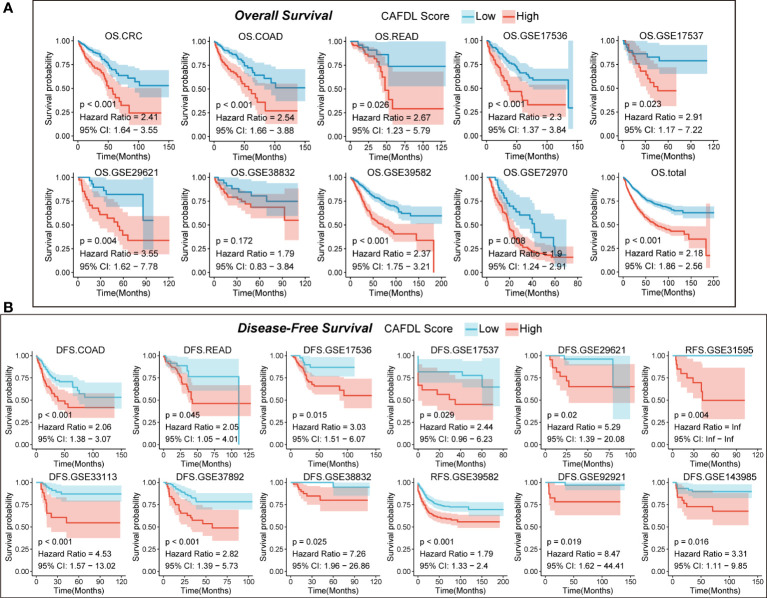
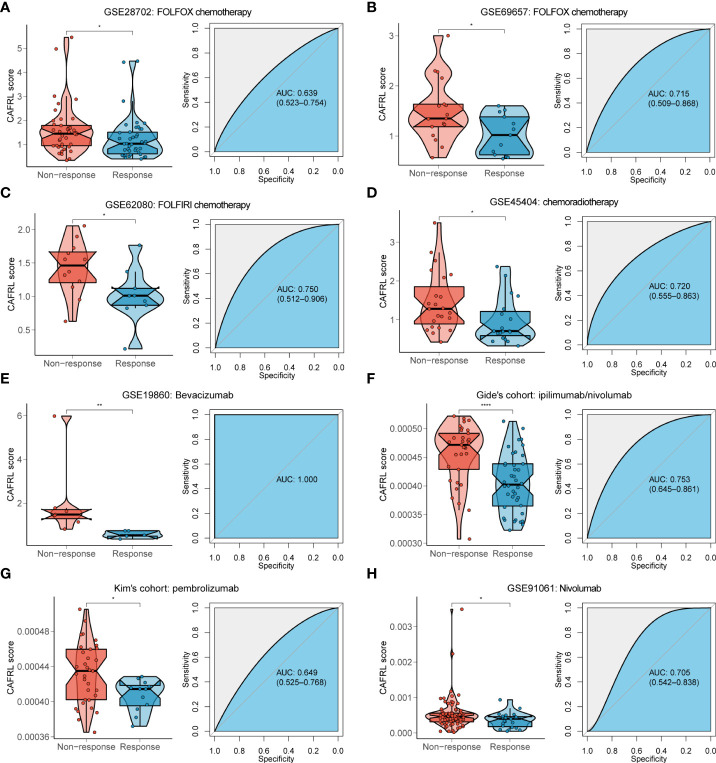
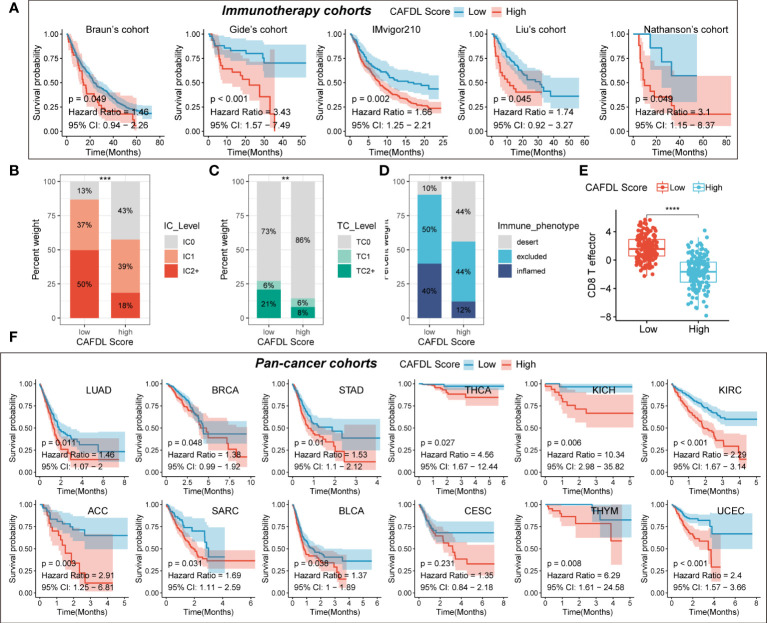
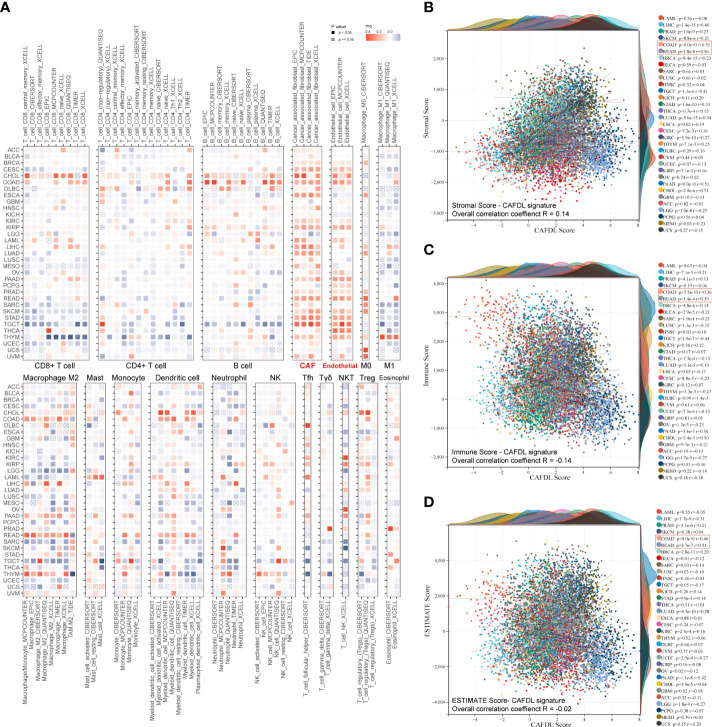
Cancer-associated fibroblasts (CAFs) are actively involved in cancer progression through generating extracellular matrix and orchestrating the crosstalk within the tumor microenvironment (TME). This study aimed to develop and validate a CAF-derived lncRNA (long non-coding RNA) (CAFDL) signature for predicting clinical outcomes in colorectal cancer (CRC). Clinical data and transcriptomic profiles of 2,320 patients with CRC from The Cancer Genome Atlas (TCGA)-COAD and TCGA-READ datasets and 16 Gene Expression Omnibus datasets were included in this study. CAFDLs were identified using weighted gene co-expression network analysis. The CAFDL signature was constructed using the least absolute shrinkage and selection operator analysis in the TCGA-CRC training set. Multiple CRC cohorts and pan-cancer cohorts were used to validated the CAFDL signature. Patients with high CAFDL scores had significantly worse overall survival and disease-free survival than patients with low CAFDL scores in all CRC cohorts. In addition, non-responders to fluorouracil, leucovorin, and oxaliplatin (FOLFOX)/fluorouracil, leucovorin, and irinotecan (FOLFIRI) chemotherapy, chemoradiotherapy, bevacizumab, and immune checkpoint inhibitors had significantly higher CAFDL scores compared with responders. Pan-cancer analysis showed that CAFDL had prognostic predictive power in multiple cancers such as lung adenocarcinoma, breast invasive carcinoma, stomach adenocarcinoma, and thyroid carcinoma. The CAFDL signature was positively correlated with transforming growth factor-beta (TGF-β) signaling, epithelial-mesenchymal transition, and angiogenesis pathways but negatively correlated with the expression of immune checkpoints such as PDCD1, CD274, and CTLA4. The CAFDL signature reflects CAF properties from a lncRNA perspective and effectively predicts clinical outcomes in CRC and across pan-cancer. The CAFDL signature can serve as a useful tool for risk stratification and provide new insights into the underlying mechanisms of CAFs in cancer immunity.
癌症相关成纤维细胞(CAFs)通过生成细胞外基质并协调肿瘤微环境(TME)内的串扰,积极参与癌症进展。本研究旨在开发和验证用于预测结直肠癌(CRC)临床结果的 CAF 衍生的长非编码 RNA(lncRNA)(CAFDL)特征。该研究纳入了来自癌症基因组图谱(TCGA)-COAD 和 TCGA-READ 数据集以及 16 个基因表达综合数据集的 2320 名 CRC 患者的临床数据和转录组谱。使用加权基因共表达网络分析鉴定 CAFDLs。在 TCGA-CRC 训练集中使用最小绝对值收缩和选择算子分析构建 CAFDL 特征。使用多个 CRC 队列和泛癌队列验证 CAFDL 特征。在所有 CRC 队列中,CAFDL 评分较高的患者的总生存率和无病生存率明显低于 CAFDL 评分较低的患者。此外,与氟尿嘧啶、亚叶酸和奥沙利铂(FOLFOX)/氟尿嘧啶、亚叶酸和伊立替康(FOLFIRI)化疗、放化疗、贝伐单抗和免疫检查点抑制剂无反应的患者的 CAFDL 评分明显高于有反应的患者。泛癌分析表明,CAFDL 在多种癌症中具有预后预测能力,如肺腺癌、乳腺浸润性癌、胃腺癌和甲状腺癌。CAFDL 特征与转化生长因子-β(TGF-β)信号、上皮-间充质转化和血管生成途径呈正相关,但与免疫检查点如 PDCD1、CD274 和 CTLA4 的表达呈负相关。CAFDL 特征从 lncRNA 角度反映了 CAF 的特性,并有效地预测了 CRC 和泛癌的临床结果。CAFDL 特征可以作为风险分层的有用工具,并为癌症免疫中 CAFs 的潜在机制提供新的见解。