Department of Rheumatology and Immunology, Sichuan Provincial People's Hospital, University of Electronic Science and Technology of China, Chengdu, China.
Clinical Immunology Translational Medicine Key Laboratory of Sichuan Province, Sichuan Provincial People's Hospital, University of Electronic Science and Technology of China, Chengdu, China.
Front Immunol. 2022 Jul 28;13:928173. doi: 10.3389/fimmu.2022.928173. eCollection 2022.
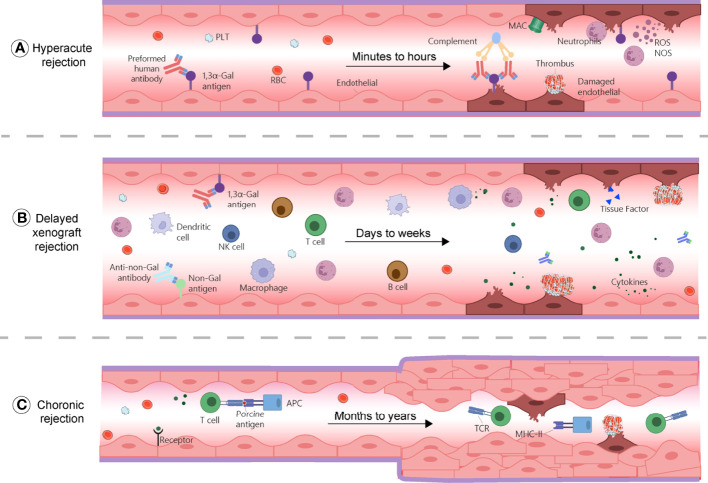
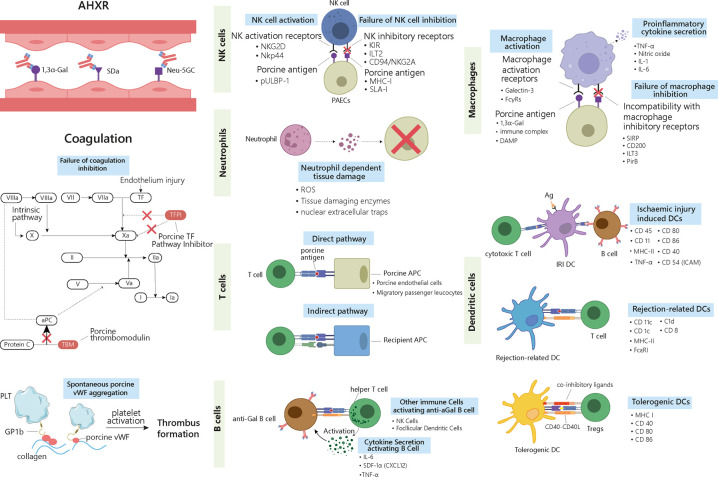
Transplantation is often the last resort for end-stage organ failures, e.g., kidney, liver, heart, lung, and pancreas. The shortage of donor organs is the main limiting factor for successful transplantation in humans. Except living donations, other alternatives are needed, e.g., xenotransplantation of pig organs. However, immune rejection remains the major challenge to overcome in xenotransplantation. There are three different xenogeneic types of rejections, based on the responses and mechanisms involved. It includes hyperacute rejection (HAR), delayed xenograft rejection (DXR) and chronic rejection. DXR, sometimes involves acute humoral xenograft rejection (AHR) and cellular xenograft rejection (CXR), which cannot be strictly distinguished from each other in pathological process. In this review, we comprehensively discussed the mechanism of these immunological rejections and summarized the strategies for preventing them, such as generation of gene knock out donors by different genome editing tools and the use of immunosuppressive regimens. We also addressed organ-specific barriers and challenges needed to pave the way for clinical xenotransplantation. Taken together, this information will benefit the current immunological research in the field of xenotransplantation.
移植通常是治疗终末期器官衰竭(如肾脏、肝脏、心脏、肺和胰腺)的最后手段。供体器官短缺是人类成功移植的主要限制因素。除了活体捐赠外,还需要其他替代方案,例如猪器官的异种移植。然而,免疫排斥仍然是异种移植中需要克服的主要挑战。根据涉及的反应和机制,有三种不同的异种排斥类型。它包括超急性排斥反应 (HAR)、延迟异种移植物排斥反应 (DXR) 和慢性排斥反应。DXR 有时涉及急性体液性异种移植物排斥反应 (AHR) 和细胞性异种移植物排斥反应 (CXR),在病理过程中不能严格区分。在这篇综述中,我们全面讨论了这些免疫排斥的机制,并总结了预防它们的策略,例如使用不同的基因组编辑工具生成基因敲除供体和使用免疫抑制方案。我们还解决了器官特异性障碍和挑战,为临床异种移植铺平了道路。综上所述,这些信息将有助于当前异种移植领域的免疫研究。