Li Wen, Chen Wanchao, Wu Di, Zhang Zhong, Yang Yan
Institute of Edible Fungi, Shanghai Academy of Agricultural Sciences, National Engineering Research Center of Edible Fungi, Key Laboratory of Edible Fungi Resources and Utilization (South), Ministry of Agriculture, Shanghai, China.
Front Nutr. 2022 Jul 28;9:960218. doi: 10.3389/fnut.2022.960218. eCollection 2022.
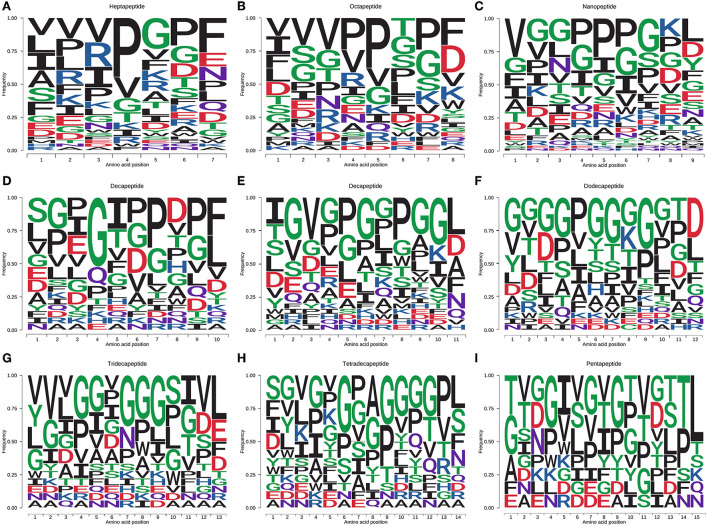
This study identified the peptides in the fermentation mycelia of . The molecular weight of the peptides was below 3,000 Da. Heptapeptides to decapeptides were the main peptides in the fermentation mycelia of . More than 50% of the peptides had salty and umami taste characteristics, and the long-chain peptides (decapeptides to 24 peptides) also played an essential role in the pleasant taste characteristics of mycelium. In the salty and umami peptide of , the distribution of non-polar hydrophobic amino acids and polar-uncharged amino acids accounted for a relatively high proportion, and the proportion of polar-uncharged amino acids further increased, with the extension of the peptide chain. P, F, I, l, V, G, S, T, and D were the amino acids with a high proportion in the peptides. The taste peptides can bind to more than 60% of the active amino acid residues in the cavity-binding domain of the T1R1/T1R3 receptors. Hydrogen bond interaction was the primary mode of interaction between the peptides and the receptor. The first and second amino acid residues (such as S, V, E, K, G, and A) at the C-terminal and N-terminal of the peptides were easy to bind to T1R1/T1R3 receptors. Asp108, Asn150, Asp147, Glu301, Asp219, Asp243, Glu70, Asp218 in T1R1, and Glu45, Glu148, Glu301, Glu48, and Ala46 in TIR3 were the key active amino acid sites of taste peptides binding to T1R1/T1R3 receptors.
本研究鉴定了……发酵菌丝体中的肽。这些肽的分子量低于3000道尔顿。七肽至十肽是……发酵菌丝体中的主要肽。超过50%的肽具有咸鲜味特征,长链肽(十肽至二十四肽)在菌丝体的愉悦风味特征中也起着重要作用。在……的咸鲜肽中,非极性疏水氨基酸和极性不带电荷氨基酸的分布占比较高,且随着肽链延长,极性不带电荷氨基酸的比例进一步增加。P、F、I、l、V、G、S、T和D是肽中占比高的氨基酸。这些呈味肽可与T1R1/T1R3受体的腔结合域中60%以上的活性氨基酸残基结合。氢键相互作用是肽与受体之间的主要相互作用方式。肽的C端和N端的第一和第二个氨基酸残基(如S、V、E、K、G和A)易于与T1R1/T1R3受体结合。T1R1中的Asp108、Asn150、Asp147、Glu301、Asp219、Asp243、Glu70、Asp218以及TIR3中的Glu45、Glu148、Glu301、Glu48和Ala46是呈味肽与T1R1/T1R3受体结合的关键活性氨基酸位点。