Koplitz Shannon, Simon Heather, Henderson Barron, Liljegren Jennifer, Tonnesen Gail, Whitehill Andrew, Wells Benjamin
Office of Air Quality Planning and Standards, U.S. Environmental Protection Agency.
Region 5, U.S. Environmental Protection Agency.
ACS Environ Au. 2022 May 18;2(3):206-222. doi: 10.1021/acsenvironau.1c00029. Epub 2021 Dec 16.
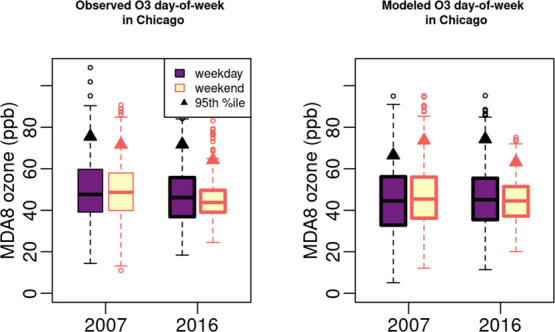
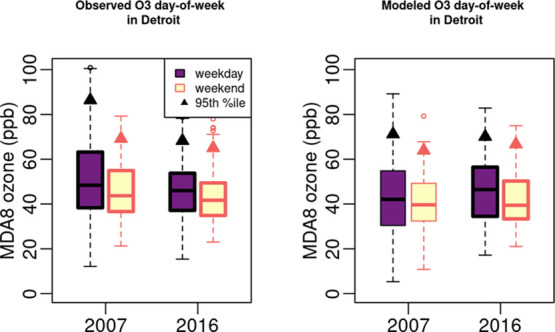
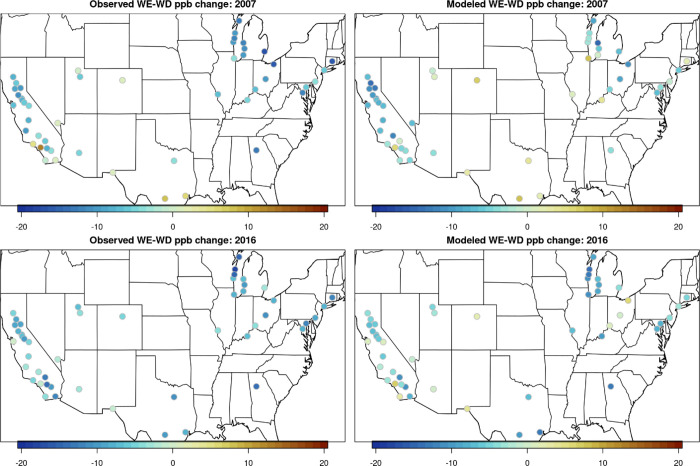
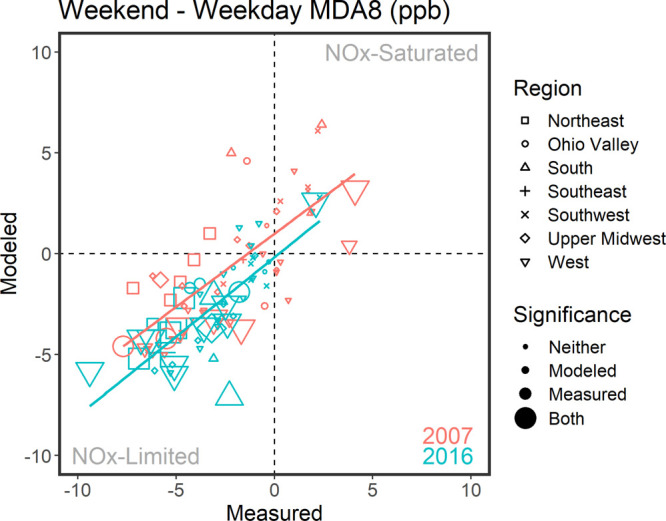
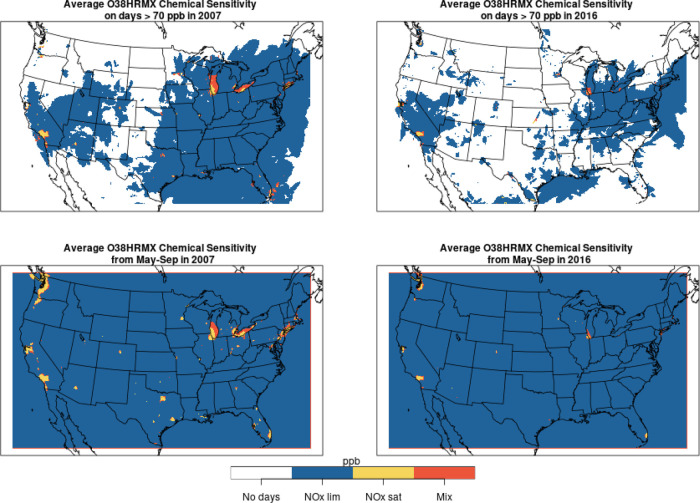
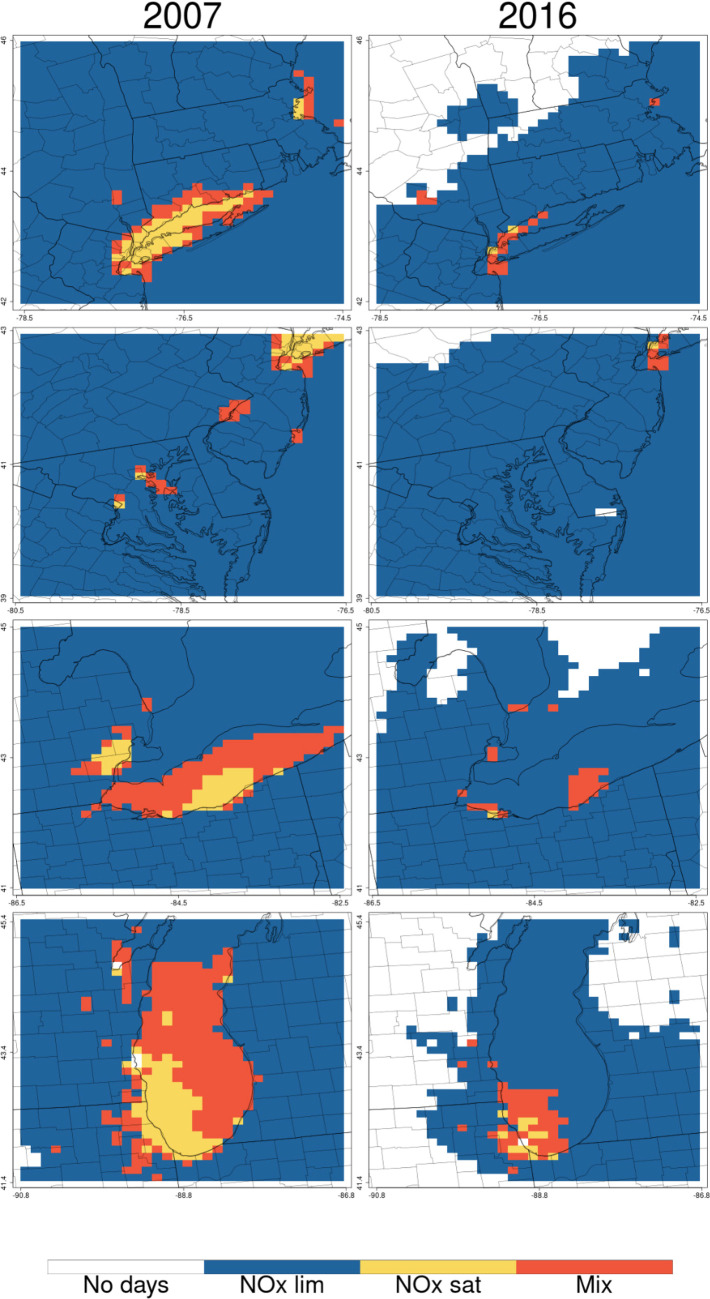
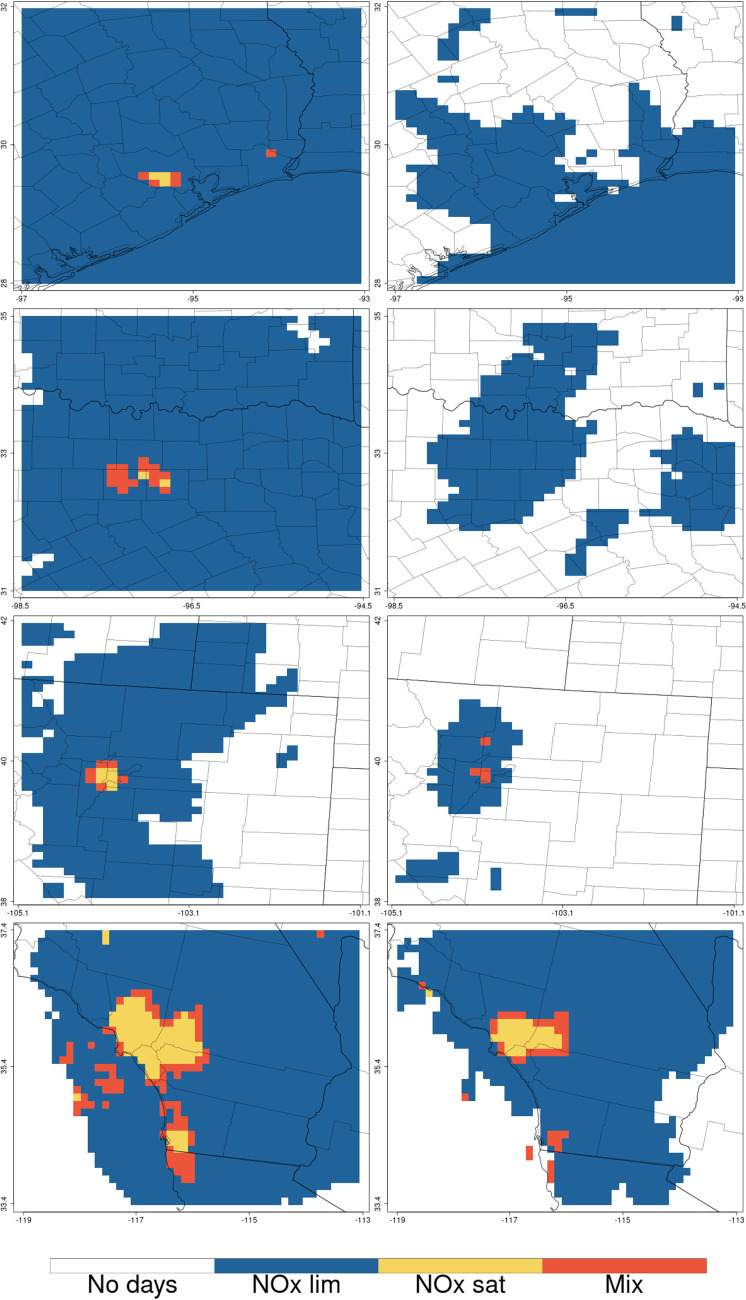
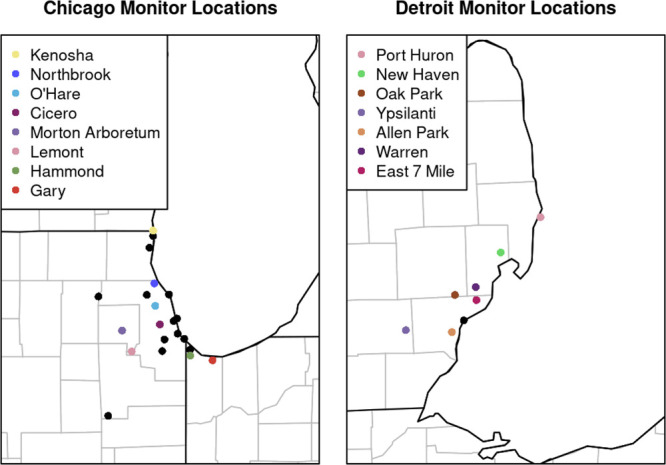
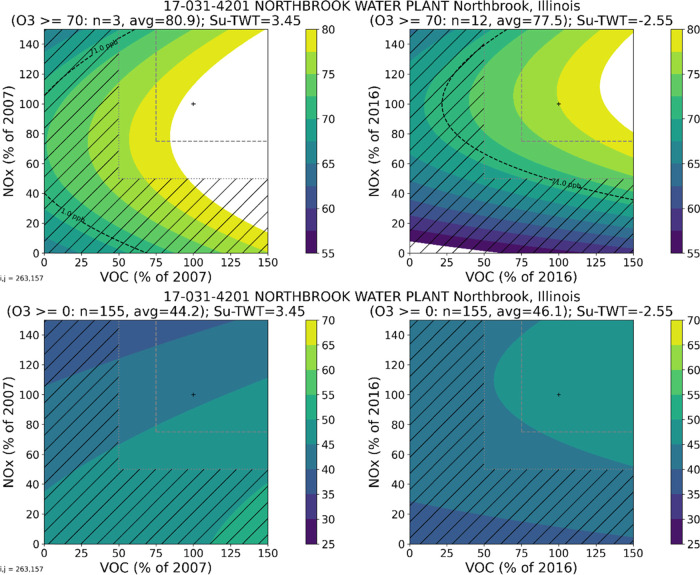
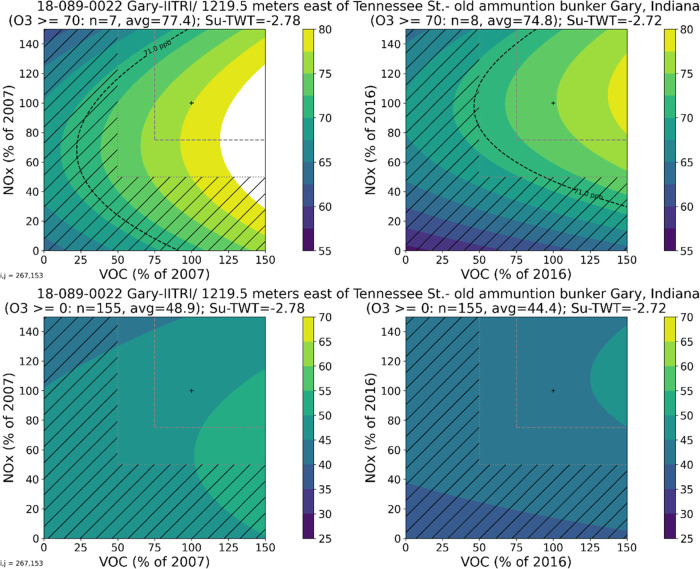
Anthropogenic nitrogen oxide (NO) and volatile organic compound (VOC) emissions in the U.S. have declined substantially over the last decade, altering the NO-VOC chemistry and ozone (O) production characteristics of many areas. In this work we use multiple air quality analysis tools to assess how these large reductions in NO and VOC have affected O production regimes across the U.S. between 2007 and 2016. We first compare observed and modeled evolution of NO-limited and NO-saturated O formation regimes using a day-of-week (DOW) analysis. This comparison builds confidence in the model's ability to qualitatively capture O changes due to chemistry and meteorology both within years and across periods of large emissions decreases. DOW analysis, however, cannot definitively differentiate between emissions and meteorology impacts. We therefore supplement this analysis with sensitivity calculations from CAMx-HDDM to characterize modeled shifts in O formation chemistry between 2007 and 2016 in different regions of the U.S. We also conduct a more detailed investigation of the O chemical behavior observed in Chicago and Detroit, two complex urban areas in the Midwest. Both the ambient and modeling data show that more locations across the U.S. have shifted towards NO-limited regimes between 2007 and 2016. The model-based HDDM sensitivity analysis shows only a few locations remaining NO-saturated on high-O days in 2016 including portions of New York City, Chicago, Minneapolis, San Francisco and Los Angeles. This work offers insights into the current state of O production chemistry in large population centers across the U.S., as well as how O chemistry in these areas may evolve in the future.
在过去十年间,美国人为源氮氧化物(NO)和挥发性有机化合物(VOC)排放量大幅下降,改变了许多地区的NO-VOC化学过程及臭氧(O₃)生成特征。在本研究中,我们使用多种空气质量分析工具,评估2007年至2016年间NO和VOC的大幅减少如何影响了美国各地的O₃生成机制。我们首先使用一周中某天(DOW)分析方法,比较了观测到的和模拟的NO限制型和NO饱和型O₃生成机制的演变情况。这种比较增强了我们对模型在定性捕捉因化学过程和气象条件导致的O₃变化方面的信心,这些变化既包括年内变化,也包括排放大幅减少期间的变化。然而,DOW分析无法明确区分排放和气象条件的影响。因此,我们用CAMx-HDDM的敏感性计算结果补充这一分析,以描述2007年至2016年间美国不同地区O₃生成化学过程的模拟变化。我们还对美国中西部两个复杂城市地区芝加哥和底特律观测到的O₃化学行为进行了更详细的研究。环境数据和模型数据均显示,2007年至2016年间,美国更多地区已转向NO限制型机制。基于模型的HDDM敏感性分析表明,2016年在高O₃浓度日,只有少数地区仍处于NO饱和状态,包括纽约市部分地区、芝加哥、明尼阿波利斯、旧金山和洛杉矶。这项研究为了解美国大型人口中心当前的O₃生成化学状态,以及这些地区的O₃化学过程未来可能如何演变提供了见解。