Department of Biomedical Engineering, Tufts University, Medford, MA 02155.
Guangdong Provincial Key Laboratory of Malignant Tumor Epigenetics and Gene Regulation, Guangdong-Hong Kong Joint Laboratory for RNA Medicine, Medical Research Center, Sun Yat-Sen Memorial Hospital, Sun Yat-Sen University, Guangzhou 510120, China.
Proc Natl Acad Sci U S A. 2022 Aug 23;119(34):e2207841119. doi: 10.1073/pnas.2207841119. Epub 2022 Aug 15.
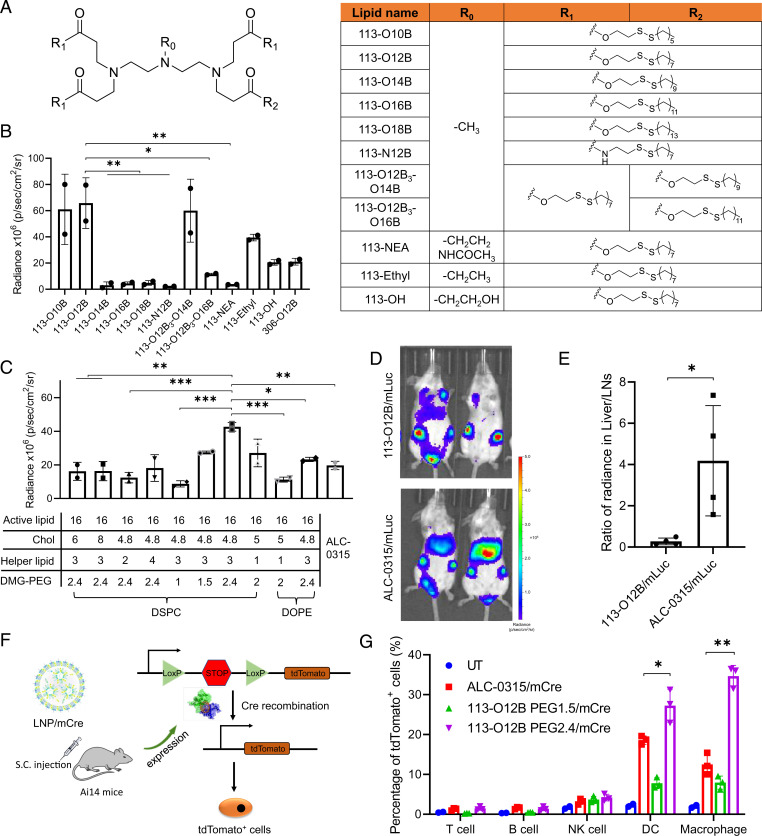
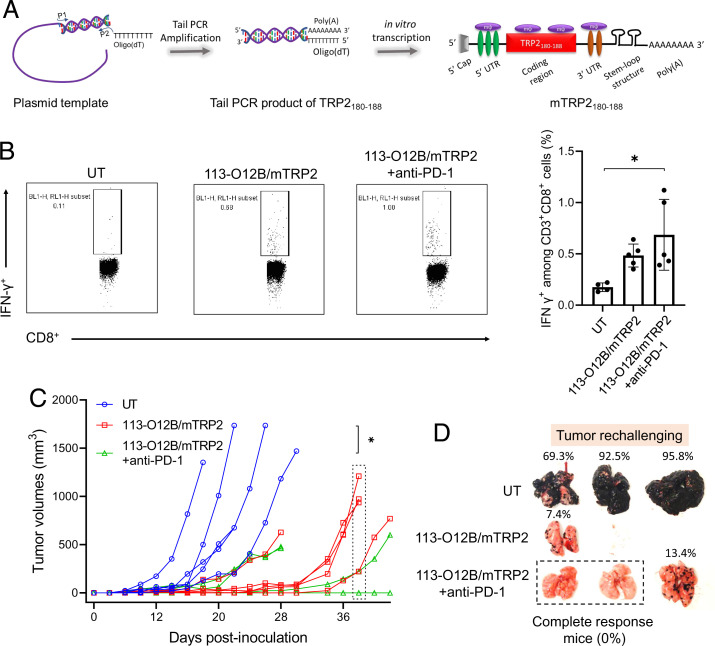
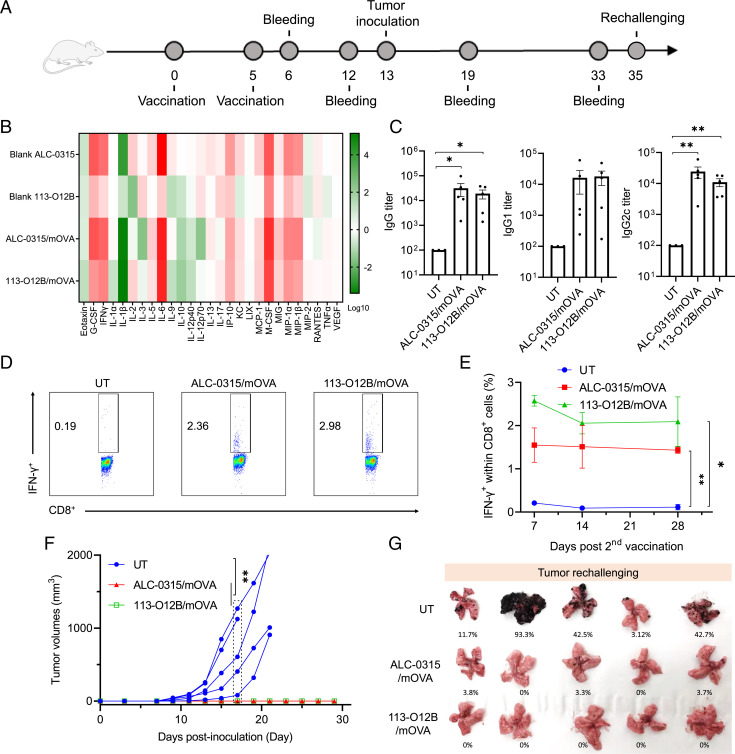
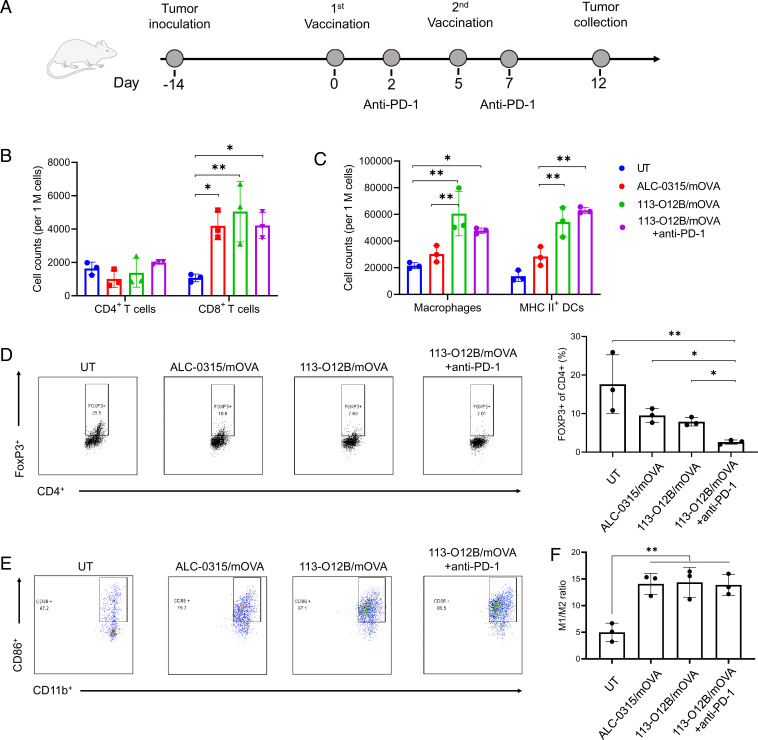
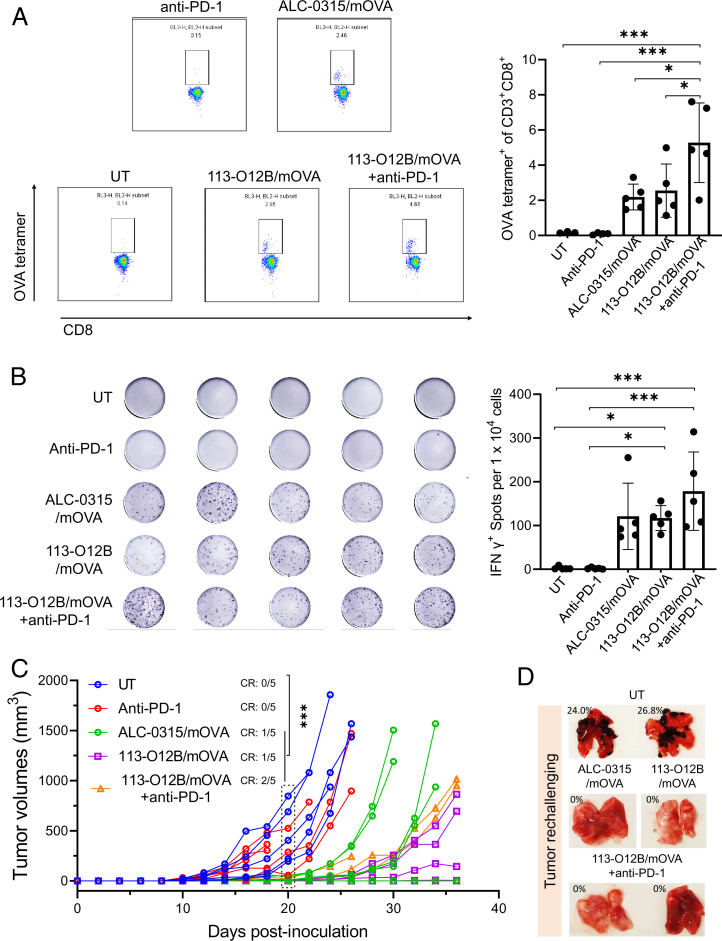
The targeted delivery of messenger RNA (mRNA) to desired organs remains a great challenge for in vivo applications of mRNA technology. For mRNA vaccines, the targeted delivery to the lymph node (LN) is predicted to reduce side effects and increase the immune response. In this study, we explored an endogenously LN-targeting lipid nanoparticle (LNP) without the modification of any active targeting ligands for developing an mRNA cancer vaccine. The LNP named 113-O12B showed increased and specific expression in the LN compared with LNP formulated with ALC-0315, a synthetic lipid used in the COVID-19 vaccine Comirnaty. The targeted delivery of mRNA to the LN increased the CD8 T cell response to the encoded full-length ovalbumin (OVA) model antigen. As a result, the protective and therapeutic effect of the OVA-encoding mRNA vaccine on the OVA-antigen-bearing B16F10 melanoma model was also improved. Moreover, 113-O12B encapsulated with TRP-2 peptide (TRP2)-encoding mRNA also exhibited excellent tumor inhibition, with the complete response of 40% in the regular B16F10 tumor model when combined with anti-programmed death-1 (PD-1) therapy, revealing broad application of 113-O12B from protein to peptide antigens. All the treated mice showed long-term immune memory, hindering the occurrence of tumor metastatic nodules in the lung in the rechallenging experiments that followed. The enhanced antitumor efficacy of the LN-targeting LNP system shows great potential as a universal platform for the next generation of mRNA vaccines.
信使 RNA(mRNA)递送到靶器官仍然是 mRNA 技术体内应用的一个巨大挑战。对于 mRNA 疫苗,靶向递送到淋巴结(LN)有望减少副作用并增强免疫反应。在这项研究中,我们探索了一种内源性靶向 LN 的脂质纳米颗粒(LNP),无需修饰任何主动靶向配体,用于开发 mRNA 癌症疫苗。与用于 COVID-19 疫苗 Comirnaty 的合成脂质 ALC-0315 配制的 LNP 相比,命名为 113-O12B 的 LNP 在 LN 中的表达增加且具有特异性。将 mRNA 靶向递送到 LN 增加了编码全长卵清蛋白(OVA)模型抗原的 CD8 T 细胞反应。结果,编码 OVA 的 mRNA 疫苗对携带 OVA 抗原的 B16F10 黑色素瘤模型的保护和治疗效果也得到了改善。此外,封装有 TRP-2 肽(TRP2)编码 mRNA 的 113-O12B 也表现出优异的肿瘤抑制作用,当与抗程序性死亡-1(PD-1)治疗联合使用时,在常规 B16F10 肿瘤模型中,有 40%的完全缓解率,表明 113-O12B 从蛋白质到肽抗原具有广泛的应用。所有接受治疗的小鼠均表现出长期免疫记忆,在随后的再挑战实验中阻止了肺中肿瘤转移结节的发生。LN 靶向 LNP 系统增强的抗肿瘤疗效显示出作为下一代 mRNA 疫苗通用平台的巨大潜力。