Department of Orthopaedic and Traumatology Surgery, University Hospital Basel, 4031, Basel, Switzerland.
University of Basel, Basel, Switzerland.
BMC Geriatr. 2022 Aug 15;22(1):669. doi: 10.1186/s12877-022-03223-z.
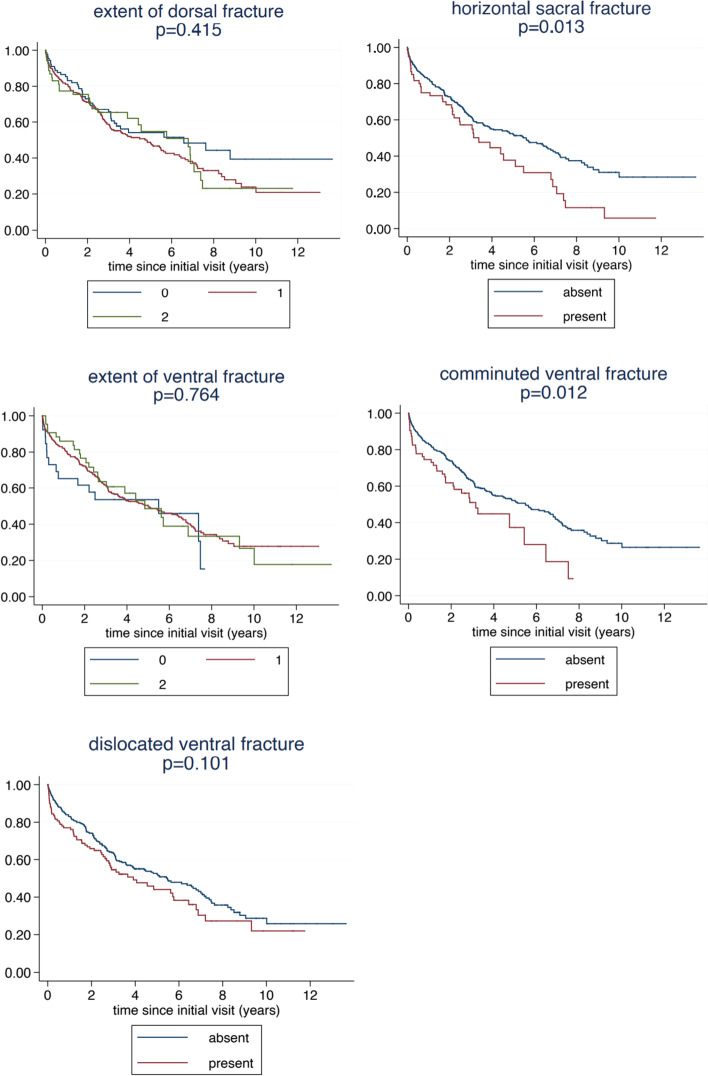
Pelvic fractures in older patients are associated with relevant morbidity and mortality. Both might be determined by fracture morphology and/or patient characteristics. The aim of this project is to investigate the prognostic value of specific fracture characteristics with respect to overall survival and to compare it with an established classification system.
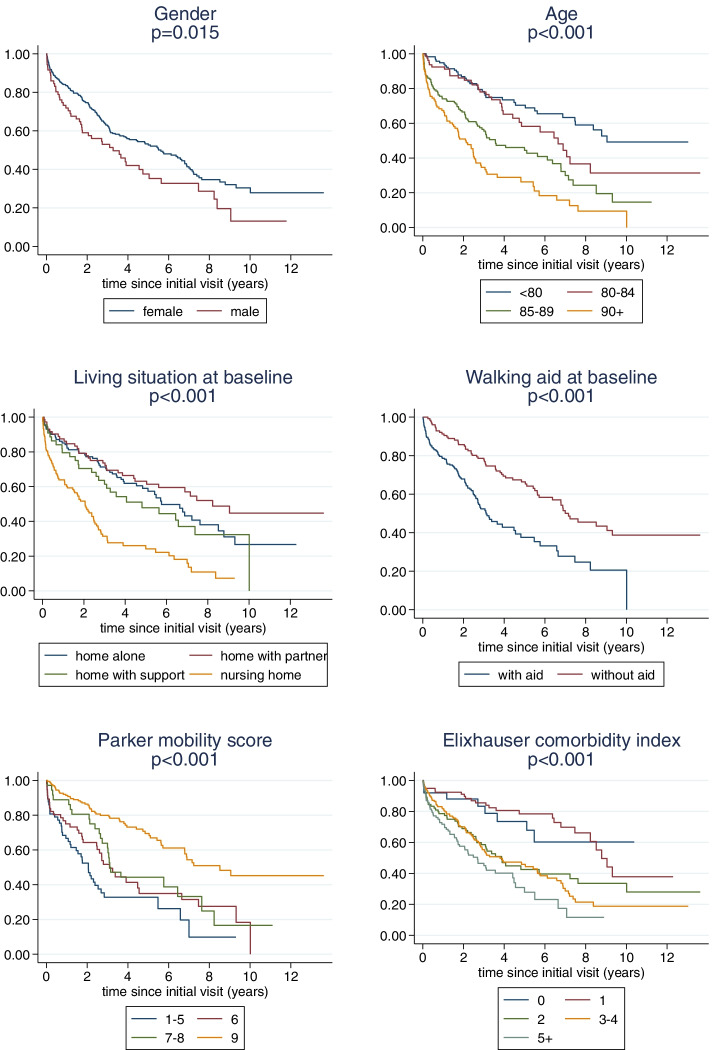
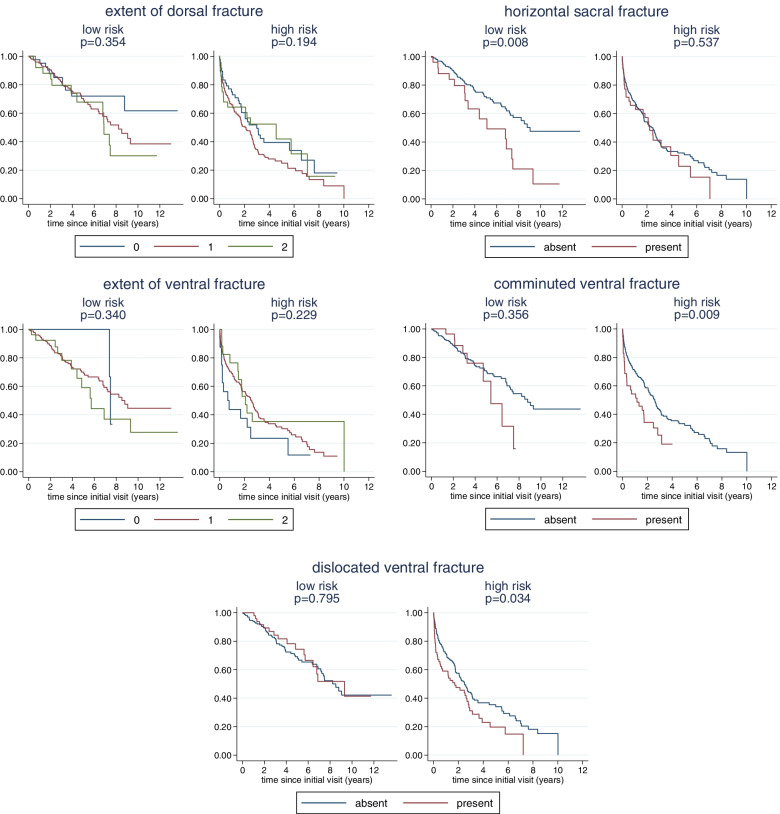
Retrospective analysis of patients ≥ 60 years, treated conservatively for a CT-scan verified, low-energy pelvic ring fracture between August 2006 and December 2018. Survival data was available from patients' charts and cantonal or national registries. The prognostic value of fracture characteristic describing the anterior and posterior involvement of the pelvic ring was investigated. This analysis was repeated after patients were stratified into a high-risk vs a low-risk group according to patient characteristic (age, gender, comorbidities, mobility, living situation). This allowed to assess the impact of the different fracture morphologies on mortality in fit vs. frail senior patients separately.
Overall, 428 patients (83.4% female) with a mean age of 83.7 years were included. Two thirds of patients were still living in their home and mobile without walking aid at baseline. In-hospital mortality was 0.7%, overall, one-year mortality 16.9%. An independent and significant association of age, gender and comorbidities to overall survival was found. Further, the occurrence of a horizontal sacral fracture as well as a ventral comminution or dislocation was associated with an increased mortality. The effect of a horizontal sacral fracture was more accentuated in low-risk patients while the ventral fracture components showed a larger effect on survival in high-risk patients.
Specific fracture characteristics may indicate a higher risk of mortality in conservatively treated patients with a low-energy pelvic ring fracture. Hence, they should be taken into account in future treatment algorithms and decisions on patient management.
老年患者的骨盆骨折与相关发病率和死亡率有关。这两者都可能由骨折形态和/或患者特征决定。本项目旨在研究特定骨折特征对总体生存率的预测价值,并将其与既定的分类系统进行比较。
回顾性分析 2006 年 8 月至 2018 年 12 月期间接受 CT 扫描证实的低能量骨盆环骨折保守治疗的≥60 岁患者。通过患者病历和州或国家登记处获得生存数据。研究了描述骨盆环前后受累的骨折特征对预后的影响。根据患者特征(年龄、性别、合并症、活动能力、居住情况)将患者分层为高风险组和低风险组后,重复了该分析。这允许分别评估不同骨折形态对健康和体弱老年患者死亡率的影响。
总共纳入了 428 名(83.4%为女性)平均年龄为 83.7 岁的患者。三分之二的患者在基线时仍居住在自己家中且行动自如,无需使用助行器。院内死亡率为 0.7%,总体而言,一年死亡率为 16.9%。年龄、性别和合并症与总体生存率独立且显著相关。此外,发生水平骶骨骨折以及前侧粉碎或脱位与死亡率增加相关。低风险患者中水平骶骨骨折的影响更为明显,而高风险患者中前侧骨折成分对生存率的影响更大。
特定的骨折特征可能表明低能量骨盆环骨折保守治疗患者的死亡率较高。因此,在未来的治疗方案和患者管理决策中应考虑这些特征。