Department of Oncology, First Affiliated Hospital of Anhui Medical University, Hefei, Anhui, China (mainland).
Graduate Student Affairs Office, First Affiliated Hospital of Anhui Medical University, Hefei, Anhui, China (mainland).
Med Sci Monit. 2022 Aug 16;28:e937146. doi: 10.12659/MSM.937146.
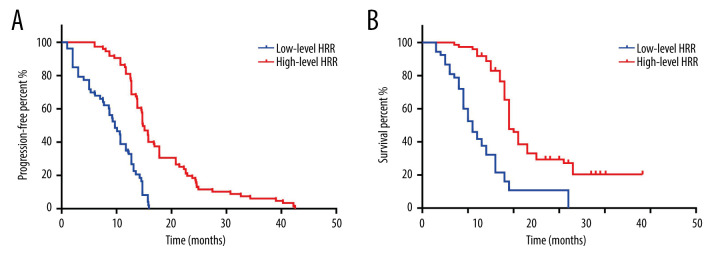
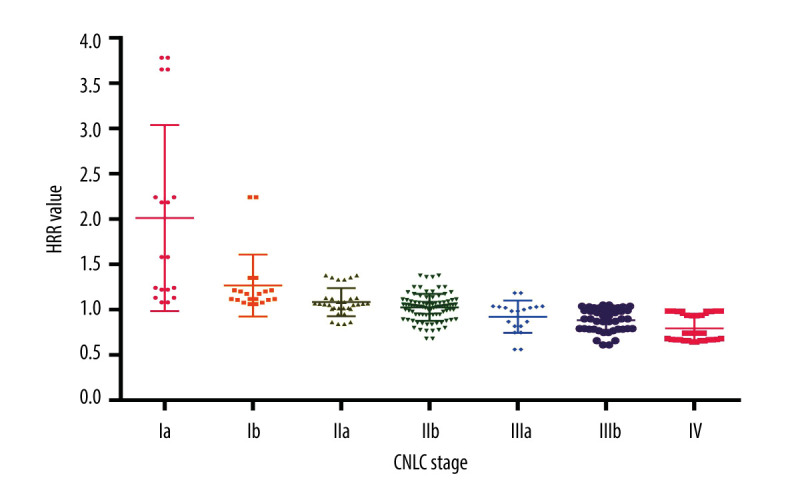
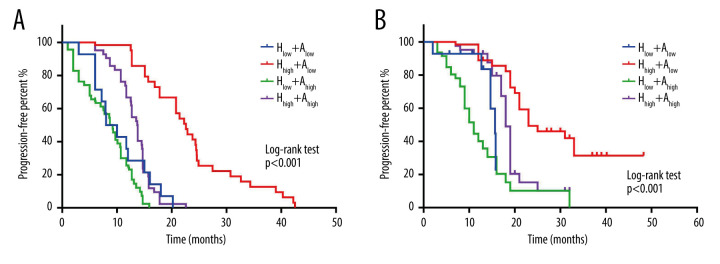
BACKGROUND The prognostic value of the hemoglobin/red blood cell distribution width ratio in primary hepatocellular carcinoma remains unknown. This study aimed to analyze the correlation between hemoglobin/red blood cell distribution width ratio and hepatocellular carcinoma prognosis. MATERIAL AND METHODS Medical records of hepatocellular carcinoma patients were analyzed retrospectively. The hemoglobin/red blood cell distribution width ratio cut-off value was determined as 0.987 by receiver operating characteristic curve analysis. Patients were divided into high- and low-level groups, and the clinical data were compared. The correlation among the ratio levels, progression-free survival, and overall survival was measured with univariate and multivariate Cox regression analyses. The prognostic utility of the ratio combined with alpha-fetoprotein was analyzed using Kaplan-Meier survival curves and log-rank detection, and the correlation between the ratio and tumor staging was studied using one-way analysis of variance. RESULTS This study included 252 patients. Sex, smoking and alcohol consumption history, body mass index, surgery, staging, platelet/lymphocyte ratio, and hemoglobin/red blood cell distribution width ratio were associated with progression-free and overall survival (P<0.05). The ratio, alpha-fetoprotein, hemoglobin, staging, and surgery were independent risk factors for progression-free survival (P<0.05), and the ratio, alpha-fetoprotein, hemoglobin, body mass index, HBsAg, staging, and surgery were independent risk factors for overall survival (P<0.05). Patients with low ratio levels and high alpha-fetoprotein levels had the worst prognosis. CONCLUSIONS Low hemoglobin/red blood cell distribution width ratio levels are associated with poor patient prognosis and are potential tumor prognosis markers.
血红蛋白/红细胞分布宽度比值在原发性肝细胞癌中的预后价值尚不清楚。本研究旨在分析血红蛋白/红细胞分布宽度比值与肝细胞癌预后的相关性。
回顾性分析肝细胞癌患者的病历。通过受试者工作特征曲线分析确定血红蛋白/红细胞分布宽度比值的截断值为 0.987。将患者分为高低水平组,并比较临床资料。采用单因素和多因素 Cox 回归分析测量比值水平与无进展生存期和总生存期的相关性。采用 Kaplan-Meier 生存曲线和对数秩检验分析比值与甲胎蛋白联合的预后价值,并采用单因素方差分析研究比值与肿瘤分期的相关性。
本研究共纳入 252 例患者。性别、吸烟和饮酒史、体重指数、手术、分期、血小板/淋巴细胞比值和血红蛋白/红细胞分布宽度比值与无进展生存期和总生存期相关(P<0.05)。比值、甲胎蛋白、血红蛋白、分期和手术是无进展生存期的独立危险因素(P<0.05),比值、甲胎蛋白、血红蛋白、体重指数、HBsAg、分期和手术是总生存期的独立危险因素(P<0.05)。低比值水平和高甲胎蛋白水平的患者预后最差。
低血红蛋白/红细胞分布宽度比值与患者预后不良相关,是潜在的肿瘤预后标志物。