Esporcatte Louise P G, Salomão Marcella Q, Junior Nelson S, Machado Aydano P, Ferreira Érica, Loureiro Tomás, Junior Renato A
Rio de Janeiro Corneal Tomography and Biomechanics Study Group, Brazil.
Renato Ambrosio Eye Institute, Rio de Janeiro, Brazil.
Saudi J Ophthalmol. 2022 Jul 11;36(1):17-24. doi: 10.4103/sjopt.sjopt_192_21. eCollection 2022 Jan-Mar.
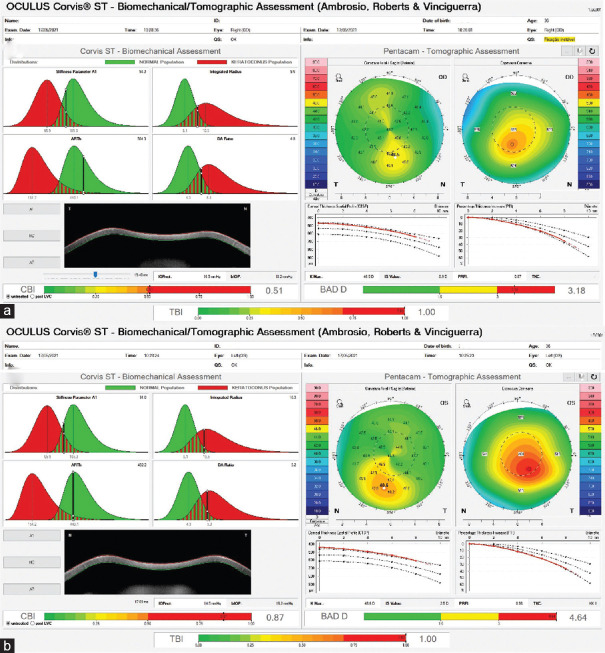
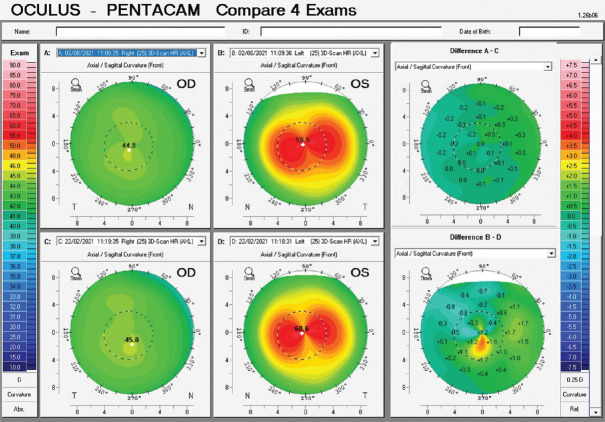
Knowledge of biomechanical principles has been applied in several clinical conditions, including correcting intraocular pressure measurements, planning and following corneal treatments, and even allowing an enhanced ectasia risk evaluation in refractive procedures. The investigation of corneal biomechanics in keratoconus (KC) and other ectatic diseases takes place in several steps, including screening ectasia susceptibility, the diagnostic confirmation and staging of the disease, and also clinical characterization. More recently, investigators have found that the integration of biomechanical and tomographic data through artificial intelligence algorithms helps to elucidate the etiology of KC and ectatic corneal diseases, which may open the door for individualized or personalized medical treatments in the near future. The aim of this article is to provide an update on corneal biomechanics in the screening, diagnosis, staging, prognosis, and treatment of KC.
生物力学原理已应用于多种临床情况,包括校正眼压测量、规划和跟踪角膜治疗,甚至在屈光手术中进行更准确的扩张风险评估。圆锥角膜(KC)和其他扩张性疾病的角膜生物力学研究分几个步骤进行,包括筛查扩张易感性、疾病的诊断确认和分期,以及临床特征描述。最近,研究人员发现,通过人工智能算法整合生物力学和断层扫描数据有助于阐明KC和扩张性角膜疾病的病因,这可能在不久的将来为个性化医疗打开大门。本文的目的是提供关于KC筛查、诊断、分期、预后和治疗中角膜生物力学的最新信息。