Human Eosinophil Section, LPD, NIAID, NIH, Bethesda, Maryland, USA.
Division of Allergy and Immunology, Department of Medicine, Northwestern University Feinberg School of Medicine, Chicago, Illinois, USA.
Allergy. 2023 Jan;78(1):258-269. doi: 10.1111/all.15481. Epub 2022 Sep 1.
Biomarkers of eosinophilic disease activity, especially in the context of novel therapies that reduce blood eosinophil counts, are an unmet need. Absolute eosinophil count (AEC) does not accurately reflect tissue eosinophilia or eosinophil activation. Therefore, the aims of this study were to compare the reliability of plasma and urine eosinophil major basic protein 1, eosinophil cationic protein, eosinophil-derived neurotoxin (EDN), and eosinophil peroxidase measurement and to evaluate the usefulness of eosinophil granule protein (EGP) measurement for the assessment of disease activity in patients with eosinophil-associated diseases treated with mepolizumab, benralizumab, or dexpramipexole.
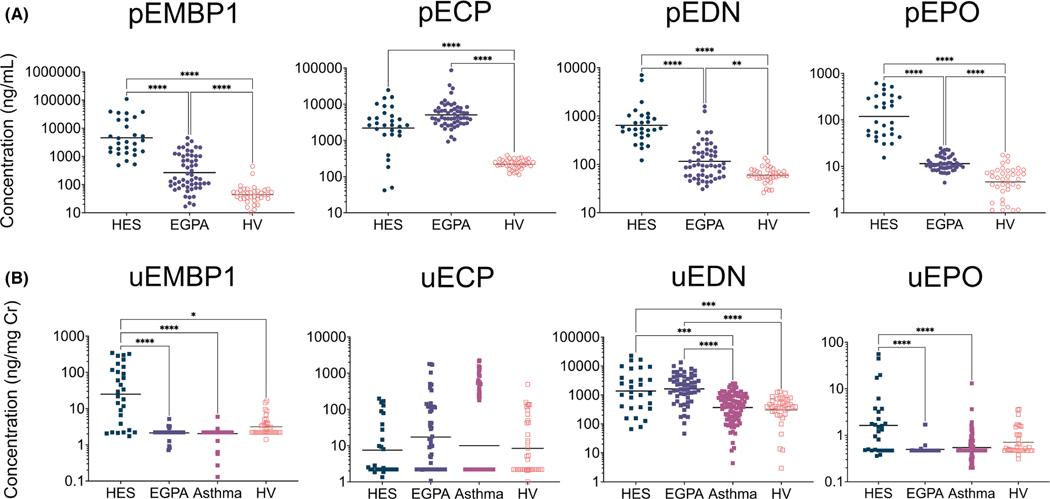
Eosinophil granule protein concentrations were measured in serum, plasma, and urine from healthy volunteers and patients with hypereosinophilic syndrome (HES), eosinophilic granulomatosis with polyangiitis (EGPA), and eosinophilic asthma using a multiplex assay.
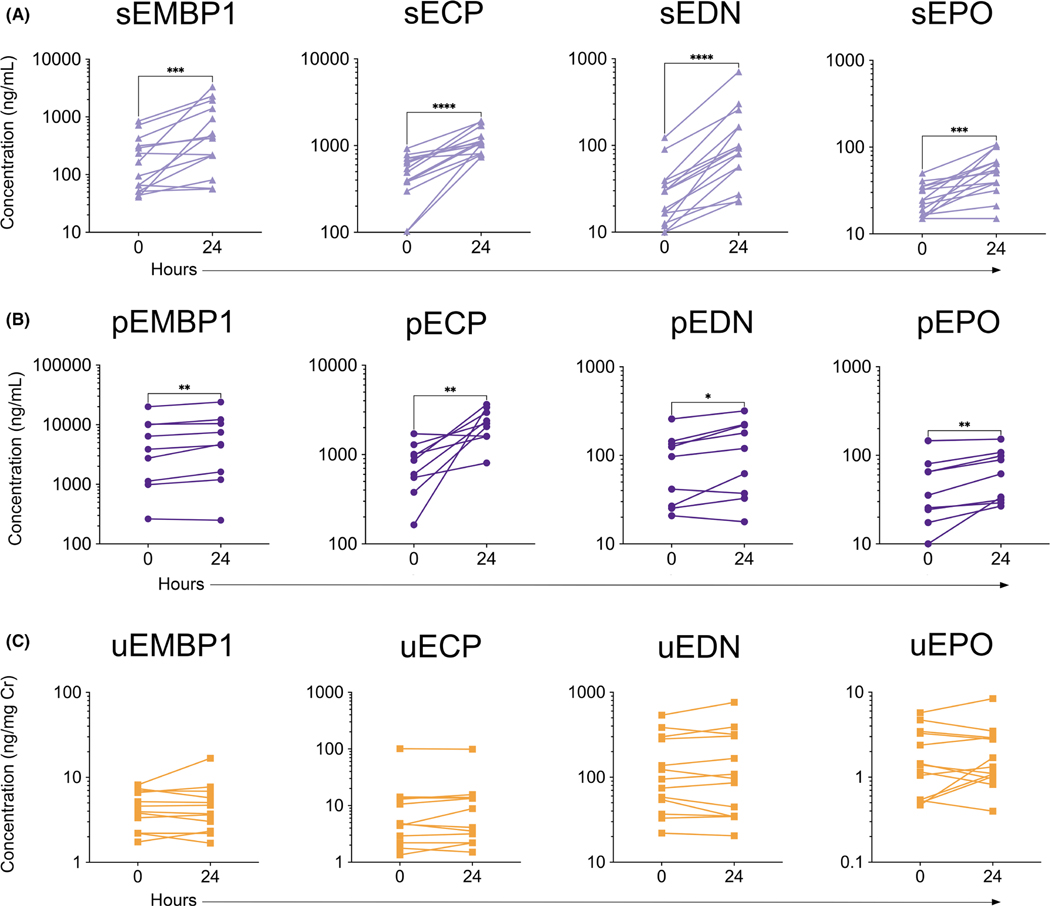
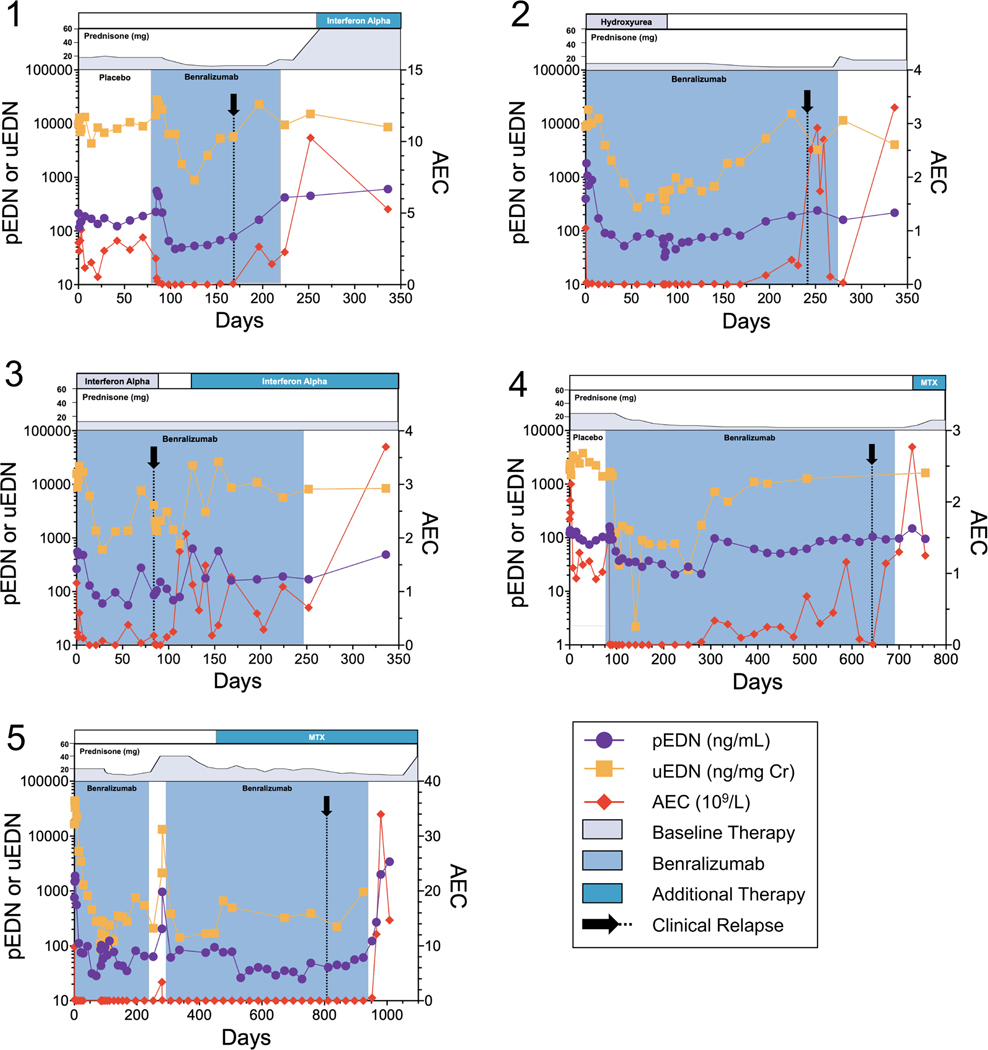
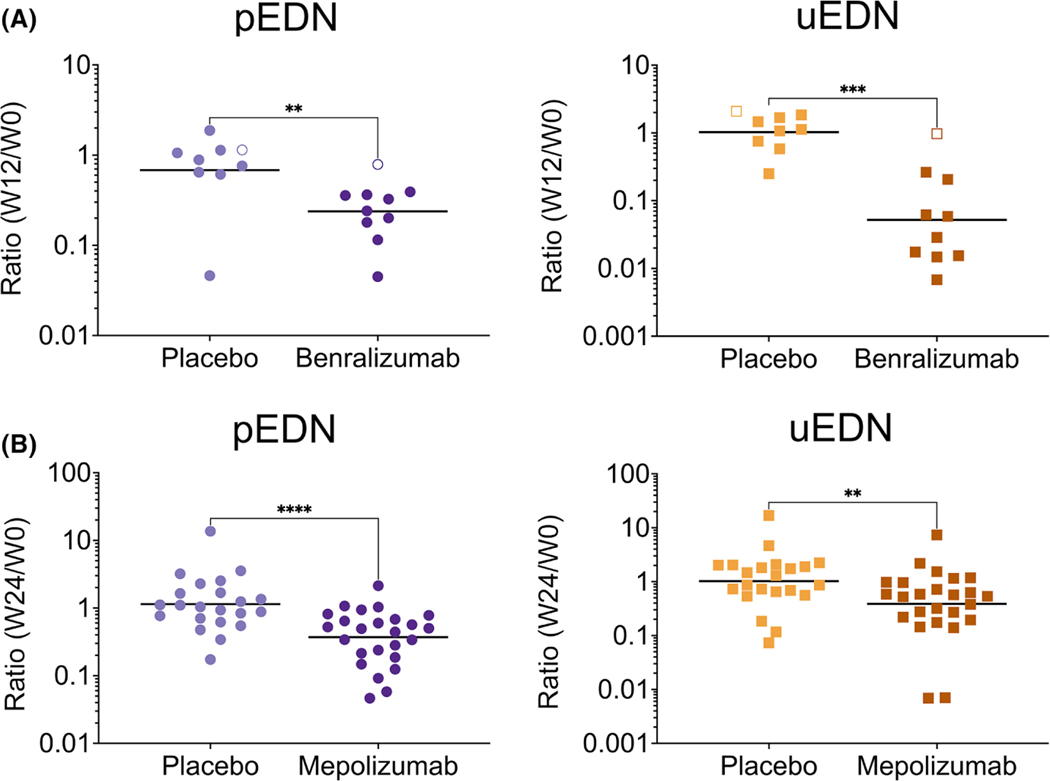
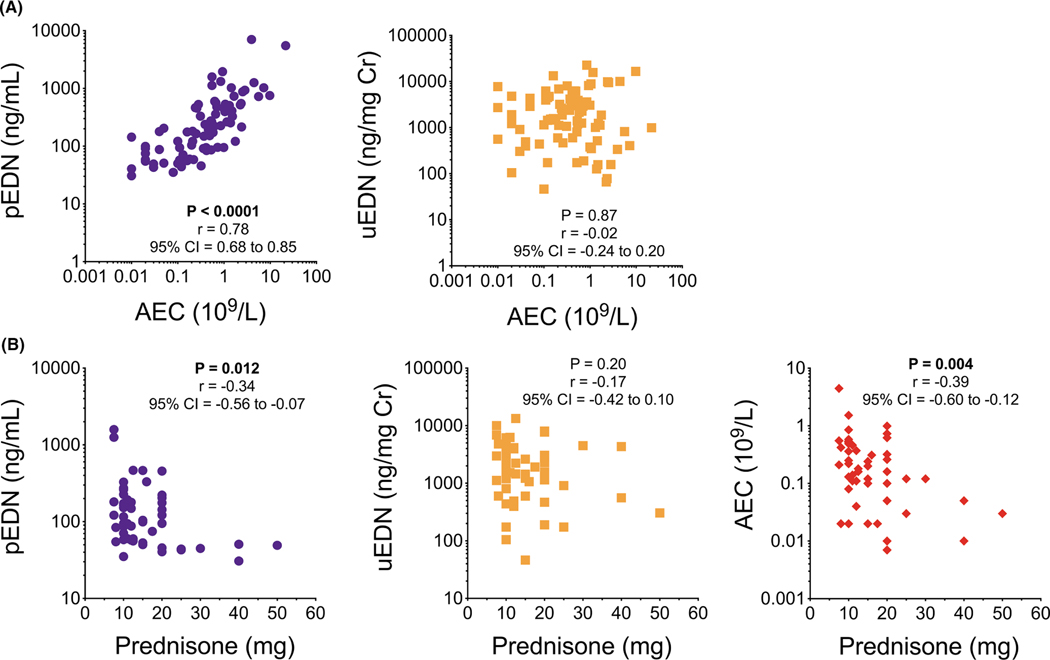
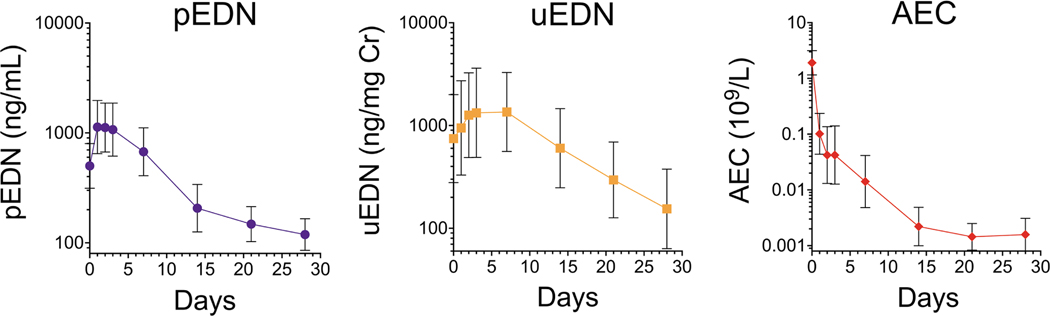
Urine EGP concentrations remained stable, whereas serum and plasma EGP concentrations increased significantly with delayed processing. Plasma (p) EDN, but not urine (u) EDN, concentration correlated with AEC and negatively correlated with prednisone dose. Both pEDN and uEDN decreased significantly following treatment of HES patients with benralizumab and EGPA patients with mepolizumab. uEDN appeared to increase with clinical relapse in both patient groups.
Measurement of EGP in urine is noninvasive and unaffected by cellular lysis. Although plasma and urine EDN concentrations showed a similar pattern following benralizumab and mepolizumab treatment, the lack of correlation between AEC or prednisone dose and uEDN concentrations suggests that measurement of uEDN may provide a potential biomarker of disease activity in patients with HES and EGPA.
嗜酸性粒细胞疾病活动的生物标志物,尤其是在新型疗法降低血嗜酸性粒细胞计数的情况下,是一个未满足的需求。绝对嗜酸性粒细胞计数(AEC)不能准确反映组织嗜酸性粒细胞或嗜酸性粒细胞活化。因此,本研究的目的是比较血浆和尿液中嗜酸性粒细胞主要碱性蛋白 1、嗜酸性粒细胞阳离子蛋白、嗜酸性粒细胞衍生神经毒素(EDN)和嗜酸性粒细胞过氧化物酶测量的可靠性,并评估嗜酸性粒细胞颗粒蛋白(EGP)测量在评估接受美泊利珠单抗、贝那鲁单抗或德泼鲁胺治疗的嗜酸性粒细胞相关疾病患者疾病活动中的有用性。
使用多重分析,测量健康志愿者和高嗜酸性粒细胞综合征(HES)、嗜酸性粒细胞肉芽肿伴多血管炎(EGPA)和嗜酸性粒细胞性哮喘患者的血清、血浆和尿液中的嗜酸性粒细胞颗粒蛋白浓度。
尿液 EGP 浓度保持稳定,而血清和血浆 EGP 浓度随处理时间的延长而显著增加。血浆(p)EDN,但不是尿液(u)EDN,浓度与 AEC 相关,与泼尼松剂量呈负相关。贝那鲁单抗治疗 HES 患者和 mepolizumab 治疗 EGPA 患者后,pEDN 和 uEDN 均显著降低。在两组患者中,uEDN 似乎随着临床复发而增加。
尿液中 EGP 的测量是非侵入性的,不受细胞裂解的影响。尽管贝那鲁单抗和 mepolizumab 治疗后血浆和尿液 EDN 浓度表现出相似的模式,但 AEC 或泼尼松剂量与 uEDN 浓度之间缺乏相关性表明,uEDN 的测量可能为 HES 和 EGPA 患者的疾病活动提供潜在的生物标志物。