School of Biological Sciences, Georgia Institute of Technologygrid.213917.f, Atlanta, Georgia, USA.
Center for Microbial Dynamics and Infection, Georgia Institute of Technologygrid.213917.f, Atlanta, Georgia, USA.
mSphere. 2022 Oct 26;7(5):e0031822. doi: 10.1128/msphere.00318-22. Epub 2022 Aug 16.
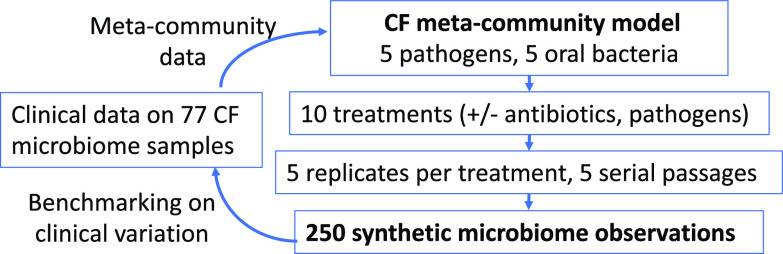
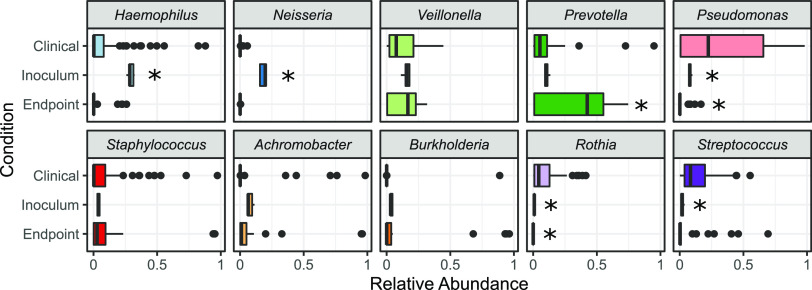
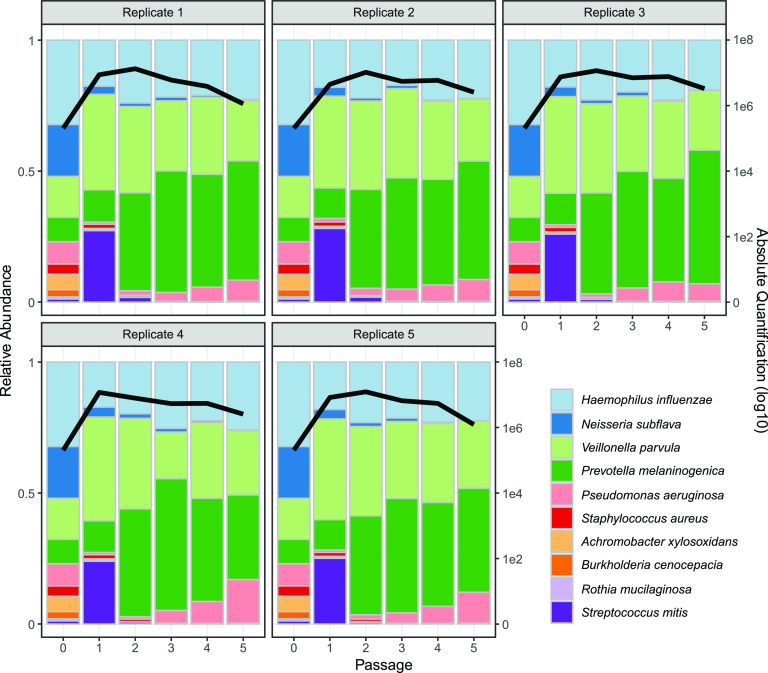
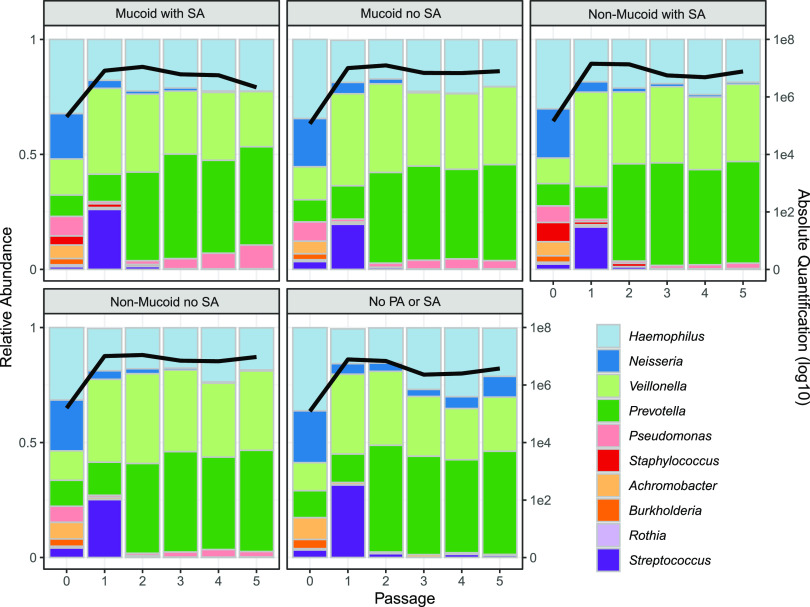
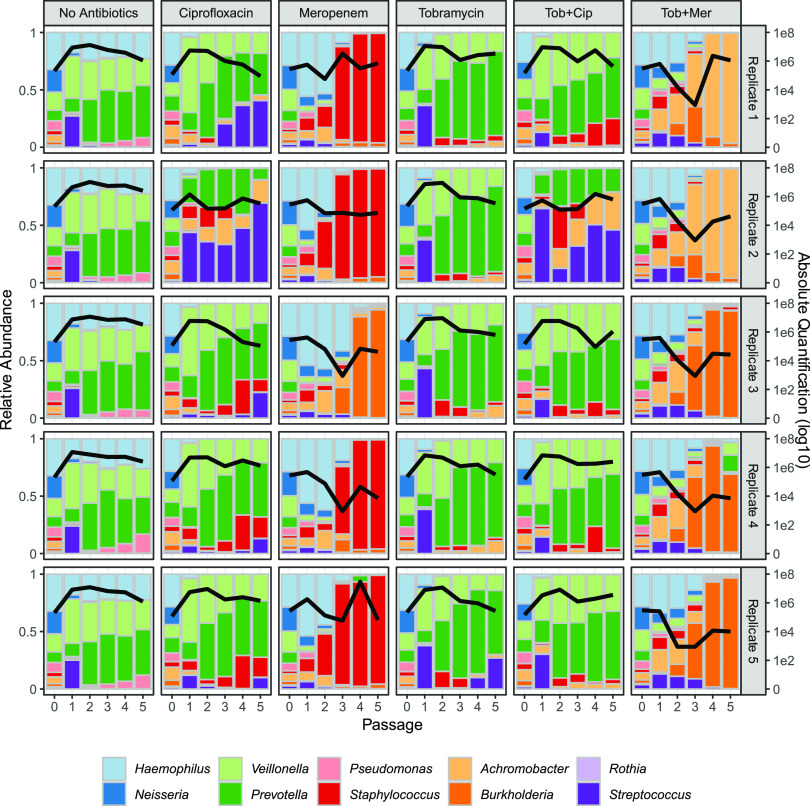
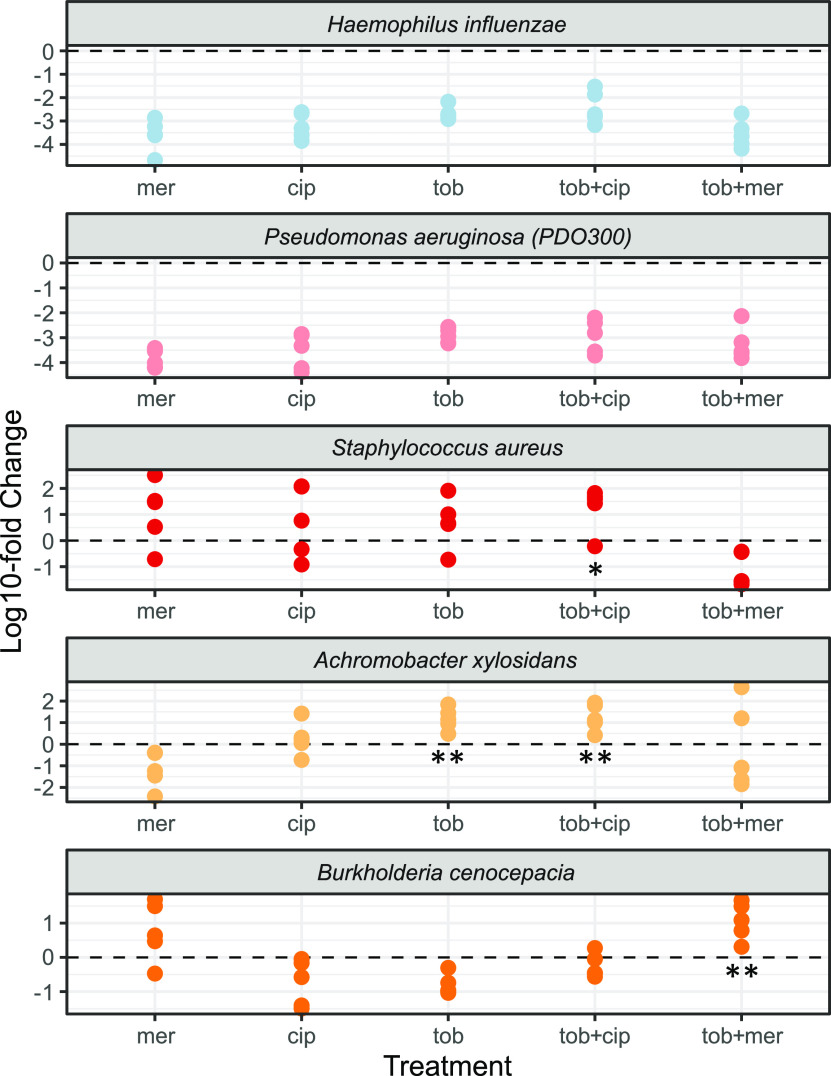
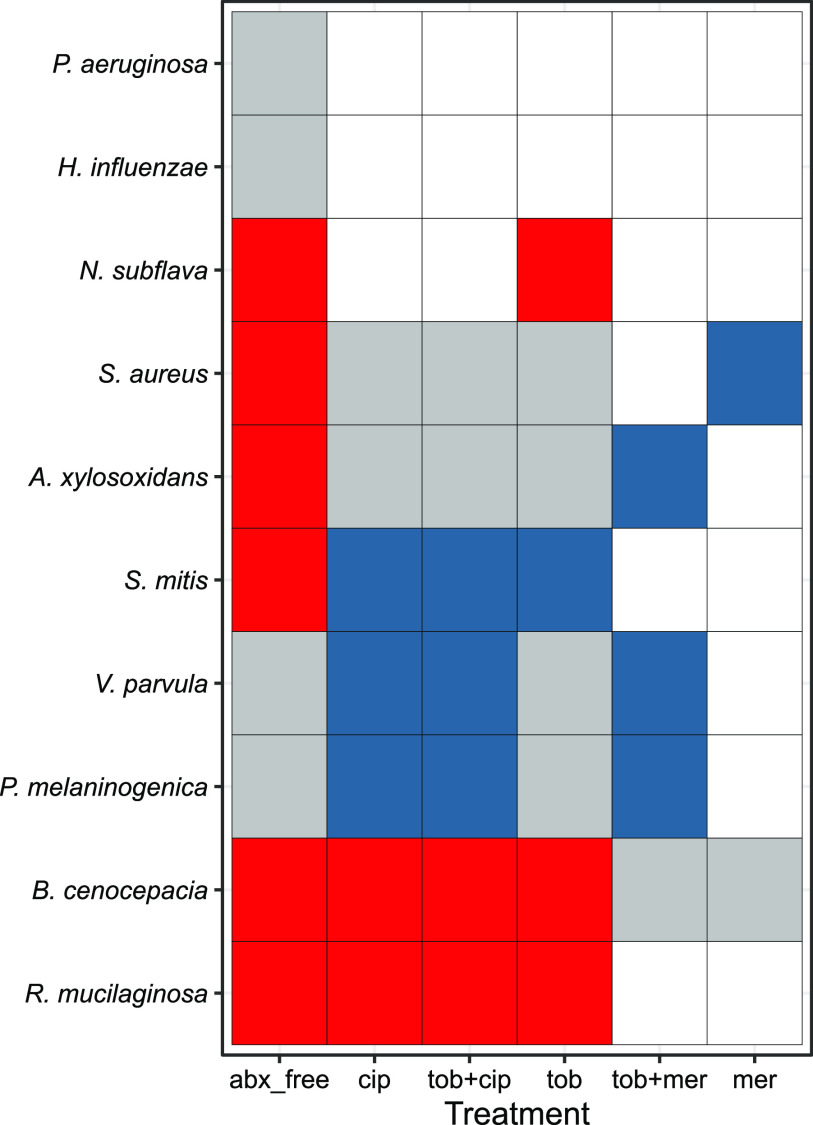
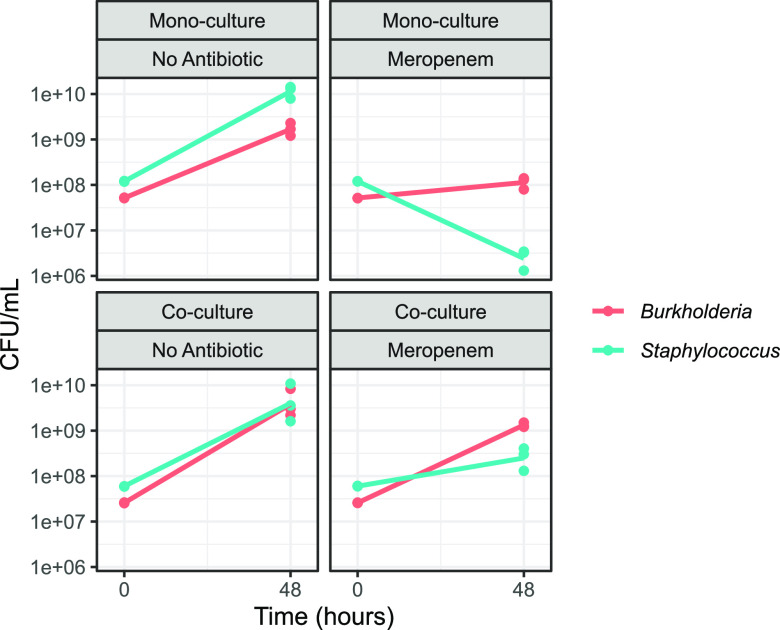
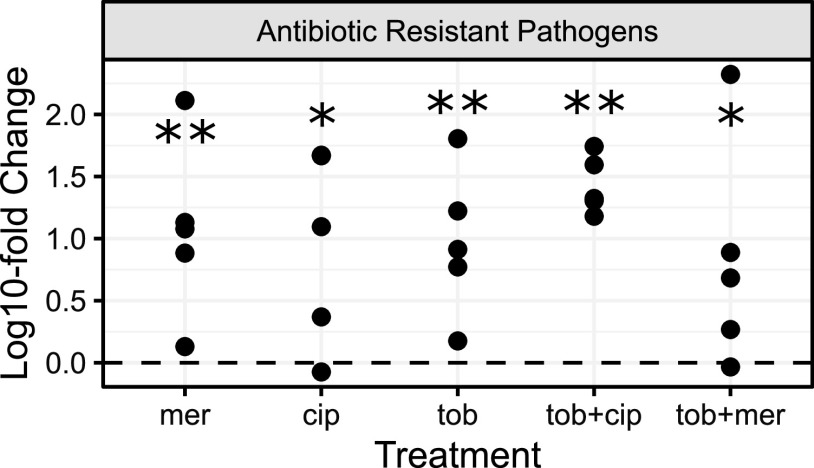
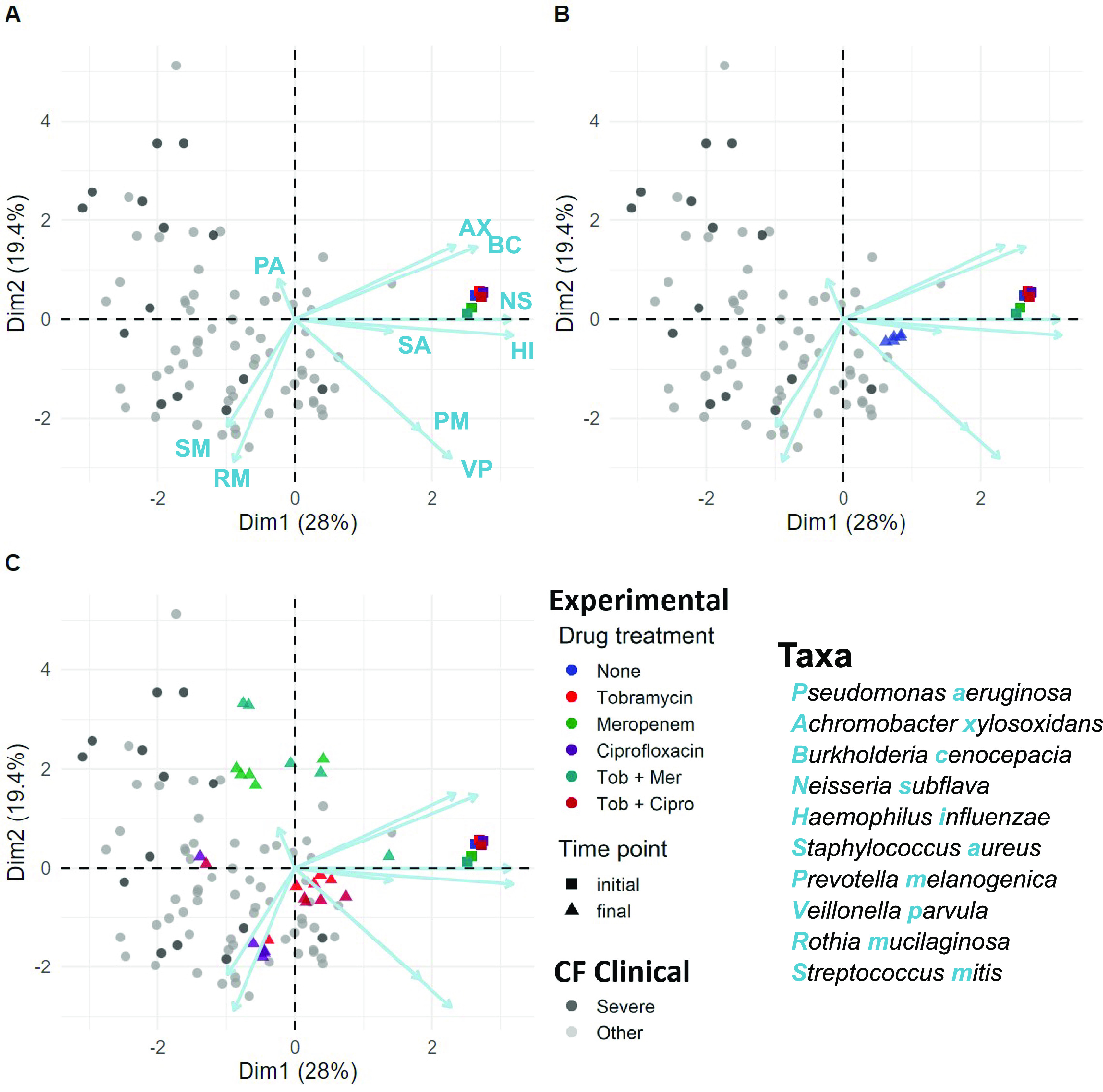
Chronic (long-lasting) infections are globally a major and rising cause of morbidity and mortality. Unlike typical acute infections, chronic infections are ecologically diverse, characterized by the presence of a polymicrobial mix of opportunistic pathogens and human-associated commensals. To address the challenge of chronic infection microbiomes, we focus on a particularly well-characterized disease, cystic fibrosis (CF), where polymicrobial lung infections persist for decades despite frequent exposure to antibiotics. Epidemiological analyses point to conflicting results on the benefits of antibiotic treatment yet are confounded by the dependency of antibiotic exposures on prior pathogen presence, limiting their ability to draw causal inferences on the relationships between antibiotic exposure and pathogen dynamics. To address this limitation, we develop a synthetic infection microbiome model representing CF metacommunity diversity and benchmark on clinical data. We show that in the absence of antibiotics, replicate microbiome structures in a synthetic sputum medium are highly repeatable and dominated by oral commensals. In contrast, challenge with physiologically relevant antibiotic doses leads to substantial community perturbation characterized by multiple alternate pathogen-dominant states and enrichment of drug-resistant species. These results provide evidence that antibiotics can drive the expansion (via competitive release) of previously rare opportunistic pathogens and offer a path toward microbiome-informed conditional treatment strategies. We develop and clinically benchmark an experimental model of the cystic fibrosis (CF) lung infection microbiome to investigate the impacts of antibiotic exposures on chronic, polymicrobial infections. We show that a single experimental model defined by metacommunity data can partially recapitulate the diversity of individual microbiome states observed across a population of people with CF. In the absence of antibiotics, we see highly repeatable community structures, dominated by oral microbes. Under clinically relevant antibiotic exposures, we see diverse and frequently pathogen-dominated communities, and a nonevolutionary enrichment of antimicrobial resistance on the community scale, mediated by competitive release. The results highlight the potential importance of nonevolutionary (community-ecological) processes in driving the growing global crisis of increasing antibiotic resistance.
慢性(长期)感染是全球发病率和死亡率上升的主要原因。与典型的急性感染不同,慢性感染具有生态多样性,其特征是存在机会性病原体和与人类相关的共生体的多种微生物混合。为了应对慢性感染微生物组的挑战,我们专注于一种特别典型的疾病,即囊性纤维化(CF),尽管经常接触抗生素,但多微生物肺部感染仍持续数十年。流行病学分析表明抗生素治疗的益处存在相互矛盾的结果,但由于抗生素暴露依赖于先前病原体的存在,从而限制了它们对抗生素暴露与病原体动态之间关系进行因果推断的能力。为了解决这一限制,我们开发了一种代表 CF 元群落多样性的合成感染微生物组模型,并在临床数据上进行了基准测试。我们表明,在没有抗生素的情况下,在合成痰培养基中重复微生物组结构高度可重复,并且主要由口腔共生体主导。相比之下,用生理相关的抗生素剂量进行挑战会导致群落的大规模扰动,其特征是多个替代病原体主导状态和耐药物种的富集。这些结果提供了证据表明抗生素可以通过竞争释放来驱动先前罕见的机会性病原体的扩张,并为基于微生物组的条件治疗策略提供了一种途径。我们开发并在临床上对囊性纤维化(CF)肺部感染微生物组的实验模型进行基准测试,以研究抗生素暴露对慢性、多微生物感染的影响。我们表明,通过元群落数据定义的单个实验模型可以部分再现 CF 人群中观察到的个体微生物组状态多样性。在没有抗生素的情况下,我们看到高度可重复的群落结构,主要由口腔微生物主导。在临床相关的抗生素暴露下,我们看到了多样化且经常以病原体为主导的群落,以及在社区范围内非进化性的抗微生物药物耐药性富集,这是由竞争释放介导的。结果突出了非进化(群落-生态)过程在推动日益严重的全球抗生素耐药性危机方面的潜在重要性。