Institute of Molecular Life Sciences, University of Zurich, Zurich, Switzerland.
Swiss Institute of Bioinformatics, Zurich, Switzerland.
Microbiome. 2017 Feb 10;5(1):20. doi: 10.1186/s40168-017-0234-1.
Cystic fibrosis (CF) is a life-threatening genetic disorder, characterized by chronic microbial lung infections due to abnormally viscous mucus secretions within airways. The clinical management of CF typically involves regular respiratory-tract cultures in order to identify pathogens and to guide treatment. However, culture-based methods can miss atypical or slow-growing microbes. Furthermore, the isolated microbes are often not classified at the strain level due to limited taxonomic resolution.
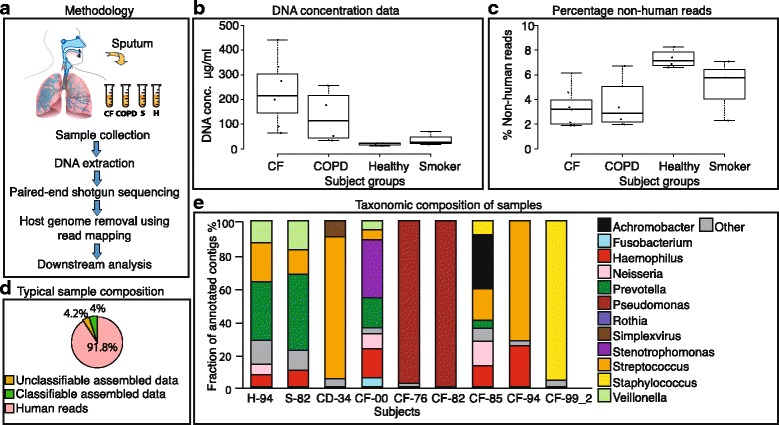
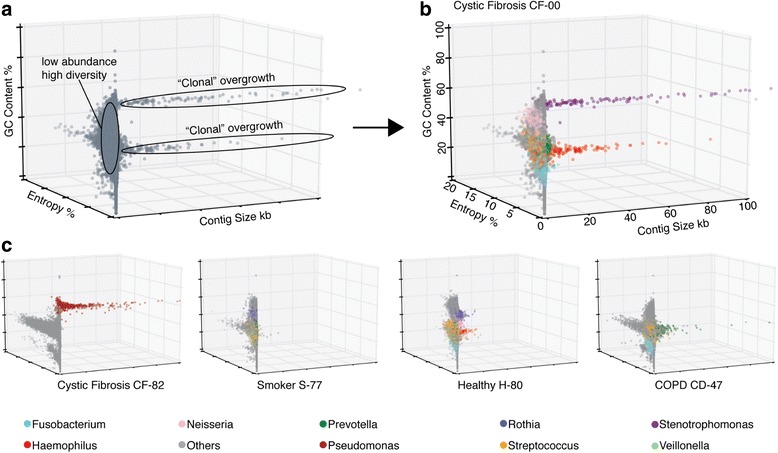
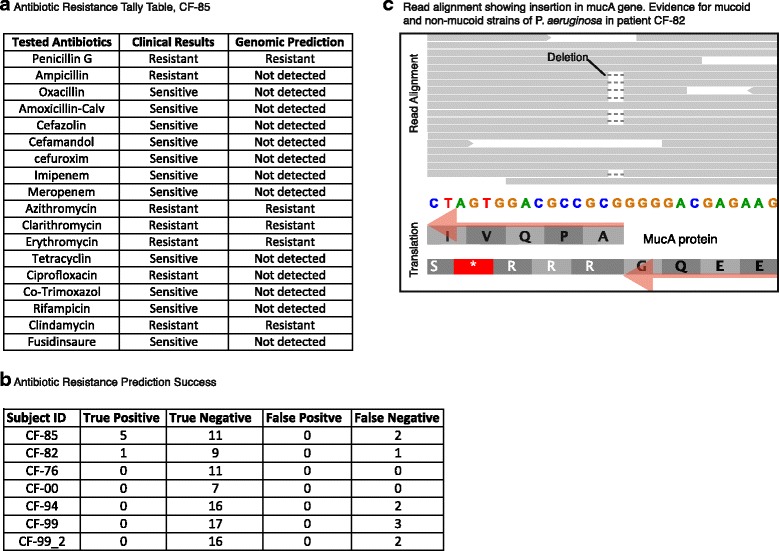
Here, we show that untargeted metagenomic sequencing of sputum DNA can provide valuable information beyond the possibilities of culture-based diagnosis. We sequenced the sputum of six CF patients and eleven control samples (including healthy subjects and chronic obstructive pulmonary disease patients) without prior depletion of human DNA or cell size selection, thus obtaining the most unbiased and comprehensive characterization of CF respiratory tract microbes to date. We present detailed descriptions of the CF and healthy lung microbiome, reconstruct near complete pathogen genomes, and confirm that the CF lungs consistently exhibit reduced microbial diversity. Crucially, the obtained genomic sequences enabled a detailed identification of the exact pathogen strain types, when analyzed in conjunction with existing multi-locus sequence typing databases. We also detected putative pathogenicity islands and indicators of antibiotic resistance, in good agreement with independent clinical tests.
Unbiased sputum metagenomics provides an in-depth profile of the lung pathogen microbiome, which is complementary to and more detailed than standard culture-based reporting. Furthermore, functional and taxonomic features of the dominant pathogens, including antibiotics resistances, can be deduced-supporting accurate and non-invasive clinical diagnosis.
囊性纤维化(CF)是一种危及生命的遗传疾病,其特征是由于气道内异常粘稠的黏液分泌物而导致慢性微生物肺部感染。CF 的临床管理通常涉及定期进行呼吸道培养,以识别病原体并指导治疗。然而,基于培养的方法可能会错过非典型或生长缓慢的微生物。此外,由于分类分辨率有限,分离出的微生物通常不能在菌株水平上进行分类。
在这里,我们表明,痰 DNA 的非靶向宏基因组测序可以提供比基于培养的诊断方法更有价值的信息。我们对六名 CF 患者和十一名对照样本(包括健康受试者和慢性阻塞性肺疾病患者)的痰液进行了测序,而无需事先耗尽人 DNA 或细胞大小选择,从而获得了迄今为止对 CF 呼吸道微生物最公正和全面的描述。我们详细描述了 CF 和健康肺部微生物组,重建了近乎完整的病原体基因组,并证实 CF 肺部的微生物多样性始终较低。至关重要的是,当与现有的多位点序列分型数据库一起分析时,获得的基因组序列能够详细识别确切的病原体菌株类型。我们还检测到了潜在的致病性岛和抗生素耐药性的指标,与独立的临床测试结果一致。
无偏倚的痰宏基因组提供了对肺部病原体微生物组的深入分析,与标准基于培养的报告相辅相成,且更加详细。此外,可以推断出主要病原体的功能和分类特征,包括抗生素耐药性,从而支持准确和非侵入性的临床诊断。