Pediatrics, University of Washington School of Medicine, Seattle, Washington, USA.
Medical Scientist Training Program, University of Washington School of Medicine, Seattle, Washington, United States.
Thorax. 2020 Sep;75(9):780-790. doi: 10.1136/thoraxjnl-2019-214187. Epub 2020 Jul 6.
The most common antibiotic used to treat people with cystic fibrosis (PWCF) is inhaled tobramycin, administered as maintenance therapy for chronic lung infections. While the effects of inhaled tobramycin on abundance and lung function diminish with continued therapy, this maintenance treatment is known to improve long-term outcomes, underscoring how little is known about why antibiotics work in CF infections, what their effects are on complex CF sputum microbiomes and how to improve these treatments.
To rigorously define the effect of maintenance tobramycin on CF sputum microbiome characteristics.
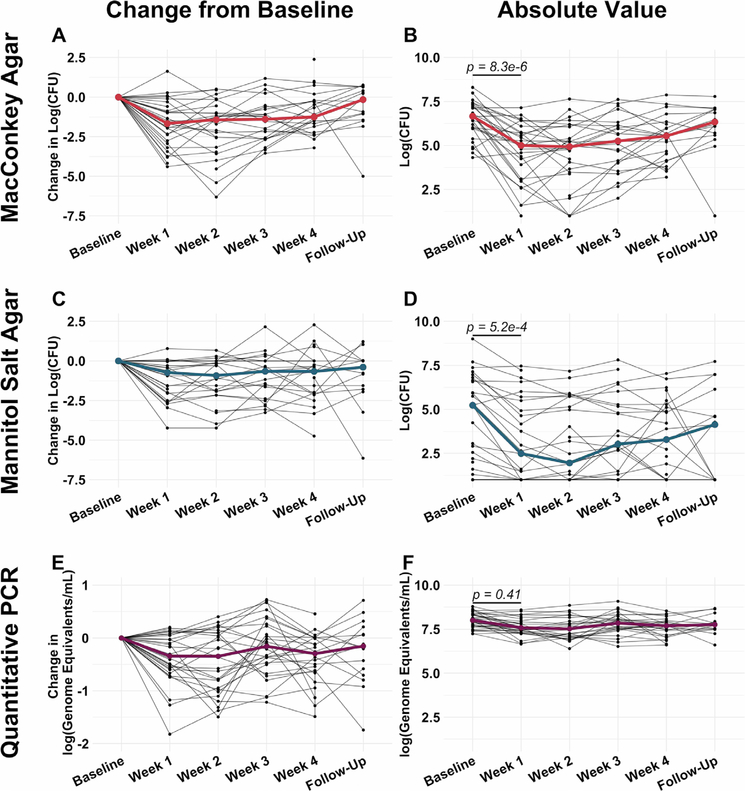
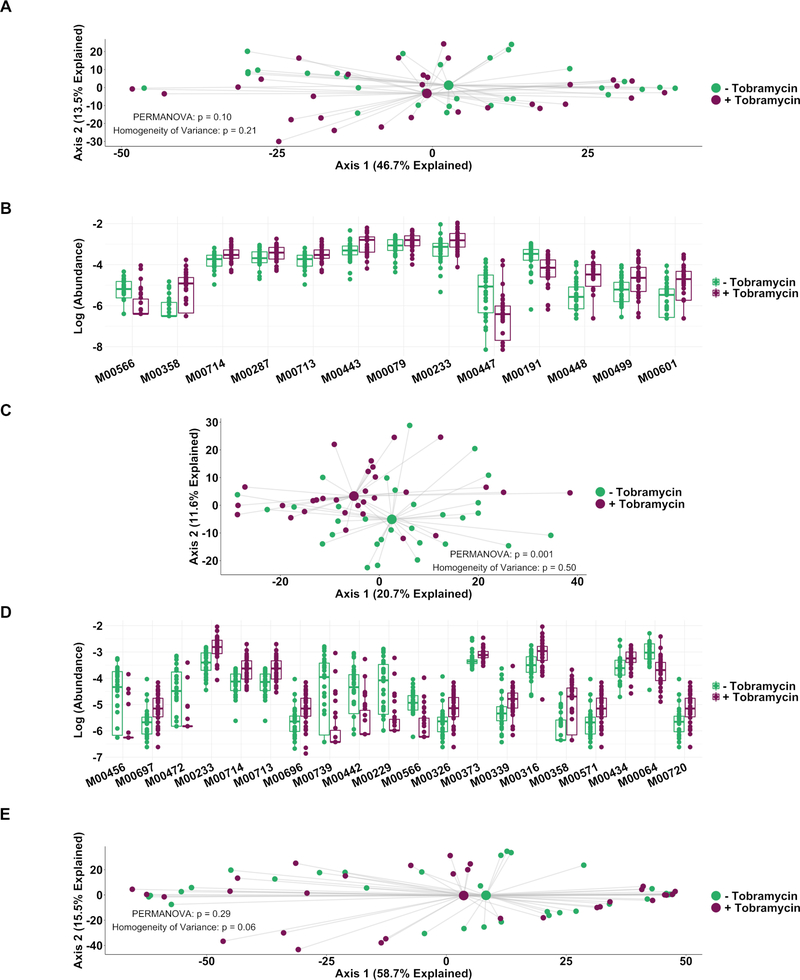
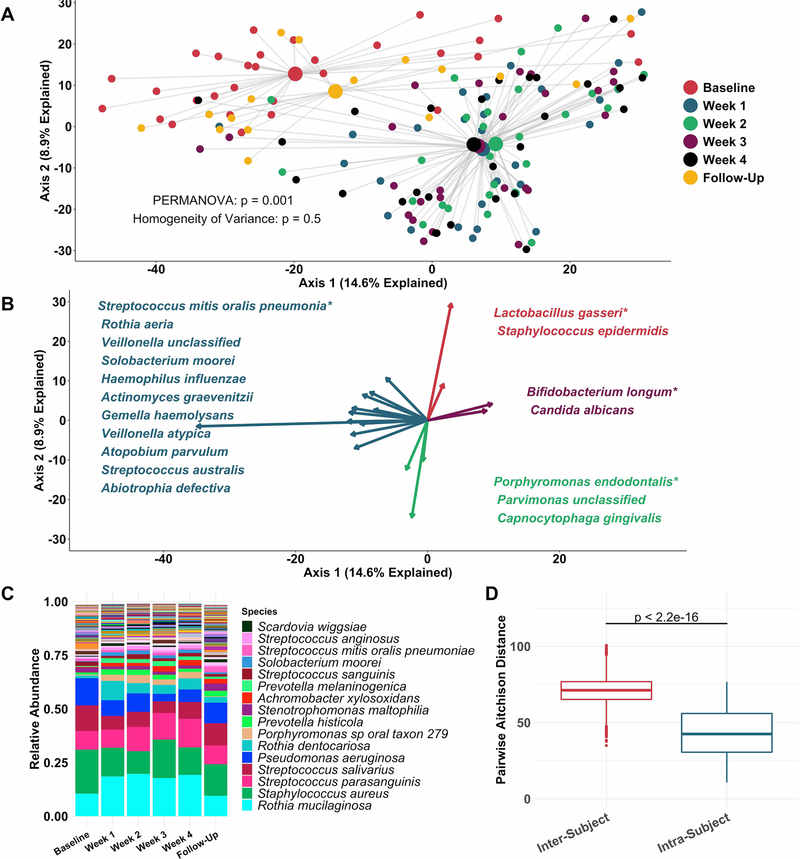
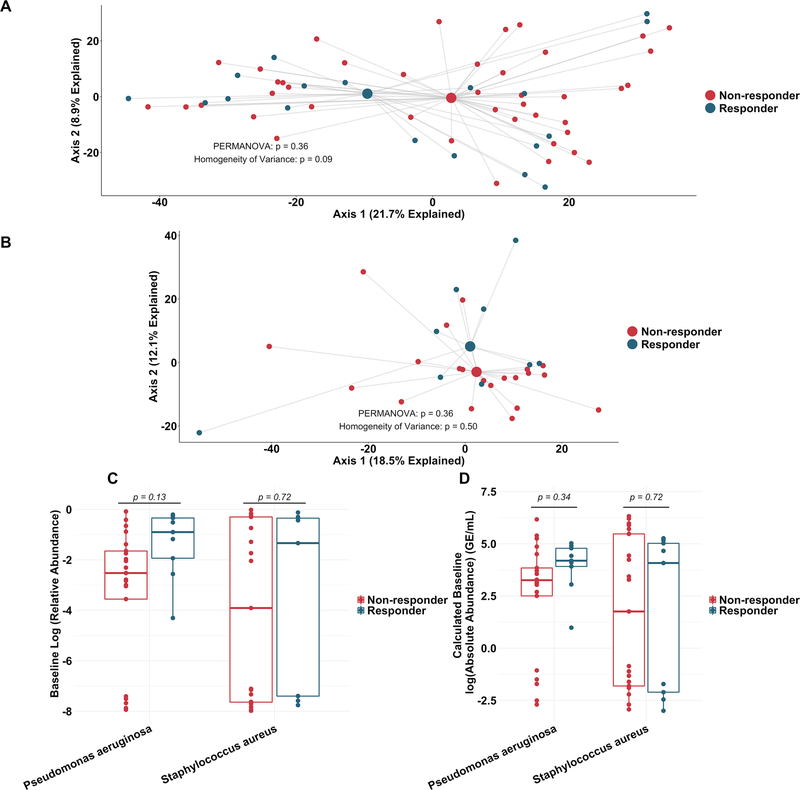
We collected sputum from 30 PWCF at standardised times before, during and after a single month-long course of maintenance inhaled tobramycin. We used traditional culture, quantitative PCR and metagenomic sequencing to define the dynamic effects of this treatment on sputum microbiomes, including abundance changes in both clinically targeted and untargeted bacteria, as well as functional gene categories.
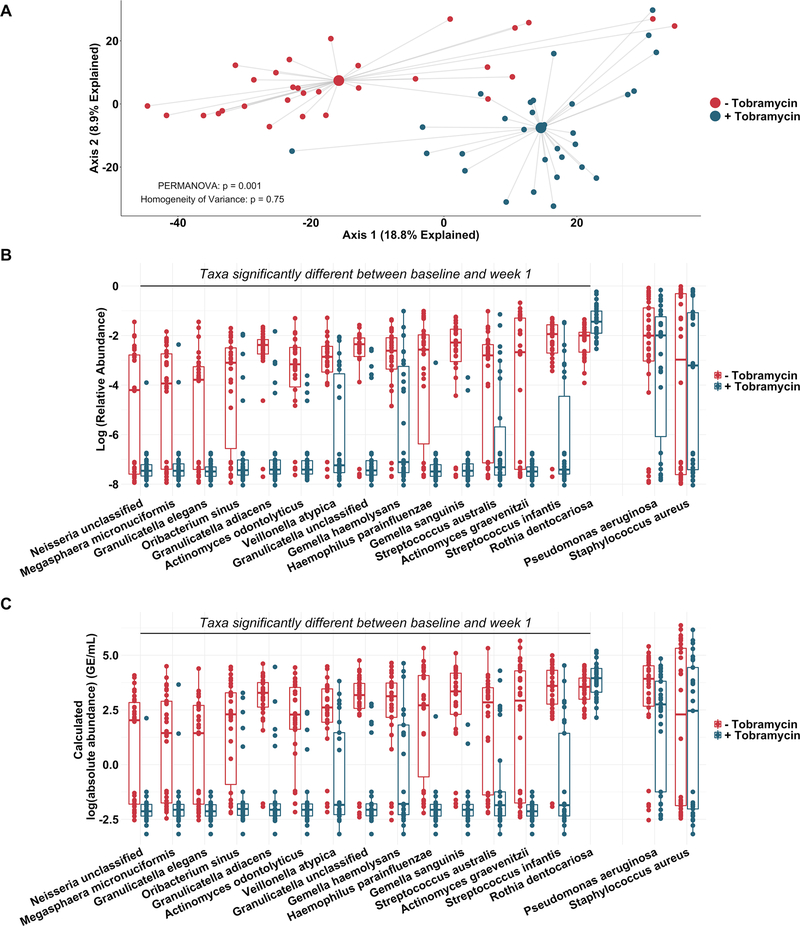
CF sputum microbiota changed most markedly by 1 week of antibiotic therapy and plateaued thereafter, and this shift was largely driven by changes in non-dominant taxa. The genetically conferred functional capacities (ie, metagenomes) of subjects' sputum communities changed little with antibiotic perturbation, despite taxonomic shifts, suggesting functional redundancy within the CF sputum microbiome.
Maintenance treatment with inhaled tobramycin, an antibiotic with demonstrated long-term mortality benefit, primarily impacted clinically untargeted bacteria in CF sputum, highlighting the importance of monitoring the non-canonical effects of antibiotics and other treatments to accurately define and improve their clinical impact.
用于治疗囊性纤维化(CF)患者的最常见抗生素是吸入用妥布霉素,作为慢性肺部感染的维持治疗。虽然吸入用妥布霉素对丰度和肺功能的影响随着持续治疗而减弱,但这种维持治疗已知可改善长期预后,这突显了人们对 CF 感染中抗生素的作用机制、它们对复杂 CF 痰微生物组的影响以及如何改善这些治疗方法知之甚少。
严格定义维持用妥布霉素对 CF 痰微生物组特征的影响。
我们在接受为期一个月的维持性吸入妥布霉素治疗前、治疗中和治疗后,按标准时间从 30 名 CF 患者中收集痰。我们使用传统培养、定量 PCR 和宏基因组测序来定义这种治疗对痰微生物组的动态影响,包括临床靶向和非靶向细菌的丰度变化,以及功能基因类别。
CF 痰微生物组在抗生素治疗 1 周后变化最为明显,此后趋于稳定,这种变化主要是由非优势菌群的变化驱动的。尽管发生了分类群的变化,但受抗生素干扰后,患者痰菌群的遗传赋予的功能能力(即宏基因组)变化很小,这表明 CF 痰微生物组中存在功能冗余。
吸入用妥布霉素的维持治疗,一种具有长期生存获益的抗生素,主要影响 CF 痰中的临床非靶向细菌,这突显了监测抗生素和其他治疗方法的非典型作用的重要性,以准确定义和改善其临床影响。