School of Nursing and Midwifery, Trinity College Dublin, 24 D'Olier St, Dublin 2, Ireland.
The Library of Trinity College Dublin, Dublin 2, Ireland.
Women Birth. 2023 Mar;36(2):e203-e212. doi: 10.1016/j.wombi.2022.08.004. Epub 2022 Aug 10.
During the COVID-19 pandemic, pregnant women were identified as a high-risk and vulnerable group. To reduce risk of transmission, maternity healthcare services were modified to limit exposure but maintain services for pregnant women. However, the change in hospital practice may have compromised quality maternal care standards. Therefore, this review aims to explore parental experiences and views with maternity care received from healthcare institutions during the COVID-19 pandemic.
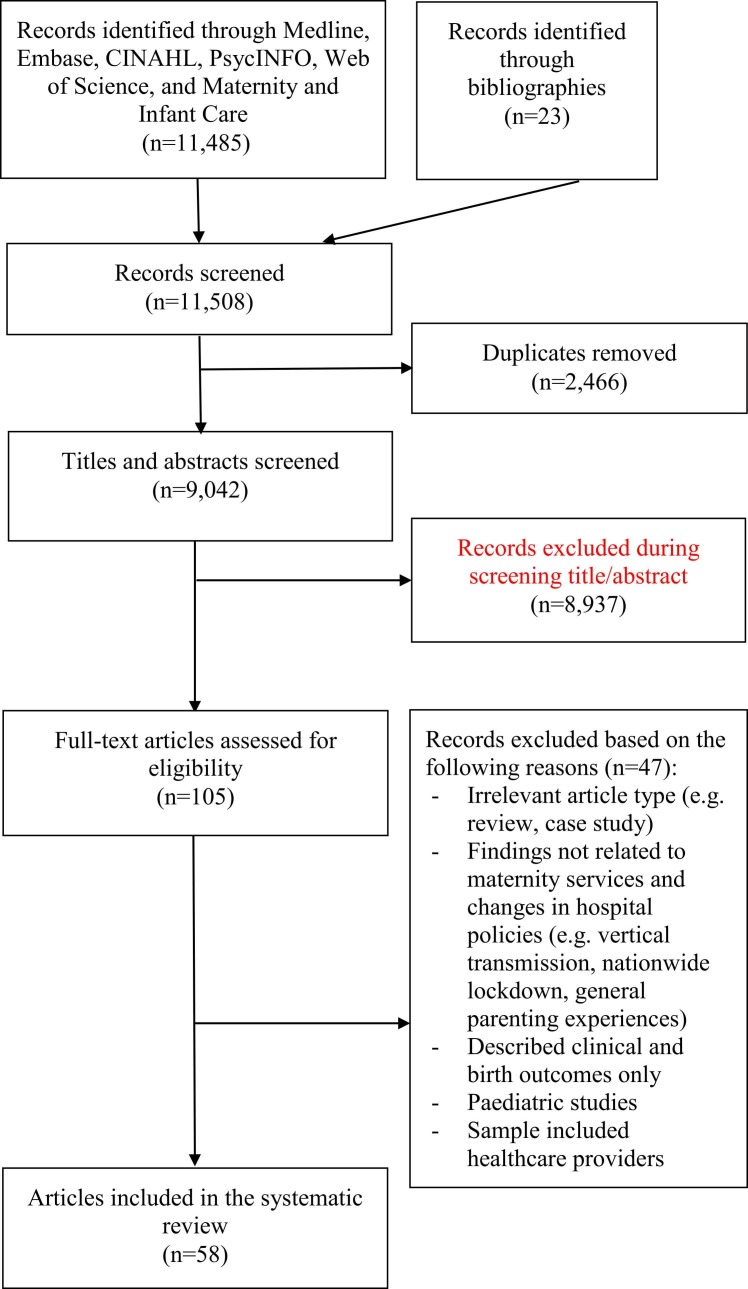
A mixed studies systematic review was conducted. Six electronic databases (Medline, CINAHL, Embase, PsycInfo, Web of Science, and Maternity and Infant Care) were searched for qualitative, observational, and mixed method studies from the year 2019 to February 2022. Study quality was appraised using the Mixed Methods Appraisal Tool. Quantitative findings were converted to narrative findings. Data was synthesised thematically using a convergent synthesis design.
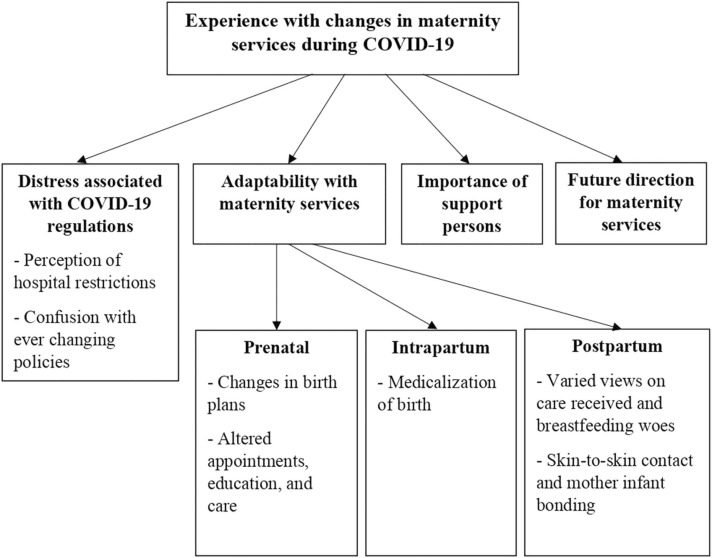
Fifty-eight articles were included. Four themes were generated: (1) Distress associated with COVID-19 regulations (perception of hospital restrictions, confusion with ever changing policies), (2) adaptability with maternity services (prenatal: changes in birth plans, prenatal: altered antenatal appointments, education, and care, intrapartum: medicalization of birth, postpartum: varied views on care received and Breastfeeding woes, postpartum: skin-to-skin contact and mother infant bonding) (3) importance of support persons, and (4) future direction for maternity services.
Parental experiences highlighted how maternity care during the COVID-19 pandemic did not adhere to WHO standards of quality maternity care. This calls for healthcare institutions to continuously appraise the implementation of restrictive practices that deviate from evidence-based frameworks underpinning quality care.
在 COVID-19 大流行期间,孕妇被确定为高风险和脆弱群体。为了降低传播风险,产妇保健服务进行了修改,以限制接触,但为孕妇维持服务。然而,医院实践的改变可能会影响产妇保健标准的质量。因此,本综述旨在探讨父母在 COVID-19 大流行期间从医疗机构获得的产妇保健的经验和看法。
进行了混合研究系统评价。从 2019 年到 2022 年 2 月,在六个电子数据库(Medline、CINAHL、Embase、PsycInfo、Web of Science 和母婴保健)中搜索定性、观察性和混合方法研究。使用混合方法评估工具评估研究质量。将定量结果转换为叙述性发现。使用汇聚式综合设计对数据进行主题式综合。
共纳入 58 篇文章。生成了四个主题:(1)与 COVID-19 规定相关的困扰(对医院限制的看法、对不断变化的政策的困惑),(2)适应产妇服务(产前:生育计划的改变、产前:改变产前预约、教育和护理、产时:分娩的医学化、产后:对所接受的护理和母乳喂养问题的不同看法、产后:皮肤与皮肤接触和母婴联系),(3)支持人员的重要性,以及(4)产妇服务的未来方向。
父母的经验强调了 COVID-19 大流行期间的产妇保健如何不符合世卫组织质量产妇保健标准。这呼吁医疗机构不断评估偏离支持质量护理的循证框架的限制性做法的实施情况。