• 文献检索
  • 文档翻译
  • 深度研究
  • 学术资讯
  • Suppr Zotero 插件Zotero 插件
  • 邀请有礼
  • 套餐&价格
  • 历史记录
应用&插件
Suppr Zotero 插件Zotero 插件浏览器插件Mac 客户端Windows 客户端微信小程序
定价
高级版会员购买积分包购买API积分包
服务
文献检索文档翻译深度研究API 文档MCP 服务
关于我们
关于 Suppr公司介绍联系我们用户协议隐私条款
关注我们

Suppr 超能文献

核心技术专利:CN118964589B侵权必究
粤ICP备2023148730 号-1Suppr @ 2026

文献检索

告别复杂PubMed语法,用中文像聊天一样搜索,搜遍4000万医学文献。AI智能推荐,让科研检索更轻松。

立即免费搜索

文件翻译

保留排版,准确专业,支持PDF/Word/PPT等文件格式,支持 12+语言互译。

免费翻译文档

深度研究

AI帮你快速写综述,25分钟生成高质量综述,智能提取关键信息,辅助科研写作。

立即免费体验

基于分层插值数据的规则体素剖分三维地质隐式建模方法

3D geological implicit modeling method of regular voxel splitting based on layered interpolation data.

作者信息

Li Jian, Liu Peirong, Wang Xinyu, Cui Hao, Ma Yurong

机构信息

School of the Geo-Science & Technology, Zhengzhou University, Zhengzhou, 450001, Henan, China.

School of Water Conservancy Science & Engineering, Zhengzhou University, Zhengzhou, 450001, Henan, China.

出版信息

Sci Rep. 2022 Aug 16;12(1):13840. doi: 10.1038/s41598-022-17231-x.

DOI:10.1038/s41598-022-17231-x
PMID:35974051
原文链接:https://pmc.ncbi.nlm.nih.gov/articles/PMC9381719/
Abstract

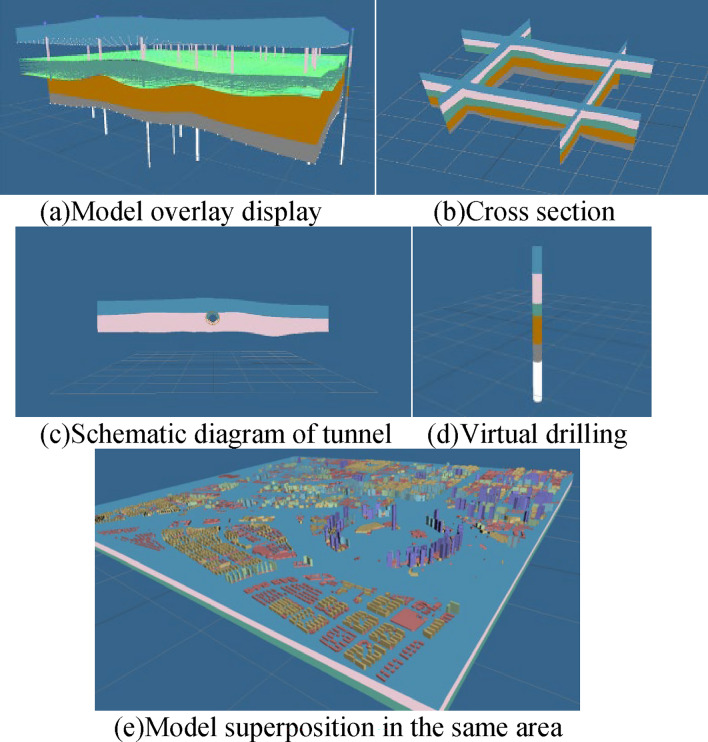
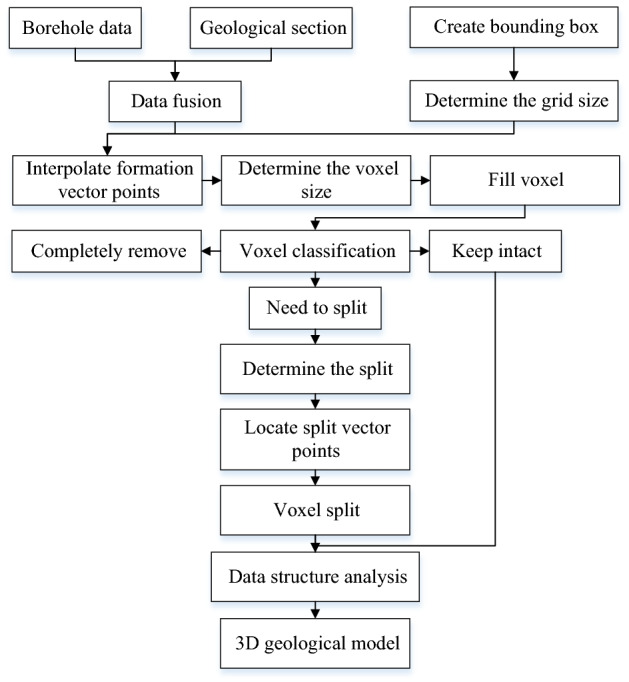
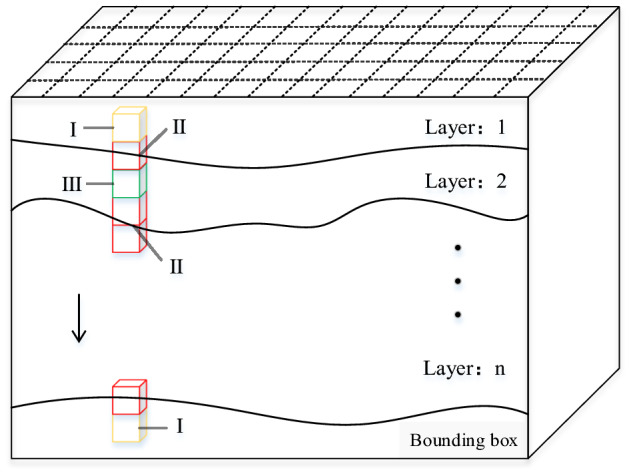
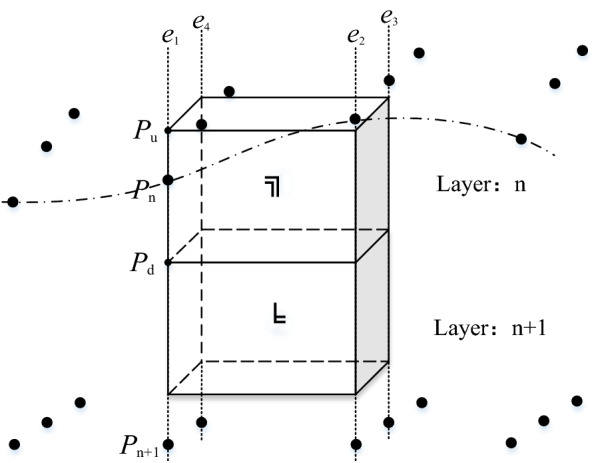
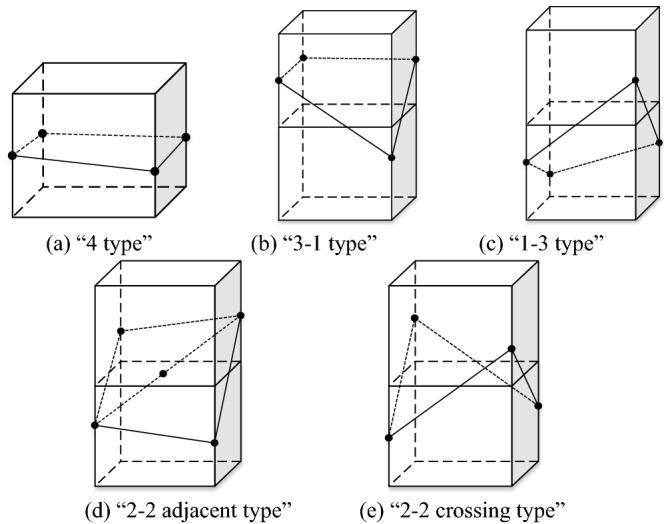
In view of the problems in traditional geological modeling methods, such as the insufficient utilization of geological survey data, the inaccurate expression of a stratigraphic model, and the large amount of model data, a 3D geological model cannot be smoothly loaded and rendered on the web end. In this paper, a 3D geological implicit modeling method of regular voxel splitting based on hierarchical interpolation data is proposed. This method first uses the boreholes and geological section data from a geological survey for data conversion and fusion, compares the applicability of different interpolation algorithms through cross-validation research, and uses the best fitting algorithm to interpolate and encrypt discrete points in the formation. Then, it constructs the regular voxels, designs five different regular voxel split types, and divides the voxels. In addition, the data structure design of the voxel split model is implemented, and the irregular voxel metadata structure is analyzed and displayed through Three.js. Using this method, based on the survey data of an area in Zhengzhou, the global workflow from data processing to model construction and visualization is demonstrated. The experimental results show that the model can integrate multisource hierarchical interpolation data; express different stratum structures accurately and smoothly, and can realize the rendering, spatial query and analysis of the internal information of a geological body in a browser.

摘要

针对传统地质建模方法存在的问题,如地质勘查数据利用不充分、地层模型表达不准确、模型数据量庞大,导致三维地质模型无法在网页端顺利加载和渲染等,本文提出一种基于分层插值数据的规则体素剖分三维地质隐式建模方法。该方法首先利用地质勘查中的钻孔和地质剖面数据进行数据转换与融合,通过交叉验证研究比较不同插值算法的适用性,采用最优拟合算法对地层中的离散点进行插值加密。然后,构建规则体素,设计五种不同的规则体素剖分类型并进行体素划分。此外,实现了体素剖分模型的数据结构设计,并通过Three.js对不规则体素元数据结构进行分析与展示。利用该方法,基于郑州某区域的勘查数据,演示了从数据处理到模型构建与可视化的全局工作流程。实验结果表明,该模型能够整合多源分层插值数据;准确、流畅地表达不同地层结构,且能在浏览器中实现地质体内部信息的渲染、空间查询与分析。
https://cdn.ncbi.nlm.nih.gov/pmc/blobs/4c39/9381719/f53bd8a0f11b/41598_2022_17231_Fig19_HTML.jpg
https://cdn.ncbi.nlm.nih.gov/pmc/blobs/4c39/9381719/bfbaa380cfb4/41598_2022_17231_Fig1_HTML.jpg
https://cdn.ncbi.nlm.nih.gov/pmc/blobs/4c39/9381719/3cff9e2bf252/41598_2022_17231_Fig2_HTML.jpg
https://cdn.ncbi.nlm.nih.gov/pmc/blobs/4c39/9381719/97085c6d6355/41598_2022_17231_Fig3_HTML.jpg
https://cdn.ncbi.nlm.nih.gov/pmc/blobs/4c39/9381719/3a66c0172d25/41598_2022_17231_Fig4_HTML.jpg
https://cdn.ncbi.nlm.nih.gov/pmc/blobs/4c39/9381719/99ecb3b287db/41598_2022_17231_Fig5_HTML.jpg
https://cdn.ncbi.nlm.nih.gov/pmc/blobs/4c39/9381719/801612b915a2/41598_2022_17231_Fig6_HTML.jpg
https://cdn.ncbi.nlm.nih.gov/pmc/blobs/4c39/9381719/248b294bb10f/41598_2022_17231_Fig7_HTML.jpg
https://cdn.ncbi.nlm.nih.gov/pmc/blobs/4c39/9381719/f542f6d8ba04/41598_2022_17231_Fig8_HTML.jpg
https://cdn.ncbi.nlm.nih.gov/pmc/blobs/4c39/9381719/3e29f27e057b/41598_2022_17231_Fig9_HTML.jpg
https://cdn.ncbi.nlm.nih.gov/pmc/blobs/4c39/9381719/c490ee068abf/41598_2022_17231_Fig10_HTML.jpg
https://cdn.ncbi.nlm.nih.gov/pmc/blobs/4c39/9381719/08a538fc1f4c/41598_2022_17231_Fig11_HTML.jpg
https://cdn.ncbi.nlm.nih.gov/pmc/blobs/4c39/9381719/40bee7a39ee1/41598_2022_17231_Fig12_HTML.jpg
https://cdn.ncbi.nlm.nih.gov/pmc/blobs/4c39/9381719/f8f11b345626/41598_2022_17231_Fig13_HTML.jpg
https://cdn.ncbi.nlm.nih.gov/pmc/blobs/4c39/9381719/1aecec039386/41598_2022_17231_Fig14_HTML.jpg
https://cdn.ncbi.nlm.nih.gov/pmc/blobs/4c39/9381719/af71d88a4bbf/41598_2022_17231_Fig15_HTML.jpg
https://cdn.ncbi.nlm.nih.gov/pmc/blobs/4c39/9381719/ec581a358bb3/41598_2022_17231_Fig16_HTML.jpg
https://cdn.ncbi.nlm.nih.gov/pmc/blobs/4c39/9381719/ba04bad4b0a1/41598_2022_17231_Fig17_HTML.jpg
https://cdn.ncbi.nlm.nih.gov/pmc/blobs/4c39/9381719/67532149a0ee/41598_2022_17231_Fig18_HTML.jpg
https://cdn.ncbi.nlm.nih.gov/pmc/blobs/4c39/9381719/f53bd8a0f11b/41598_2022_17231_Fig19_HTML.jpg
https://cdn.ncbi.nlm.nih.gov/pmc/blobs/4c39/9381719/bfbaa380cfb4/41598_2022_17231_Fig1_HTML.jpg
https://cdn.ncbi.nlm.nih.gov/pmc/blobs/4c39/9381719/3cff9e2bf252/41598_2022_17231_Fig2_HTML.jpg
https://cdn.ncbi.nlm.nih.gov/pmc/blobs/4c39/9381719/97085c6d6355/41598_2022_17231_Fig3_HTML.jpg
https://cdn.ncbi.nlm.nih.gov/pmc/blobs/4c39/9381719/3a66c0172d25/41598_2022_17231_Fig4_HTML.jpg
https://cdn.ncbi.nlm.nih.gov/pmc/blobs/4c39/9381719/99ecb3b287db/41598_2022_17231_Fig5_HTML.jpg
https://cdn.ncbi.nlm.nih.gov/pmc/blobs/4c39/9381719/801612b915a2/41598_2022_17231_Fig6_HTML.jpg
https://cdn.ncbi.nlm.nih.gov/pmc/blobs/4c39/9381719/248b294bb10f/41598_2022_17231_Fig7_HTML.jpg
https://cdn.ncbi.nlm.nih.gov/pmc/blobs/4c39/9381719/f542f6d8ba04/41598_2022_17231_Fig8_HTML.jpg
https://cdn.ncbi.nlm.nih.gov/pmc/blobs/4c39/9381719/3e29f27e057b/41598_2022_17231_Fig9_HTML.jpg
https://cdn.ncbi.nlm.nih.gov/pmc/blobs/4c39/9381719/c490ee068abf/41598_2022_17231_Fig10_HTML.jpg
https://cdn.ncbi.nlm.nih.gov/pmc/blobs/4c39/9381719/08a538fc1f4c/41598_2022_17231_Fig11_HTML.jpg
https://cdn.ncbi.nlm.nih.gov/pmc/blobs/4c39/9381719/40bee7a39ee1/41598_2022_17231_Fig12_HTML.jpg
https://cdn.ncbi.nlm.nih.gov/pmc/blobs/4c39/9381719/f8f11b345626/41598_2022_17231_Fig13_HTML.jpg
https://cdn.ncbi.nlm.nih.gov/pmc/blobs/4c39/9381719/1aecec039386/41598_2022_17231_Fig14_HTML.jpg
https://cdn.ncbi.nlm.nih.gov/pmc/blobs/4c39/9381719/af71d88a4bbf/41598_2022_17231_Fig15_HTML.jpg
https://cdn.ncbi.nlm.nih.gov/pmc/blobs/4c39/9381719/ec581a358bb3/41598_2022_17231_Fig16_HTML.jpg
https://cdn.ncbi.nlm.nih.gov/pmc/blobs/4c39/9381719/ba04bad4b0a1/41598_2022_17231_Fig17_HTML.jpg
https://cdn.ncbi.nlm.nih.gov/pmc/blobs/4c39/9381719/67532149a0ee/41598_2022_17231_Fig18_HTML.jpg
https://cdn.ncbi.nlm.nih.gov/pmc/blobs/4c39/9381719/f53bd8a0f11b/41598_2022_17231_Fig19_HTML.jpg

相似文献

1
3D geological implicit modeling method of regular voxel splitting based on layered interpolation data.基于分层插值数据的规则体素剖分三维地质隐式建模方法
Sci Rep. 2022 Aug 16;12(1):13840. doi: 10.1038/s41598-022-17231-x.
2
Generation of 3D finite element mesh of layered geological bodies in intersecting fault zones.生成相交断层带中层状地质体的三维有限元网格。
PLoS One. 2024 Jan 2;19(1):e0293193. doi: 10.1371/journal.pone.0293193. eCollection 2024.
3
A hybrid sparrow optimization Kriging model and its application in geological modeling.一种混合麻雀优化克里金模型及其在地质建模中的应用。
Sci Rep. 2024 Oct 19;14(1):24610. doi: 10.1038/s41598-024-75347-8.
4
Summary on several key techniques in 3D geological modeling.三维地质建模中若干关键技术综述
ScientificWorldJournal. 2014 Feb 16;2014:723832. doi: 10.1155/2014/723832. eCollection 2014.
5
Construction of knowledge constraints: a case study of 3D structural modeling.知识约束的构建:以3D结构建模为例
Sci Rep. 2024 Feb 27;14(1):4704. doi: 10.1038/s41598-024-55115-4.
6
Comparison of projection algorithms used for the construction of maximum intensity projection images.用于构建最大强度投影图像的投影算法比较。
J Comput Assist Tomogr. 1996 Jan-Feb;20(1):56-67. doi: 10.1097/00004728-199601000-00012.
7
Synergistic application of digital outcrop characterization techniques and deep learning algorithms in geological exploration.数字露头表征技术与深度学习算法在地质勘探中的协同应用。
Sci Rep. 2024 Oct 3;14(1):22948. doi: 10.1038/s41598-024-74903-6.
8
Volumetric three-dimensional intravascular ultrasound visualization using shape-based nonlinear interpolation.基于形状的非线性插值的容积三维血管内超声可视化。
Biomed Eng Online. 2013 May 7;12:39. doi: 10.1186/1475-925X-12-39.
9
Automatic elastic image registration by interpolation of 3D rotations and translations from discrete rigid-body transformations.通过从离散刚体变换中插值三维旋转和平移实现自动弹性图像配准。
Med Image Anal. 2006 Dec;10(6):899-914. doi: 10.1016/j.media.2006.09.002. Epub 2006 Oct 31.
10
Voxel segmentation-based 3D building detection algorithm for airborne LIDAR data.基于体素分割的机载激光雷达数据三维建筑物检测算法。
PLoS One. 2018 Dec 28;13(12):e0208996. doi: 10.1371/journal.pone.0208996. eCollection 2018.

引用本文的文献

1
Twin support vector regression for characterizing uncertainty in surface reconstruction.用于表征表面重建不确定性的孪生支持向量回归
Sci Rep. 2024 Aug 23;14(1):19612. doi: 10.1038/s41598-024-70109-y.