Department of Neurosurgery, Hannover Medical School, Carl-Neuberg-Street 1, 30625, Hannover, Germany.
Institute for Diagnostic and Interventional Neuroradiology, Hannover Medical School, Hannover, Germany.
Acta Neurochir (Wien). 2022 Oct;164(10):2781-2787. doi: 10.1007/s00701-022-05340-5. Epub 2022 Aug 17.
IgG4-related hypertrophic pachymeningitis is a rare fibroinflammatory disorder that may cause localized or diffused thickening of the dura mater. Misinterpretations of the clinical and imaging findings are common. Clinical manifestations depend on the location of the inflammatory lesion and on compression of neural structures leading to functional deficits. A dural biopsy is commonly needed for a definitive diagnosis. Immunomodulatory therapy is considered the therapy of choice.
Four patients with IgG4-related hypertrophic pachymeningitis were identified over a 5-year period. Patient-related characteristics including age, preoperative workup, signs and symptoms of patients, and diagnostic procedures were evaluated. Furthermore, the surgical treatment and 5-year follow-up outcomes were analyzed.
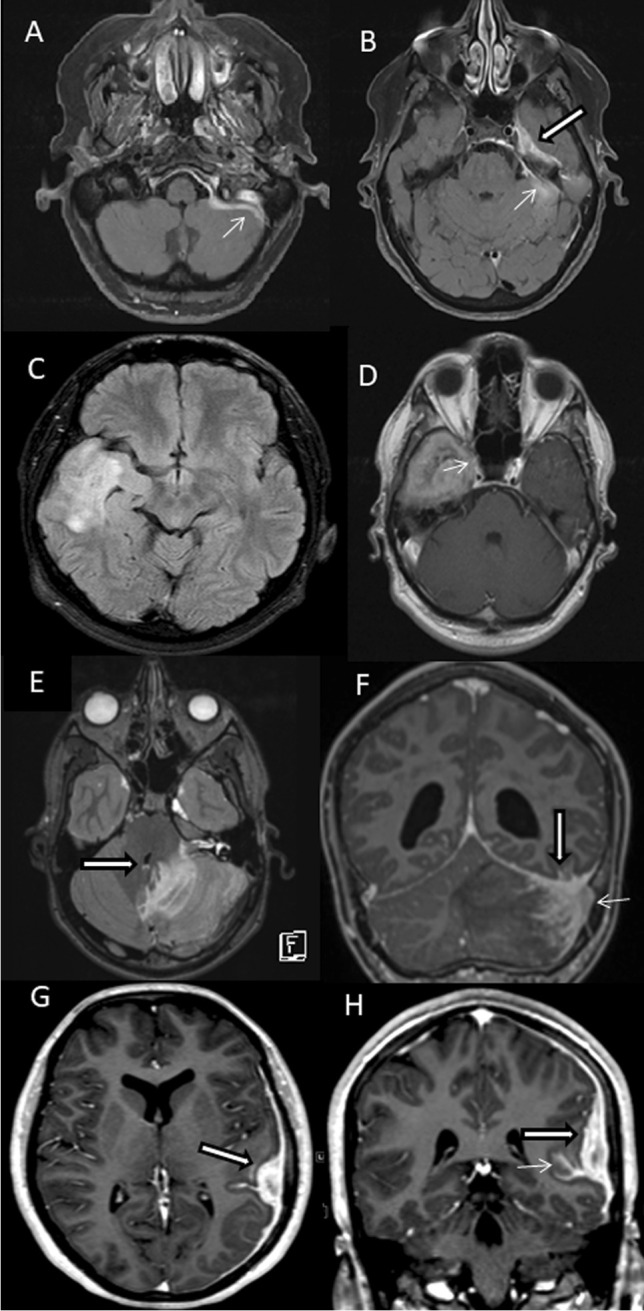
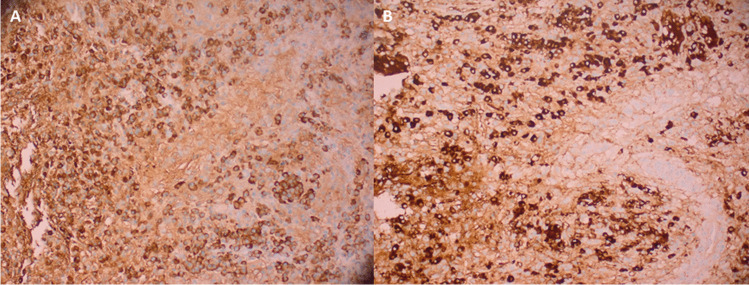
There were two adults and two adolescents (mean age 32 years; range 15 to 67 years). Two patients were male, and two were female. No history of disease was known in any of the patients. Clinical symptoms were epilepsy (n = 2), ataxia and nausea (n = 1), and facial nerve palsy (n = 1). MR imaging studies showed contrast enhancing lesions in the temporal region in two patients, and in the cerebellar region in the other two patients. Subtotal resection was performed in two instances and a biopsy via a suboccipital retrosigmoid approach was obtained in the other two patients. Histochemical and immunohistochemical investigations revealed an IgG 4 disease in all of these patients. Immunomodulatorry therapy led to clinical stability during follow-up of 5 years in all four cases.
The diagnosis of IgG4-related hypertrophic pachymeningitis is challenging, but is of great relevance as treatment differs significantly from other forms of pachymeningitis and a specific therapeutic approach may avoid long-term neurological complications. Our series contributes to a better clinical characterization of this rare disease.
IgG4 相关肥厚性脑脊膜炎是一种罕见的纤维炎症性疾病,可能导致硬脑膜局部或弥漫性增厚。对临床和影像学表现的误解很常见。临床表现取决于炎症病变的位置以及对神经结构的压迫导致的功能缺损。通常需要硬脑膜活检以明确诊断。免疫调节治疗被认为是首选治疗方法。
在 5 年期间,我们共发现 4 例 IgG4 相关肥厚性脑脊膜炎患者。评估了患者相关特征,包括年龄、术前检查、患者的症状和体征以及诊断程序。此外,还分析了手术治疗和 5 年随访结果。
患者年龄为 15 至 67 岁,平均 32 岁;2 例为男性,2 例为女性。所有患者均无已知疾病史。2 例患者的临床症状为癫痫,1 例患者为共济失调和恶心,1 例患者为面神经瘫痪。磁共振成像研究显示,2 例患者颞区有对比增强病变,另外 2 例患者小脑区有病变。2 例患者行次全切除术,2 例患者通过枕下入路行活检。组织化学和免疫组织化学研究显示所有患者均存在 IgG4 疾病。免疫调节治疗在 4 例患者的 5 年随访期间均导致临床稳定。
IgG4 相关肥厚性脑脊膜炎的诊断具有挑战性,但意义重大,因为治疗与其他形式的脑脊膜炎有很大的不同,特定的治疗方法可以避免长期的神经并发症。我们的研究结果有助于更好地了解这种罕见疾病的临床特征。