Guan Xiaowen, Meng Fanqi, Tan Hongwei, Wang Xiaoni, Li Jingjing, Wei Juanjuan, Ouyang Jin, Na Na
Key Laboratory of Radiopharmaceuticals, Ministry of Education, College of Chemistry, Beijing Normal University Beijing 100875 China
Chem Sci. 2022 Jul 5;13(29):8657-8666. doi: 10.1039/d2sc02488h. eCollection 2022 Jul 29.
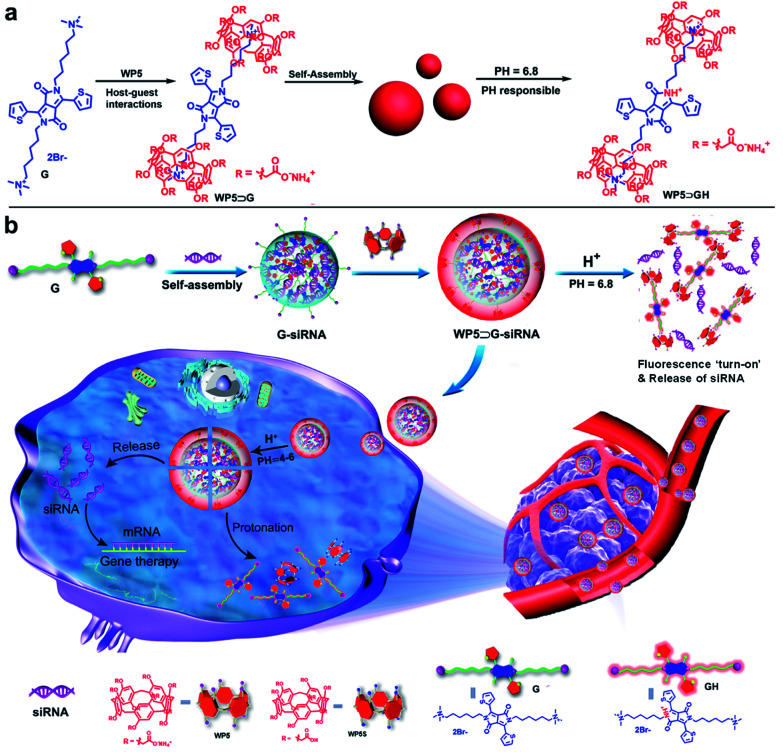
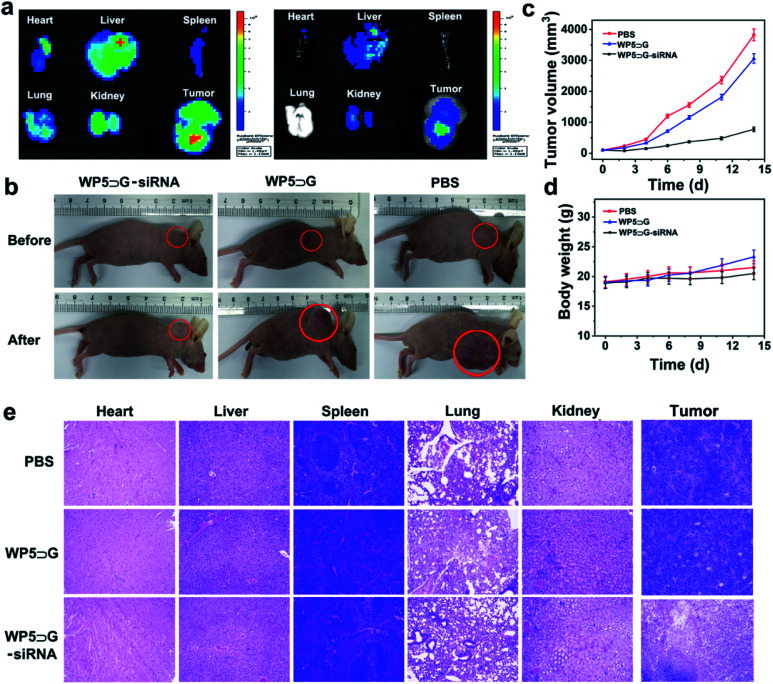
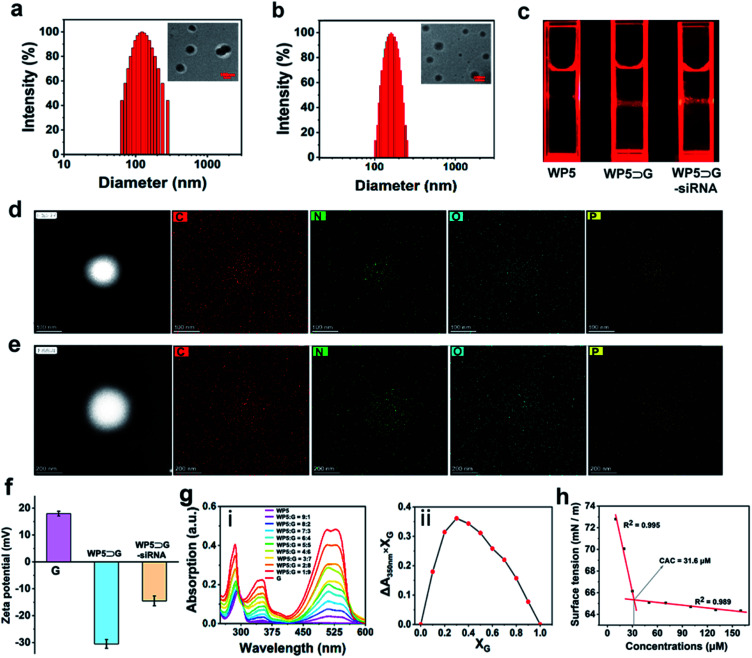
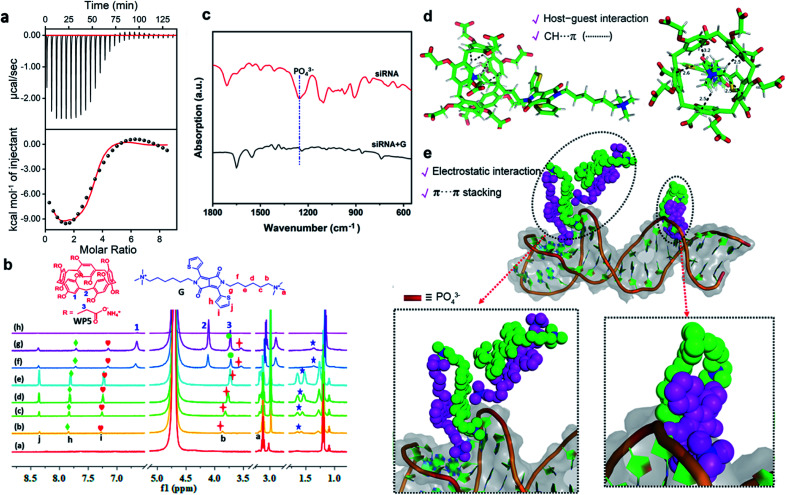
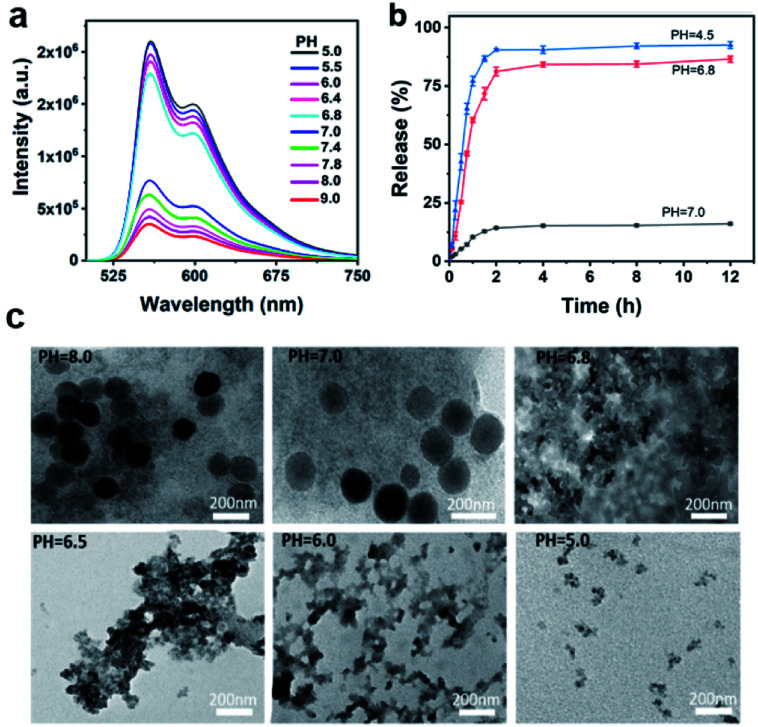
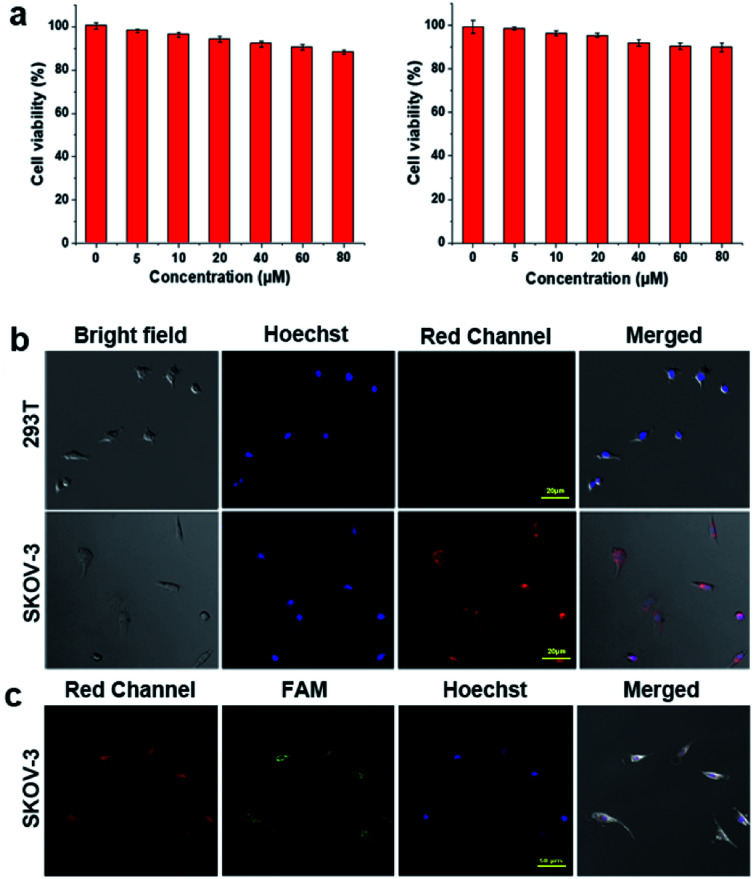
siRNA therapeutics are challenged by homogeneous and efficient loading, maintenance of biological activities, and precise, dynamic and monitorable site-release. Herein, supramolecular nanomaterials of WP5⊃G-siRNA were constructed by modular and hierarchical self-assembly of siRNA with guest (3,6-di(thiophen-2-yl)pyrrolo[3,4-]pyrrole-1,4(2,5)-dione derivative, G) and host (pillar[5]arene, WP5) molecules in the same system. Demonstrated by experiments and theoretical calculations, WP5⊃G-siRNA was constructed comprehensive weak interactions including electrostatic, hydrophobic-hydrophilic, host-guest and π-π interactions. Therefore, siRNAs were efficiently loaded, maintaining good stability, bioactivities and biocompatibilities. At pH 6.8, G was protonated to give weak acidic-responsive "turn-on" fluorescent signals, which realized the precise location of cancer sites. This triggered a subsequent delivery and a dynamic release of siRNA in cancer cells under acidic conditions for the entire collapse of WP5⊃G-siRNA by the protonation of both WP5 and G. By both in vitro and experiments, precise and visualized delivery to cancer sites was achieved to exhibit effective tumour inhibition. This provided an efficient and soft strategy of siRNA therapies and expanded the application of supramolecular nanomaterials in diagnosis and treatment.
小干扰RNA(siRNA)疗法面临着均匀高效负载、生物活性维持以及精确、动态且可监测的位点释放等挑战。在此,通过在同一体系中使小干扰RNA与客体(3,6-二(噻吩-2-基)吡咯并[3,4-]吡咯-1,4(2,5)-二酮衍生物,G)和主体(柱[5]芳烃,WP5)分子进行模块化和分级自组装,构建了WP5⊃G-siRNA超分子纳米材料。实验和理论计算表明,WP5⊃G-siRNA是通过包括静电、疏水-亲水、主客体和π-π相互作用在内的综合弱相互作用构建而成。因此,小干扰RNA被有效负载,保持了良好的稳定性、生物活性和生物相容性。在pH 6.8时,G质子化产生弱酸性响应的“开启”荧光信号,实现了癌症位点的精确定位。这引发了随后在酸性条件下癌细胞中小干扰RNA的递送和动态释放,因为WP5和G的质子化导致WP5⊃G-siRNA整体坍塌。通过体外和体内实验,实现了对癌症位点的精确可视化递送,以显示有效的肿瘤抑制作用。这提供了一种高效且温和的小干扰RNA治疗策略,并扩展了超分子纳米材料在诊断和治疗中的应用。