Soheilifar Mohammad Hasan, Pornour Majid, Saidijam Massoud, Najafi Rezvan, Azizi Jalilian Farid, Keshmiri Neghab Hoda, Amini Razieh
Research Center for Molecular Medicine, School of Medicine, Hamadan University of Medical Sciences, Hamadan, 6517838678, Iran.
Department of Photo Healing and Regeneration, Medical Laser Research Center, Yara Institute, ACECR, Tehran, 1315795613, Iran.
Bioimpacts. 2022;12(4):349-358. doi: 10.34172/bi.2021.23571. Epub 2021 Nov 3.
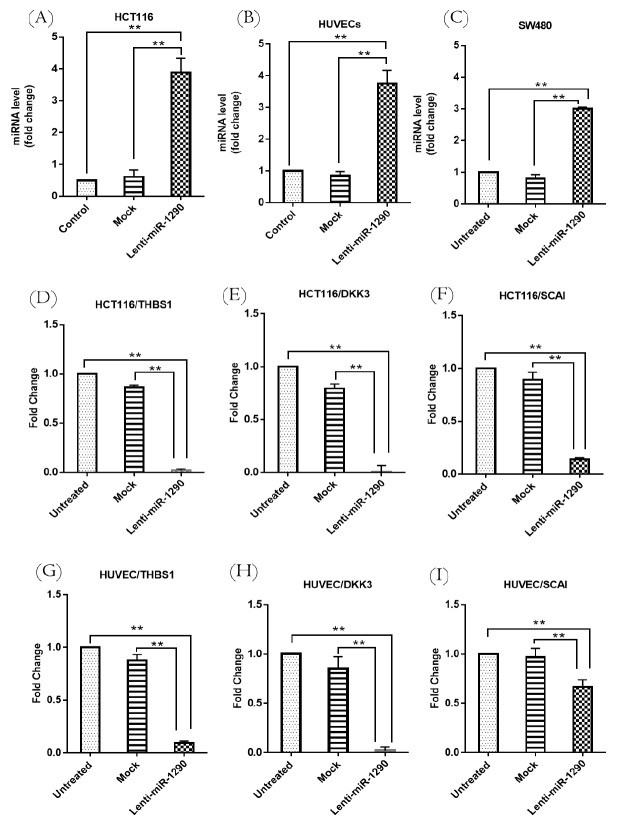
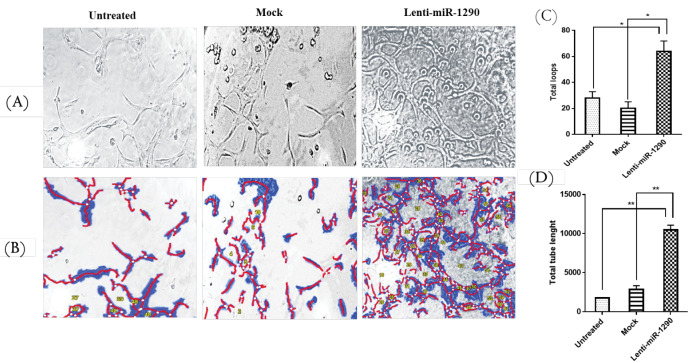
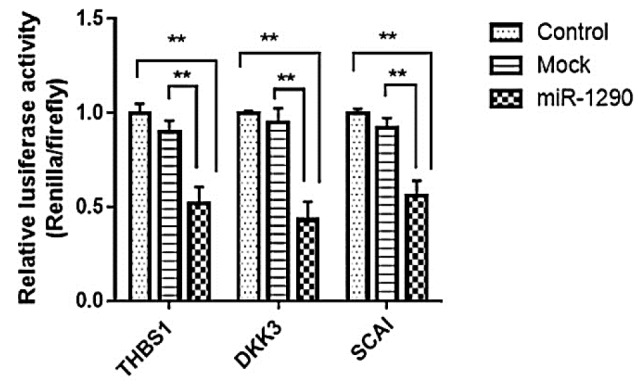
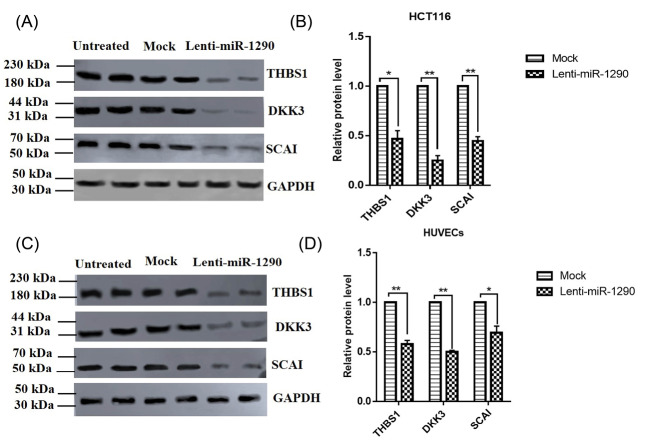
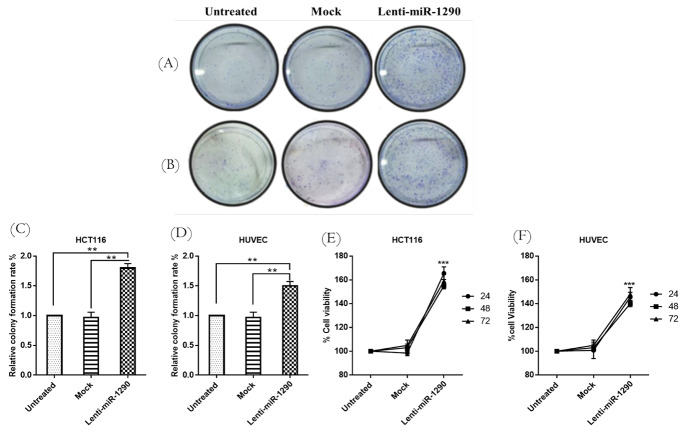
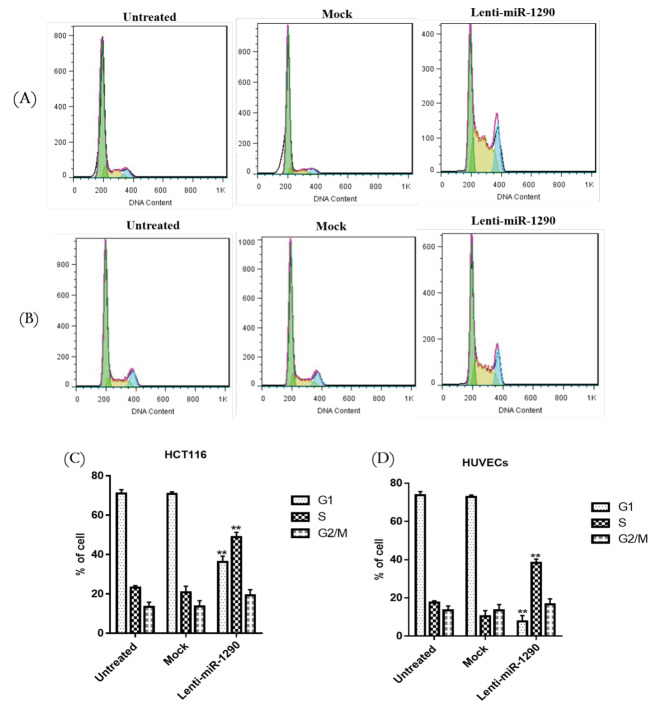
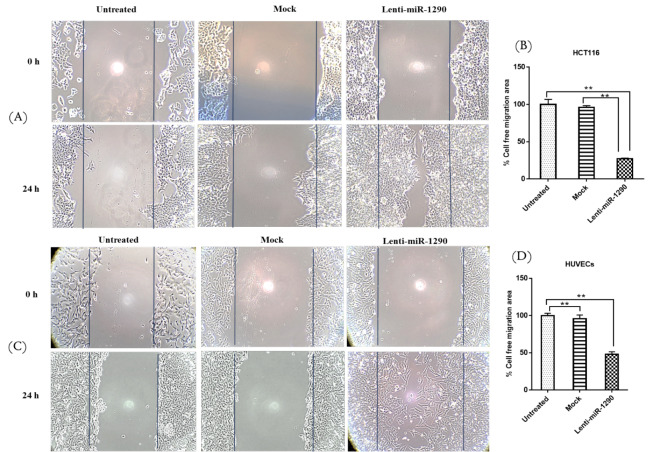
Colorectal cancer (CRC) is the third most common cancer in the world with high mortality, hence, understanding the molecular mechanisms involved in the tumor progression are important for CRC diagnosis and treatment. MicroRNAs (miRNAs) are key gene expression regulators that can function as tumor suppressors or oncogenes in tumor cells, and modulate angiogenesis as a critical process in tumor metastasis. MiR-1290 has been demonstrated as an onco-miRNA in various types of cancer, however, the role of miR-1290 in CRC is not fully understood. This study aimed to investigate the oncogenic and angiogenic potential of miR-1290 in CRC. Lenti-miR-1290 was transduced into HCT116, SW480, and human umbilical vein endothelial cells (HUVECs). By bioinformatics analysis, we identified thrombospondin 1 (THBS1) as a novel predicted target for miR-1290. Quantitative real-time PCR, western blotting, and luciferase reporter assay were used to demonstrate suppression of miR-1290 target genes including THBS1, Dickkopf Wnt signaling pathway inhibitor 3 (DKK3), and suppressor of cancer cell invasion (SCAI) in HCT116 and HUVECs. Cell cycle analysis, proliferation, migration and, tube formation were determined by flow cytometry, MTT, wound healing, and tube formation assays, respectively. MiR-1290 significantly decreased the expression of THBS1, DKK3, and SCAI. We demonstrated that miR-1290 enhanced proliferation, migration, and angiogenesis partially through suppression of THBS1, DKK3, and SCAI in CRC. These results suggest a novel function of miR-1290 which may contribute to tumorigenesis and angiogenesis in CRC.
结直肠癌(CRC)是全球第三大常见癌症,死亡率很高,因此,了解肿瘤进展所涉及的分子机制对于CRC的诊断和治疗至关重要。微小RNA(miRNA)是关键的基因表达调节因子,在肿瘤细胞中可作为肿瘤抑制因子或癌基因发挥作用,并调节血管生成这一肿瘤转移中的关键过程。MiR-1290已被证明在多种类型的癌症中是一种致癌miRNA,然而,miR-1290在CRC中的作用尚未完全明确。本研究旨在探讨miR-1290在CRC中的致癌和血管生成潜力。将慢病毒载体介导的miR-1290转导至HCT116、SW480和人脐静脉内皮细胞(HUVEC)中。通过生物信息学分析,我们确定血小板反应蛋白1(THBS1)是miR-1290的一个新的预测靶点。采用定量实时PCR、蛋白质印迹法和荧光素酶报告基因检测法来证实miR-1290对HCT116和HUVEC中包括THBS1、Dickkopf Wnt信号通路抑制因子3(DKK3)和癌细胞侵袭抑制因子(SCAI)在内的靶基因的抑制作用。分别通过流式细胞术、MTT法、伤口愈合实验和管腔形成实验测定细胞周期分析、增殖、迁移和管腔形成情况。MiR-1290显著降低了THBS1、DKK3和SCAI的表达。我们证明miR-1290在CRC中部分通过抑制THBS1、DKK3和SCAI来增强增殖、迁移和血管生成。这些结果提示了miR-1290的一种新功能,其可能有助于CRC的肿瘤发生和血管生成。