Neurelis, Inc., San Diego, California, USA.
Thomas Jefferson University, Philadelphia, Pennsylvania, USA.
Epilepsia. 2022 Oct;63(10):2684-2693. doi: 10.1111/epi.17385. Epub 2022 Aug 17.
Intermittent rescue therapy may be used for seizure clusters, which are clinical emergencies that may persist ≥24 h and increase risk of status epilepticus, emergency room visits, and reduced quality of life for patients with epilepsy. Beyond effectiveness for aborting seizure clusters, no data exist on how intermittent rescue therapy may impact the long-term natural course of seizure clusters. This novel analysis explores SEIzure interVAL (SEIVAL; time between seizure clusters) in patients from a long-term safety study of diazepam nasal spray (Valtoco) to assess SEIVAL changes with intermittent rescue therapy across time.
Patients were aged 6-65 years. Age- and weight-based doses of diazepam nasal spray were administered during a 12-month treatment period with an optional follow-up period. SEIVAL was evaluated in patients receiving two or more doses of diazepam nasal spray using 90-day periods.
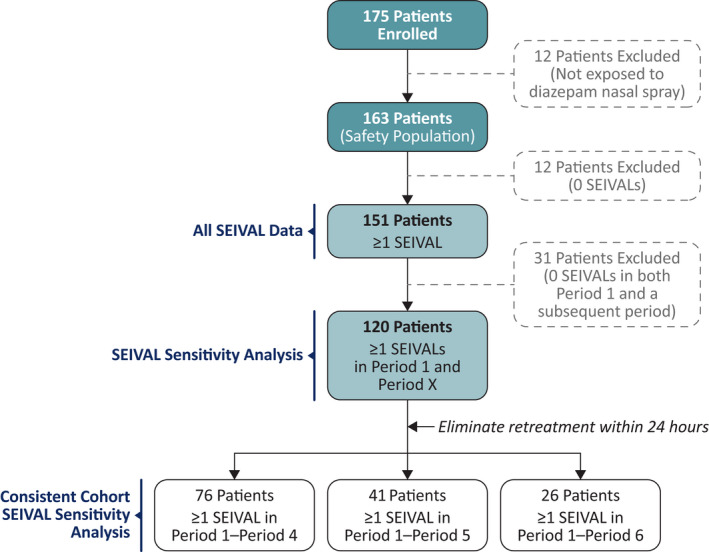
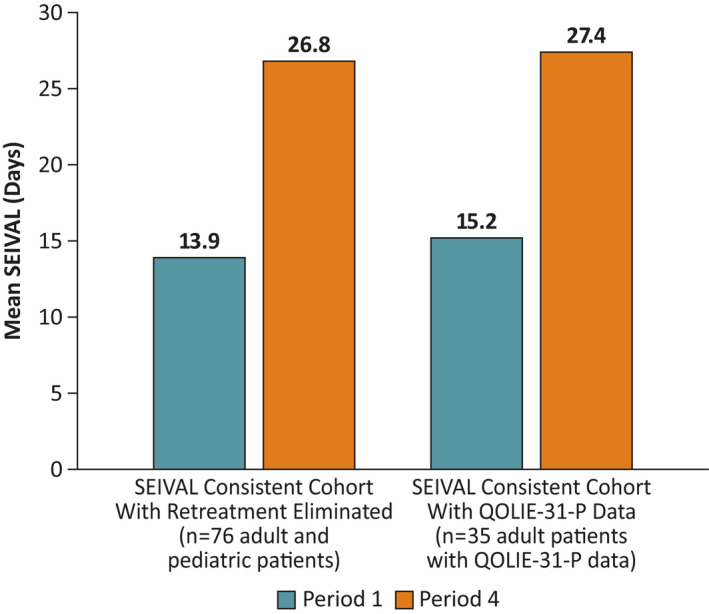
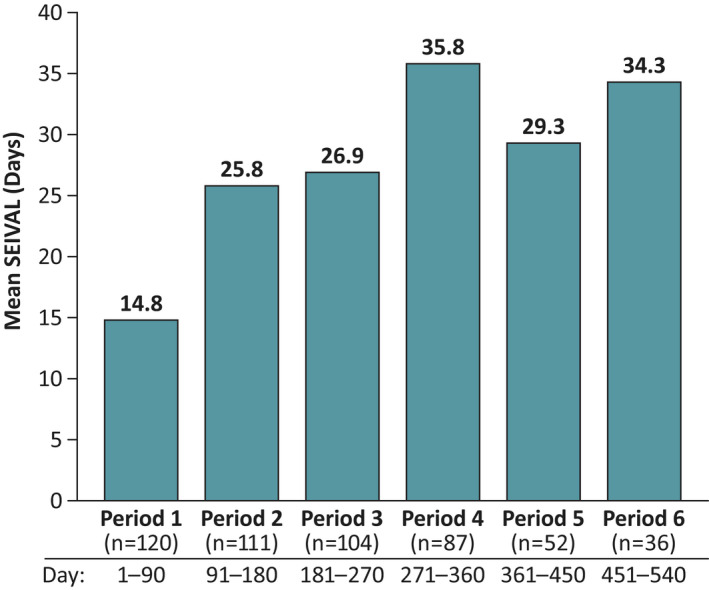
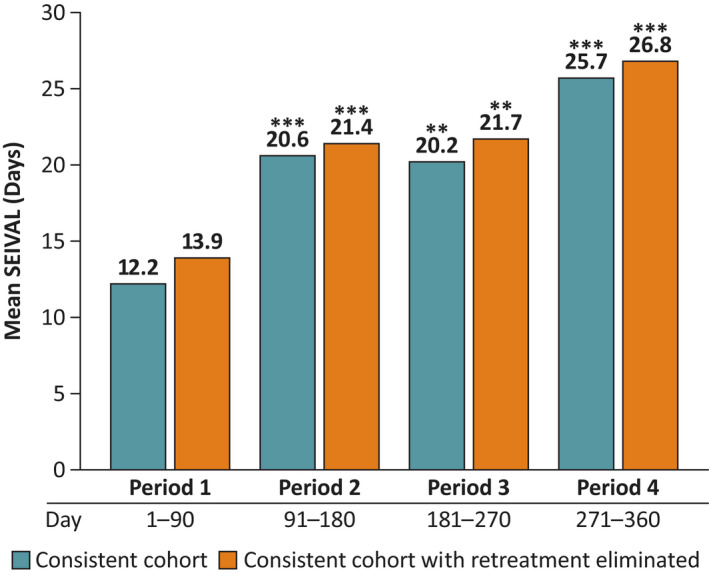
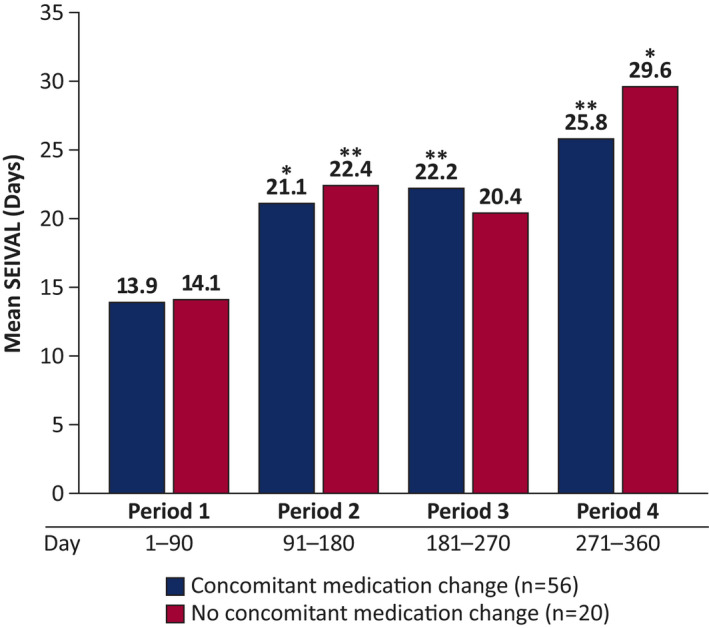
Of 163 treated patients, 151 had one or more SEIVALs. One hundred twenty had SEIVALs in Period 1 and one or more other periods. An increase in SEIVAL was noted from Period 1 compared with all subsequent periods (p ≤ .001). A consistent cohort (n = 76) had one or more SEIVALs in each of Periods 1-4 (360 days); mean SEIVALs increased significantly (p < .01) from 12.2 days (Period 1) to 25.7 days (Period 4). Similar SEIVAL patterns occurred when repeat doses within a seizure cluster were eliminated and irrespective of age group, treatment duration, and change to concomitant medications. In adults, Quality of Life in Epilepsy scores were maintained with increased SEIVALs.
Across 12 months, increases in SEIVAL were demonstrated in patients using diazepam nasal spray for seizure cluster treatment in a phase 3 safety study. Increased time between seizure clusters may reflect a previously unrecognized beneficial effect of intermittent rescue therapy. These results generate a range of biological and behavioral hypotheses and warrant exploration of the impact of intermittent rescue therapy.
发作群集可能需要间歇抢救治疗,这是一种临床急症,可能持续≥24 小时,并增加癫痫患者癫痫持续状态、急诊就诊和生活质量下降的风险。除了中止发作群集的有效性外,尚无数据表明间歇抢救治疗如何影响发作群集的长期自然病程。这项新的分析探讨了 diazepam 鼻喷剂(Valtoco)长期安全性研究中患者的 SEIzure interVAL(SEIVAL;发作群集之间的时间),以评估间歇抢救治疗随时间推移对 SEIVAL 变化的影响。
患者年龄在 6-65 岁之间。在 12 个月的治疗期间,根据年龄和体重给予 diazepam 鼻喷剂剂量,随后可选进行随访期。在接受两次或更多次 diazepam 鼻喷剂治疗的患者中,使用 90 天的时间段评估 SEIVAL。
在 163 名接受治疗的患者中,151 名患者有一次或多次 SEIVAL。120 名患者在第 1 期和 1 个或多个其他期有 SEIVAL。与所有后续期相比,第 1 期的 SEIVAL 增加(p≤.001)。一个持续的队列(n=76)在第 1-4 期(360 天)中有一次或多次 SEIVAL;第 4 期 SEIVAL 明显增加(p<.01),从第 1 期的 12.2 天增加到第 4 期的 25.7 天。当在一个发作群集中重复剂量被消除时,以及无论年龄组、治疗持续时间和伴随药物的变化如何,都出现了类似的 SEIVAL 模式。在成人中,随着 SEIVAL 的增加,癫痫生活质量评分得到维持。
在一项 3 期安全性研究中,使用 diazepam 鼻喷剂治疗发作群集的患者在 12 个月期间显示出 SEIVAL 的增加。发作群集之间时间的增加可能反映了间歇抢救治疗以前未被认识到的有益作用。这些结果产生了一系列生物学和行为学假设,需要进一步探索间歇抢救治疗的影响。