Center for Neuropathology and Prion Research, University Hospital Munich, Ludwig-Maximilians-University, Feodor-Lynen-Str. 23, 81377, Munich, Germany.
German Center for Neurodegenerative Diseases, Feodor-Lynen-Str. 17, 81377, Munich, Germany.
Acta Neuropathol. 2022 Oct;144(4):615-635. doi: 10.1007/s00401-022-02483-8. Epub 2022 Aug 17.
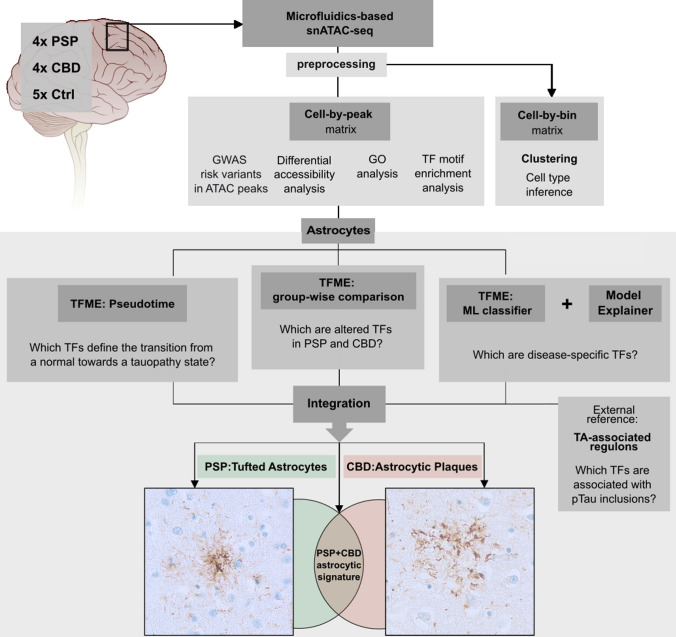
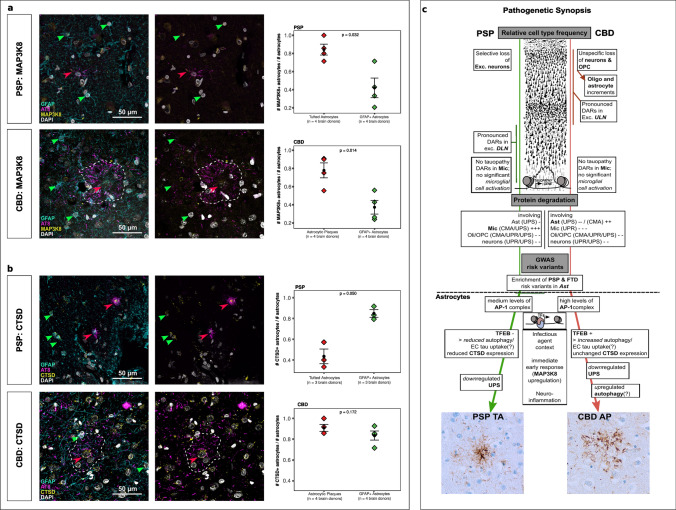
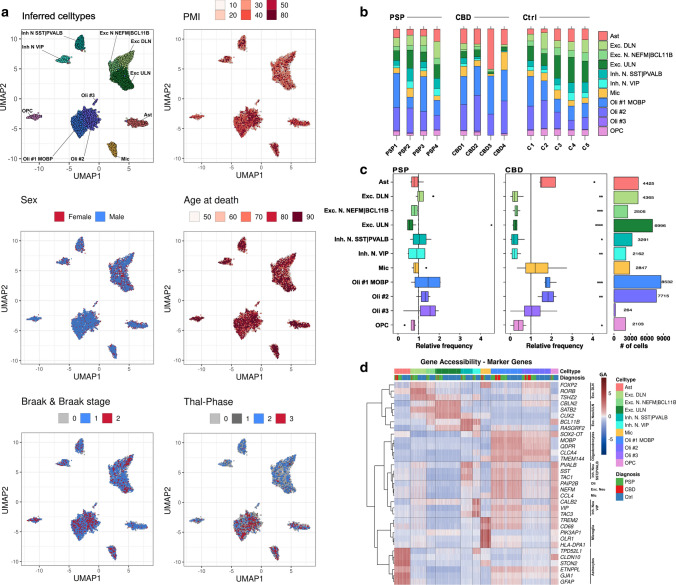
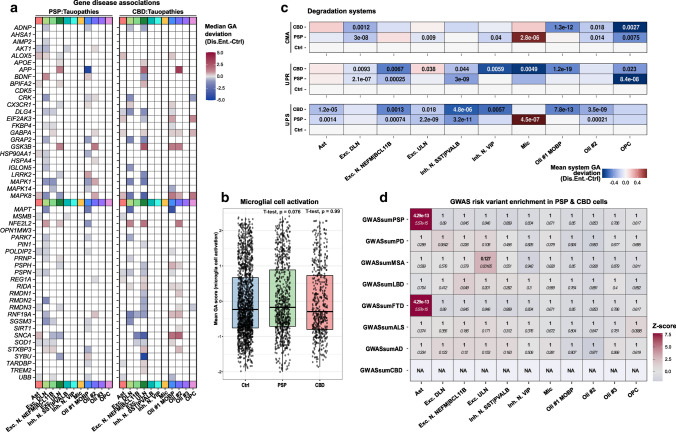
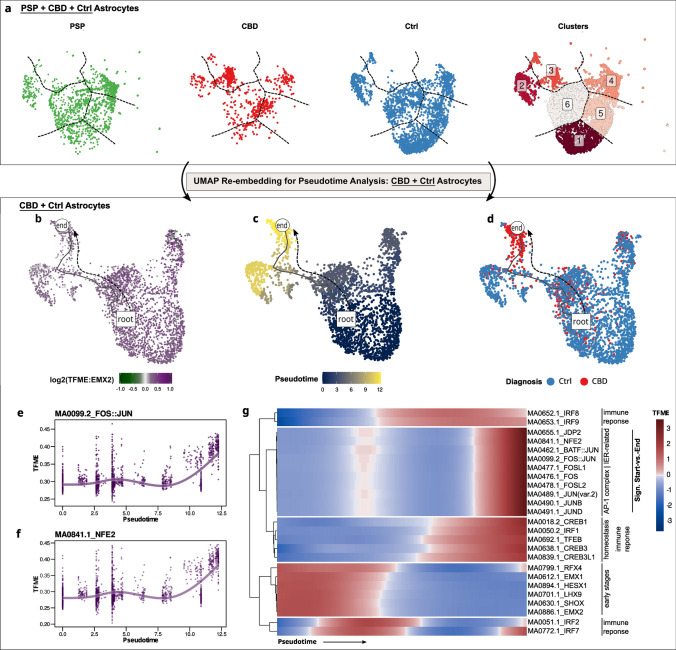
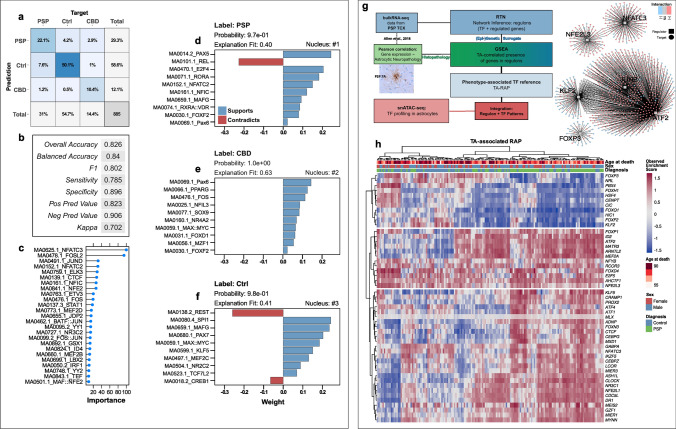
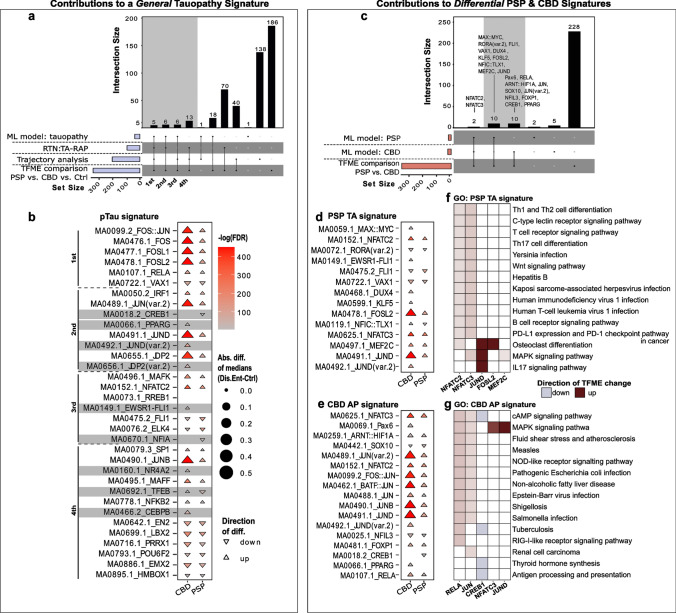
Tauopathies such as progressive supranuclear palsy (PSP) and corticobasal degeneration (CBD) exhibit characteristic neuronal and glial inclusions of hyperphosphorylated Tau (pTau). Although the astrocytic pTau phenotype upon neuropathological examination is the most guiding feature in distinguishing both diseases, regulatory mechanisms controlling their transitions into disease-specific states are poorly understood to date. Here, we provide accessible chromatin data of more than 45,000 single nuclei isolated from the frontal cortex of PSP, CBD, and control individuals. We found a strong association of disease-relevant molecular changes with astrocytes and demonstrate that tauopathy-relevant genetic risk variants are tightly linked to astrocytic chromatin accessibility profiles in the brains of PSP and CBD patients. Unlike the established pathogenesis in the secondary tauopathy Alzheimer disease, microglial alterations were relatively sparse. Transcription factor (TF) motif enrichments in pseudotime as well as modeling of the astrocytic TF interplay suggested a common pTau signature for CBD and PSP that is reminiscent of an inflammatory immediate-early response. Nonetheless, machine learning models also predicted discriminatory features, and we observed marked differences in molecular entities related to protein homeostasis between both diseases. Predicted TF involvement was supported by immunofluorescence analyses in postmortem brain tissue for their highly correlated target genes. Collectively, our data expand the current knowledge on risk gene involvement (e.g., MAPT, MAPK8, and NFE2L2) and molecular pathways leading to the phenotypic changes associated with CBD and PSP.
tau 病,如进行性核上性麻痹(PSP)和皮质基底节变性(CBD),表现出特征性的神经元和神经胶质过度磷酸化 tau(pTau)包含物。尽管在神经病理学检查中星形胶质细胞的 pTau 表型是区分这两种疾病的最具指导意义的特征,但迄今为止,控制它们向疾病特异性状态转变的调节机制仍知之甚少。在这里,我们提供了超过 45000 个从 PSP、CBD 和对照个体的额皮质中分离的单个核的可及染色质数据。我们发现疾病相关的分子变化与星形胶质细胞有很强的关联,并证明 tau 病相关的遗传风险变体与 PSP 和 CBD 患者大脑中的星形胶质细胞染色质可及性图谱紧密相关。与阿尔茨海默病等继发性 tau 病的既定发病机制不同,小胶质细胞的改变相对较少。在伪时间中的转录因子(TF)基序富集以及星形胶质细胞 TF 相互作用的建模表明,CBD 和 PSP 具有共同的 pTau 特征,类似于炎症的即刻早期反应。尽管如此,机器学习模型也预测了具有区分度的特征,并且我们观察到两种疾病之间与蛋白质稳态相关的分子实体存在显著差异。对死后脑组织进行免疫荧光分析,证实了预测 TF 的参与及其高度相关的靶基因。总的来说,我们的数据扩展了与 CBD 和 PSP 相关的表型变化的风险基因参与(例如 MAPT、MAPK8 和 NFE2L2)和分子途径的现有知识。