Department of Health Psychology, University of Groningen, University Medical Center Groningen, Groningen, The Netherlands.
Centre for Psycho-Oncology, Scientific Research Department, Helen Dowling Institute, De Bilt, The Netherlands.
J Cancer Surviv. 2024 Apr;18(2):479-488. doi: 10.1007/s11764-022-01246-4. Epub 2022 Aug 17.
The majority of depressed cancer survivors do not receive psychological care, possibly because offered care does not align with their experiences and preferences. We examined (1) which depressive symptoms cancer survivors would like to receive psychological care for; (2) how distinct depressive symptoms are related to each other in the contemporaneous and temporal network of depressive symptoms; and (3) whether survivors' care needs correspond to the interconnectedness of these specific symptoms.
Fifty-two cancer survivors suffering from at least mild depressive symptoms and were not receiving psychological care filled out a baseline questionnaire about their care needs for distinct depressive symptoms, followed by ecological momentary assessments (EMA) assessing depressive symptoms (14 days, five times a day). Multi-level vector autoregression analysis was used to estimate associations between distinct depressive symptoms as well as their centrality within the network.
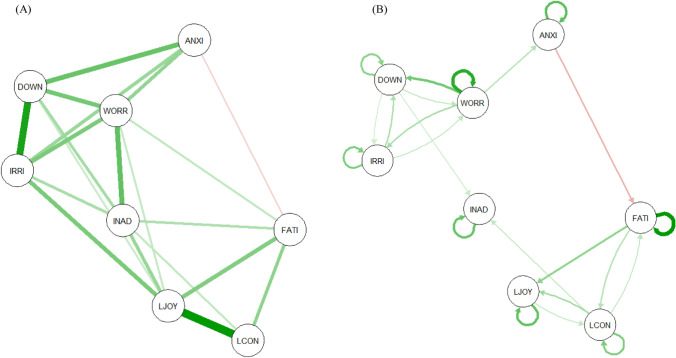
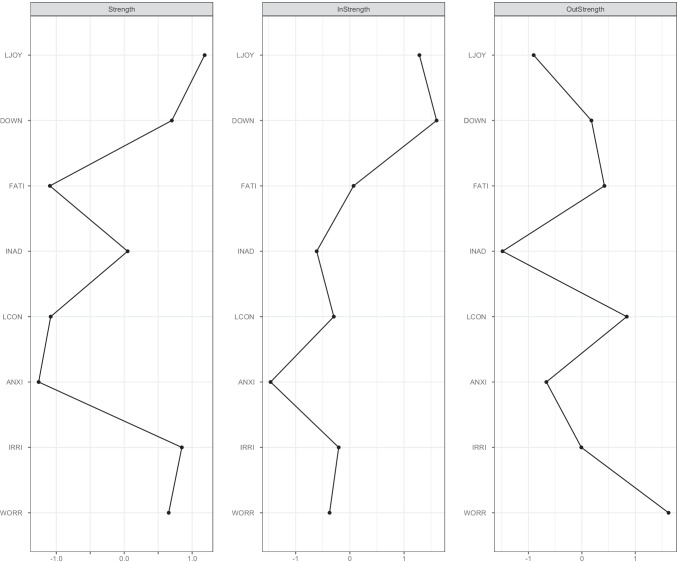
Cancer survivors most strongly preferred to receive care for fatigue, feeling down, little enjoyment, and sleep problems. Fatigue, together with worry and lack of concentration, most strongly predicted the onset of other symptoms. Little enjoyment and feeling down were two of the most central symptoms (i.e., strongly connected to other symptoms) in the contemporaneous network and were most strongly influenced by other symptoms in the temporal network.
Clinicians can offer specific interventions that target fatigue, as these played an important role in the onset of symptoms and would align with survivors' needs.
Offering such symptom-specific care may increase the uptake of psychological interventions in cancer survivors.
大多数患有抑郁症的癌症幸存者未接受心理护理,这可能是因为所提供的护理与他们的经历和偏好不符。我们研究了(1)癌症幸存者希望接受哪些抑郁症状的心理护理;(2)在抑郁症状的同期和时间网络中,不同的抑郁症状如何相互关联;(3)幸存者的护理需求是否与这些特定症状的相互关联性相符。
52 名患有至少轻度抑郁症状且未接受心理护理的癌症幸存者填写了一份关于他们对不同抑郁症状的护理需求的基线问卷,随后进行了 14 天、每天 5 次的生态瞬时评估(EMA)来评估抑郁症状。多层次向量自回归分析用于估计不同抑郁症状之间以及它们在网络中的中心性之间的关联。
癌症幸存者最希望接受针对疲劳、情绪低落、缺乏乐趣和睡眠问题的护理。疲劳与担忧和注意力不集中一起,最能预测其他症状的发作。缺乏乐趣和情绪低落是同期网络中两个最中心的症状(即与其他症状的联系最紧密),也是时间网络中受其他症状影响最大的症状。
临床医生可以提供针对疲劳的特定干预措施,因为疲劳在症状发作中起着重要作用,并且符合幸存者的需求。
提供这种针对特定症状的护理可能会增加癌症幸存者接受心理干预的可能性。