School of Natural Sciences, Faculty of Science and Engineering, Macquarie University, North Ryde, New South Wales, Australia.
Department of Biological Sciences, National University of Singapore, Singapore City, Singapore.
Ecol Lett. 2022 Oct;25(10):2269-2288. doi: 10.1111/ele.14084. Epub 2022 Aug 17.
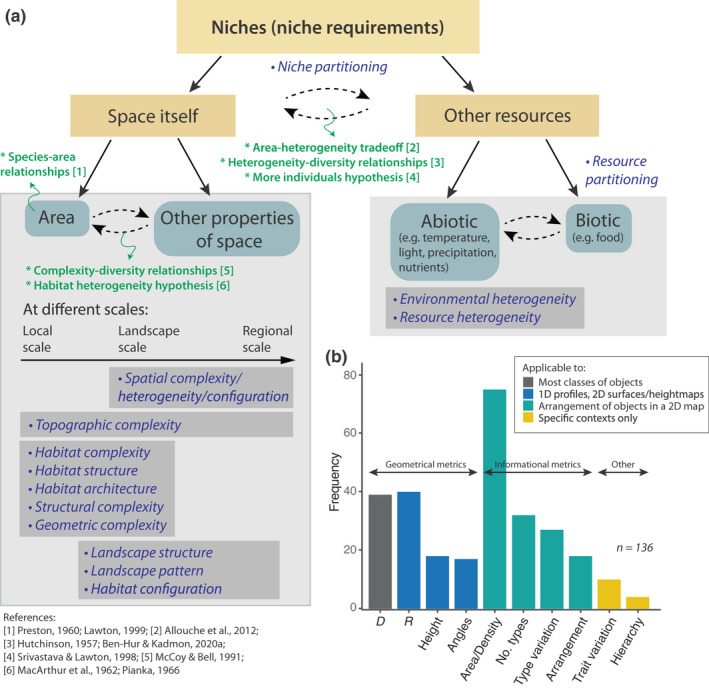
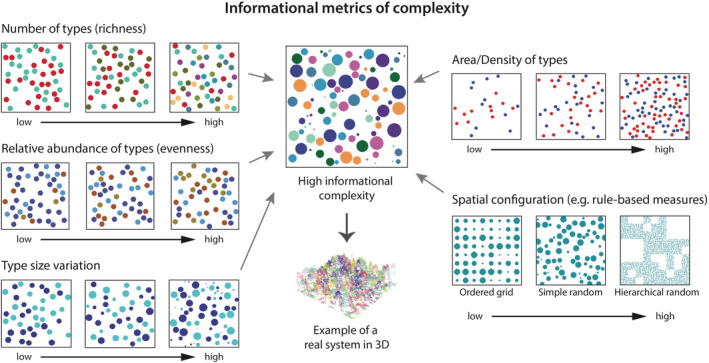
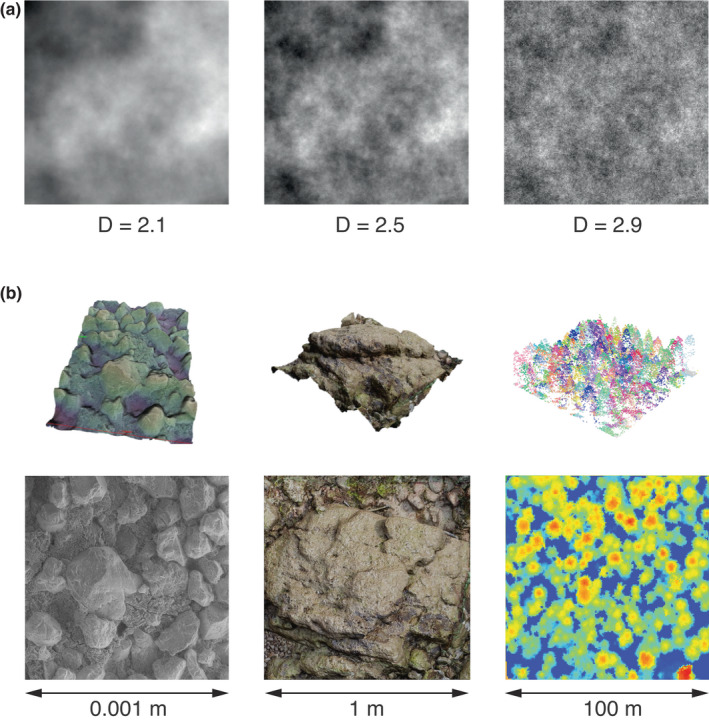
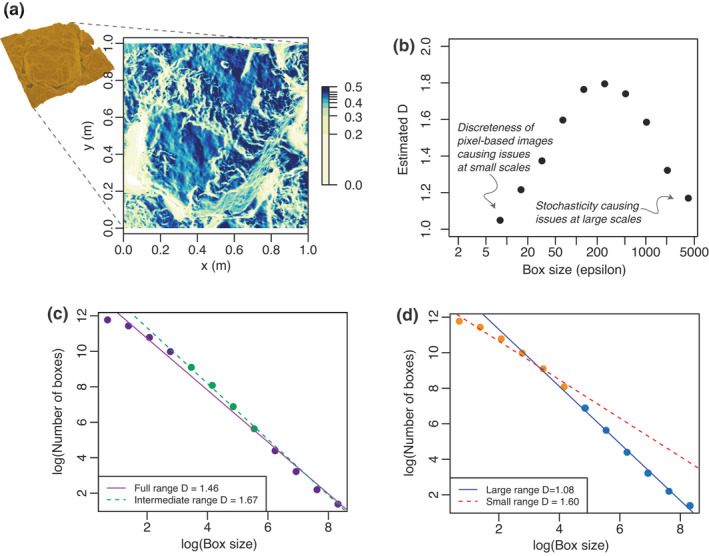
Habitat complexity has been considered a key driver of biodiversity and other ecological phenomena for nearly a century. However, there is still no consensus over the definition of complexity or how to measure it. Up-to-date and clear guidance on measuring complexity is urgently needed, particularly given the rise of remote sensing and advent of technologies that allow environments to be scanned at unprecedented spatial extents and resolutions. Here we review how complexity is measured in ecology. We provide a framework for metrics of habitat complexity, and for the related concept of spatial heterogeneity. We focus on the two most commonly used complexity metrics in ecology: fractal dimension and rugosity. We discuss the pros and cons of these metrics using practical examples from our own empirical data and from simulations. Fractal dimension is particularly widely used, and we provide a critical examination of it drawing on research from other scientific fields. We also discuss informational metrics of complexity and their potential benefits. We chart a path forward for research on measuring habitat complexity by presenting, as a guide, sets of essential and desirable criteria that a metric of complexity should possess. Lastly, we discuss the applied significance of our review.
近一个世纪以来,生境复杂性一直被认为是生物多样性和其他生态现象的关键驱动因素。然而,对于复杂性的定义或如何衡量复杂性,仍然没有共识。鉴于遥感技术的兴起以及能够以前所未有的空间范围和分辨率扫描环境的技术的出现,迫切需要最新和明确的复杂性衡量标准。在这里,我们回顾了生态学中如何衡量复杂性。我们提供了生境复杂性度量和相关空间异质性概念的框架。我们重点介绍生态学中最常用的两种复杂性度量:分形维数和粗糙度。我们使用来自我们自己的经验数据和模拟的实际示例讨论了这些度量的优缺点。分形维数的使用尤其广泛,我们借鉴其他科学领域的研究对其进行了批判性的考察。我们还讨论了复杂性的信息度量及其潜在的好处。我们提出了一套复杂性度量应具备的基本和理想标准,为衡量生境复杂性的研究指明了前进的道路。最后,我们讨论了我们综述的应用意义。