School of Chemistry and Chemical Engineering, Beijing Institute of Technology, Beijing, 100081, PR China.
Technical University of Berlin, Müller-Breslau-Str. 10, D-10623, Berlin, Germany.
Nat Commun. 2022 Aug 17;13(1):4843. doi: 10.1038/s41467-022-32535-2.
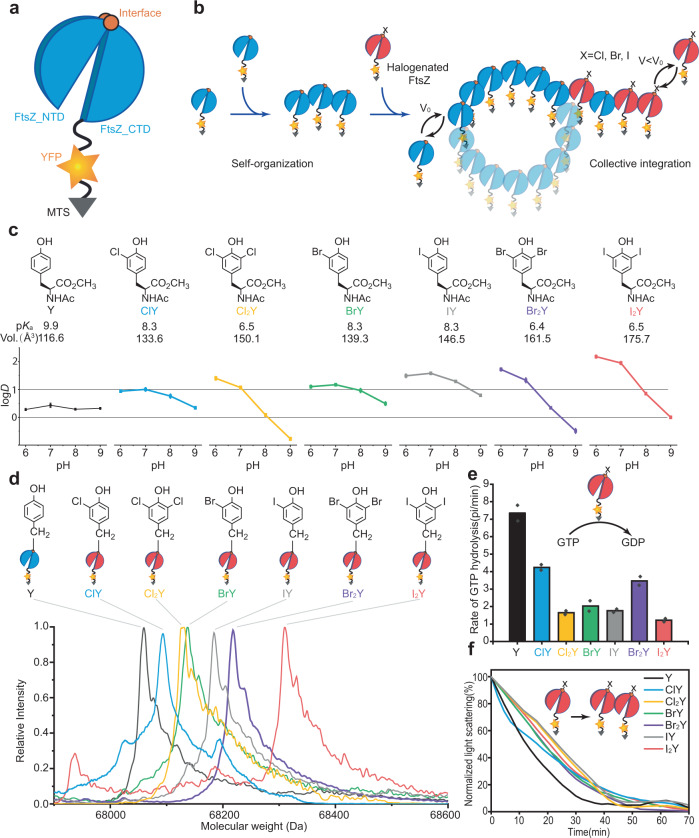
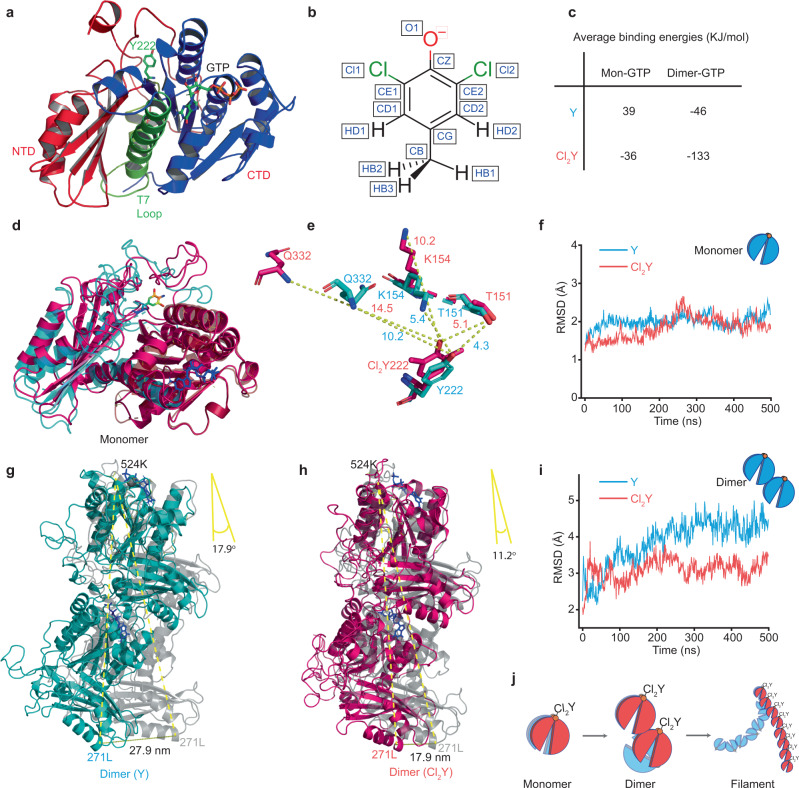
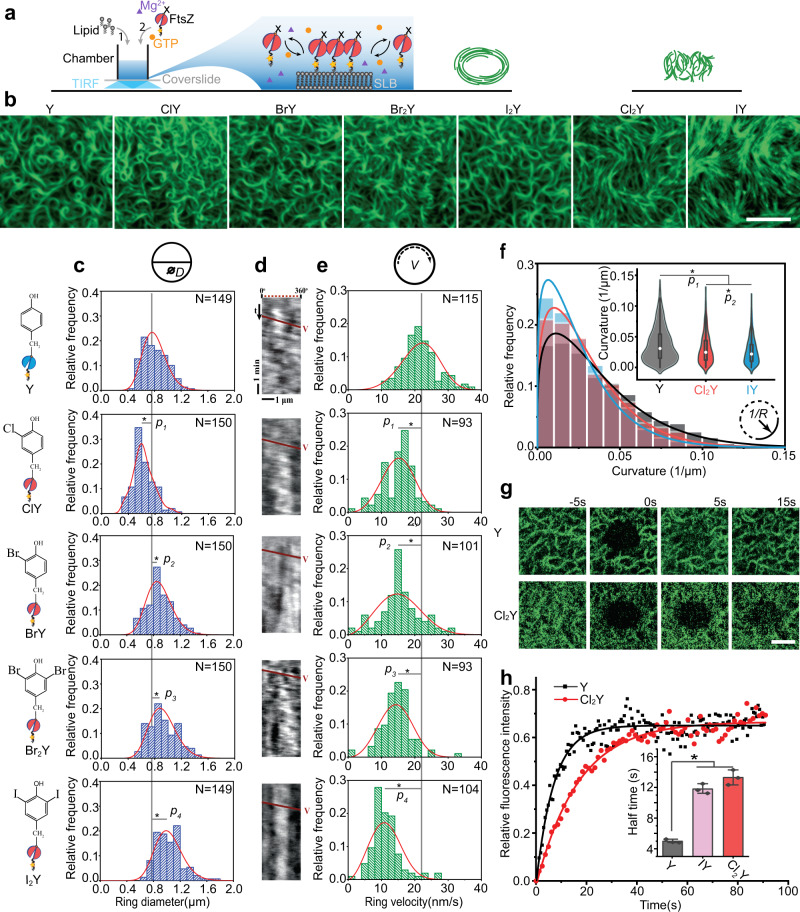
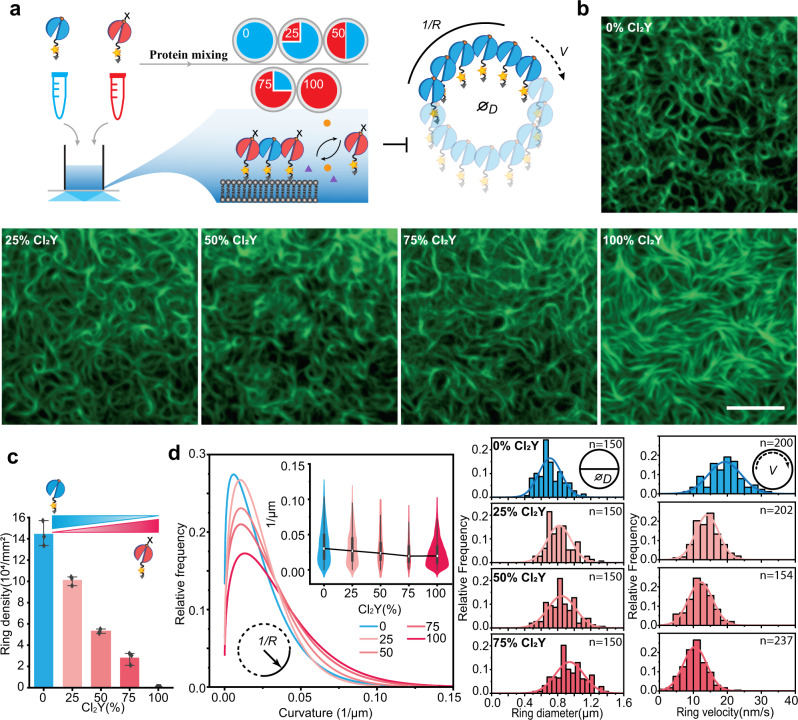
Protein halogenation is a common non-enzymatic post-translational modification contributing to aging, oxidative stress-related diseases and cancer. Here, we report a genetically encodable halogenation of tyrosine residues in a reconstituted prokaryotic filamentous cell-division protein (FtsZ) as a platform to elucidate the implications of halogenation that can be extrapolated to living systems of much higher complexity. We show how single halogenations can fine-tune protein structures and dynamics of FtsZ with subtle perturbations collectively amplified by the process of FtsZ self-organization. Based on experiments and theories, we have gained valuable insights into the mechanism of halogen influence. The bending of FtsZ structures occurs by affecting surface charges and internal domain distances and is reflected in the decline of GTPase activities by reducing GTP binding energy during polymerization. Our results point to a better understanding of the physiological and pathological effects of protein halogenation and may contribute to the development of potential diagnostic tools.
蛋白质卤化是一种常见的非酶翻译后修饰,与衰老、氧化应激相关疾病和癌症有关。在这里,我们报告了一种在重组原核丝状细胞分裂蛋白(FtsZ)中酪氨酸残基的遗传编码卤化,作为阐明卤化影响的平台,这些影响可以外推到更复杂的高等生物系统。我们展示了单个卤化如何通过 FtsZ 自组织过程中的细微扰动来微调 FtsZ 的蛋白质结构和动力学。基于实验和理论,我们深入了解了卤化物影响的机制。FtsZ 结构的弯曲是通过影响表面电荷和内部结构域距离来实现的,这反映在聚合过程中降低 GTP 结合能从而降低 GTP 酶活性。我们的结果表明,对蛋白质卤化的生理和病理影响有了更好的理解,这可能有助于开发潜在的诊断工具。