Pediatric Surgery Division, Department of Surgery, Faculty of Medicine, Public Health and Nursing, Universitas Gadjah Mada/Dr, Sardjito Hospital, Yogyakarta, 55281, Indonesia.
Department of Child Health, Faculty of Medicine, Public Health and Nursing, Universitas Gadjah Mada, UGM Academic Hospital, Yogyakarta, 55291, Indonesia.
Sci Rep. 2022 Aug 17;12(1):13911. doi: 10.1038/s41598-022-17846-0.
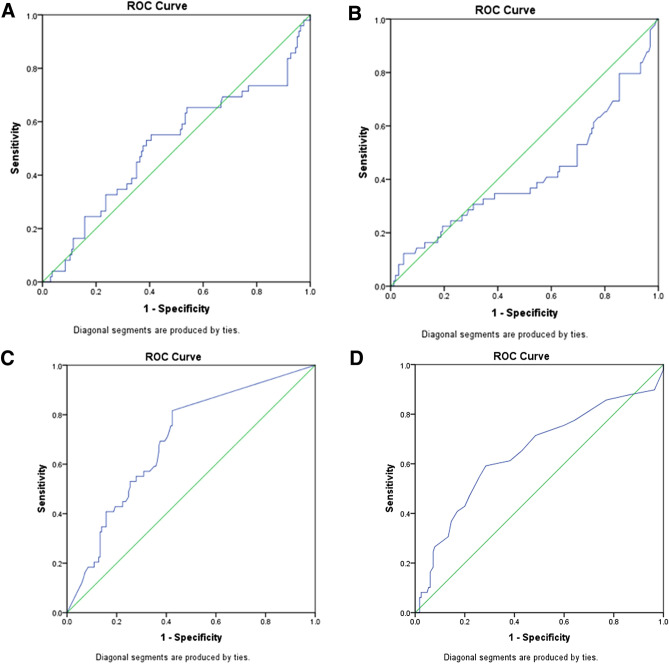
Necrotizing enterocolitis (NEC) is responsible for most morbidity and mortality in neonates. Early recognition of the clinical deterioration in newborns with NEC is essential to enhance the referral and management and potentially improve the outcomes. Here, we aimed to identify the prognostic factors and associate them with the clinical deterioration of preterm neonates with NEC. We analyzed the medical records of neonates with NEC admitted to our hospital from 2016 to 2021. We ascertained 214 neonates with NEC. The area under the receiver operating characteristic (ROC) curve and cut-off level of age at onset, C-reactive protein (CRP), leukocyte count, and platelet count for the clinical deterioration of preterm neonates with NEC was 0.644 and 10.5 days old, 0.694 and 4.5 mg/L, 0.513 and 12,200/mm, and 0.418 and 79,500/mm, respectively. Late-onset, history of blood transfusion, thrombocytopenia, and elevated CRP were significantly associated with the clinical deterioration of neonates with NEC (p = < 0.001, 0.017, 0.001, and < 0.001, respectively), while leukocytosis, gestational age, and birth weight were not (p = 0.073, 0.274, and 0.637, respectively). Multivariate analysis revealed that late-onset and elevated CRP were strongly associated with the clinical deterioration of neonates with NEC, with an odds ratio of 3.25 (95% CI = 1.49-7.09; p = 0.003) and 3.53 (95% CI = 1.57-7.95; p = 0.002), respectively. We reveal that late-onset and elevated CRP are the independent prognostic factor for the clinical deterioration of preterm neonates with NEC. Our findings suggest that we should closely monitor preterm neonates with NEC, particularly those with late-onset of the disease and those with an elevated CRP, to prevent further clinical deterioration and intervene earlier if necessary.
坏死性小肠结肠炎(NEC)是导致新生儿发病和死亡的主要原因。早期识别 NEC 新生儿的临床恶化对于提高转介和管理水平,并有可能改善预后至关重要。在这里,我们旨在确定预后因素,并将其与 NEC 早产儿的临床恶化相关联。我们分析了 2016 年至 2021 年我院收治的 NEC 新生儿的病历。我们确定了 214 例 NEC 新生儿。发病年龄、C 反应蛋白(CRP)、白细胞计数和血小板计数的受试者工作特征(ROC)曲线下面积和截断值,对于 NEC 早产儿临床恶化的预测价值分别为 0.644 和 10.5 天、0.694 和 4.5mg/L、0.513 和 12,200/mm 和 0.418 和 79,500/mm。晚发型、输血史、血小板减少症和 CRP 升高与 NEC 新生儿的临床恶化显著相关(p<0.001、0.017、0.001 和<0.001),而白细胞增多症、胎龄和出生体重则没有(p=0.073、0.274 和 0.637)。多变量分析显示,晚发型和 CRP 升高与 NEC 新生儿的临床恶化密切相关,其优势比分别为 3.25(95%可信区间为 1.49-7.09;p=0.003)和 3.53(95%可信区间为 1.57-7.95;p=0.002)。我们揭示了晚发型和 CRP 升高是 NEC 早产儿临床恶化的独立预后因素。我们的研究结果表明,我们应该密切监测 NEC 早产儿,特别是那些晚发型疾病和 CRP 升高的患儿,以防止病情进一步恶化,并在必要时尽早干预。