Department of Neurosurgery, First Hospital of Jilin University, Changchun 130021, China.
Institute of Translational Medicine, First Hospital of Jilin University, Changchun 130021, China.
Biomed Res Int. 2022 Aug 8;2022:5079153. doi: 10.1155/2022/5079153. eCollection 2022.
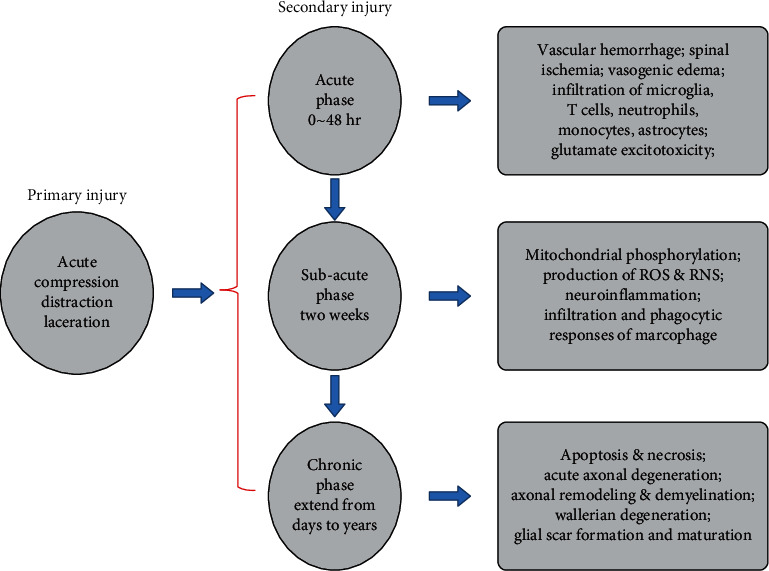
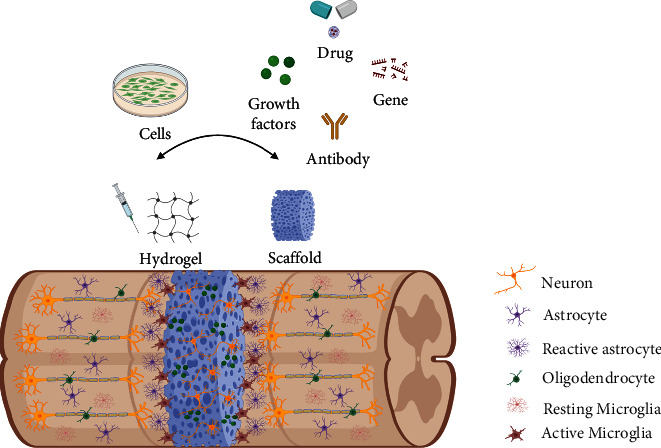
Spinal cord injury (SCI) is a devastating central nervous system disease caused by accidental events, resulting in loss of sensory and motor function. Considering the multiple effects of primary and secondary injuries after spinal cord injury, including oxidative stress, tissue apoptosis, inflammatory response, and neuronal autophagy, it is crucial to understand the underlying pathophysiological mechanisms, local microenvironment changes, and neural tissue functional recovery for preparing novel treatment strategies. Treatment based on cell transplantation has become the forefront of spinal cord injury therapy. The transplanted cells provide physical and nutritional support for the damaged tissue. At the same time, the implantation of biomaterials with specific biological functions at the site of the SCI has also been proved to improve the local inhibitory microenvironment and promote axonal regeneration, etc. The combined transplantation of cells and functional biomaterials for SCI treatment can result in greater neuroprotective and regenerative effects by regulating cell differentiation, enhancing cell survival, and providing physical and directional support for axon regeneration and neural circuit remodeling. This article reviews the pathophysiology of the spinal cord, changes in the microenvironment after injury, and the mechanisms and strategies for spinal cord regeneration and repair. The article will focus on summarizing and discussing the latest intervention models based on cell and functional biomaterial transplantation and the latest progress in combinational therapies in SCI repair. Finally, we propose the future prospects and challenges of current treatment regimens for SCI repair, to provide references for scientists and clinicians to seek better SCI repair strategies in the future.
脊髓损伤(SCI)是一种由意外事件引起的破坏性中枢神经系统疾病,导致感觉和运动功能丧失。考虑到脊髓损伤后原发性和继发性损伤的多种影响,包括氧化应激、组织细胞凋亡、炎症反应和神经元自噬,了解潜在的病理生理机制、局部微环境变化和神经组织功能恢复对于制定新的治疗策略至关重要。基于细胞移植的治疗已成为脊髓损伤治疗的前沿。移植细胞为受损组织提供物理和营养支持。同时,在 SCI 部位植入具有特定生物学功能的生物材料也已被证明可以改善局部抑制性微环境,促进轴突再生等。细胞和功能生物材料联合移植治疗 SCI 可以通过调节细胞分化、增强细胞存活、为轴突再生和神经回路重塑提供物理和定向支持,从而产生更大的神经保护和再生效果。本文综述了脊髓的病理生理学、损伤后微环境的变化以及脊髓再生和修复的机制和策略。本文将重点总结和讨论基于细胞和功能生物材料移植的最新干预模型以及 SCI 修复的联合治疗的最新进展。最后,我们提出了当前 SCI 修复治疗方案的未来前景和挑战,为科学家和临床医生未来寻求更好的 SCI 修复策略提供参考。