Cubillo Ana
Jacobs Center for Productive Youth Development, Zurich Center for Neuroeconomics, University of Zürich, Zurich, Switzerland.
Department of Child and Adolescent Psychiatry, University Psychiatric Clinic Basel, Basel, Switzerland.
Front Psychiatry. 2022 Aug 1;13:866926. doi: 10.3389/fpsyt.2022.866926. eCollection 2022.
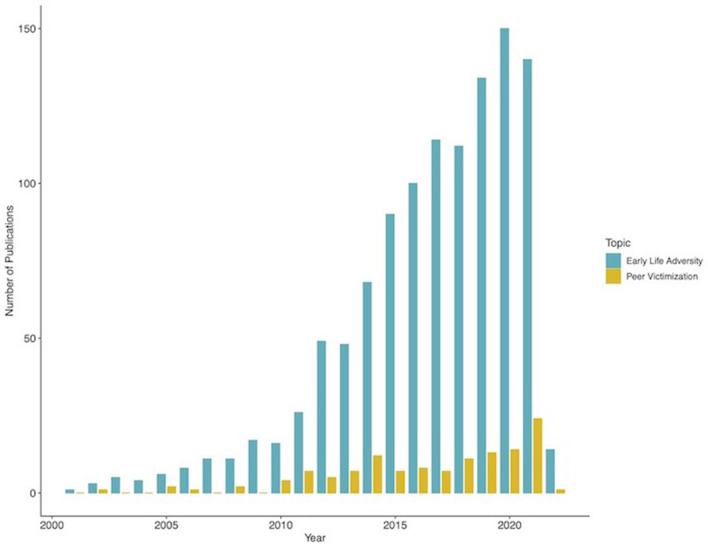
Peer victimization is very common during late childhood and adolescence. Despite the relatively reduced number of studies, the neurobiological underpinnings of the negative impact of peer victimization experiences have received increasing attention in recent years. The present selective review summarizes the most recent available evidence and provides a general overview of the impact of peer victimization experiences on social processing and decision-making at the neurobiological level, highlighting the most pressing areas requiring further research. Three key cognitive areas show a clear negative impact of peer victimization and bullying experiences: social valuation processing, reward and reinforcement learning and self-regulation processes. Victims show enhanced activation in key regions of the limbic system including the amygdala, rostral and dorsal anterior cingulate cortices, suggestive of enhanced sensitivity to social stimuli. They also show enhanced recruitment of lateral prefrontal regions crucially involved in cognitive and emotional regulation processes, and abnormal reward-related striatal function. The presence of psychopathology is a complex factor, increased as a consequence of peer victimization, but that also constitutes vulnerability to such experiences.
同伴欺侮在儿童晚期和青少年时期非常普遍。尽管相关研究数量相对较少,但近年来,同伴欺侮经历产生负面影响的神经生物学基础受到了越来越多的关注。本选择性综述总结了现有最新证据,并概述了同伴欺侮经历在神经生物学层面上对社会加工和决策的影响,突出了最迫切需要进一步研究的领域。三个关键认知领域显示出同伴欺侮和霸凌经历的明显负面影响:社会评价加工、奖赏与强化学习以及自我调节过程。受害者在边缘系统的关键区域(包括杏仁核、喙部和背侧前扣带回皮质)表现出增强的激活,这表明对社会刺激的敏感性增强。他们还表现出在认知和情绪调节过程中至关重要的外侧前额叶区域的募集增强,以及与奖赏相关的纹状体功能异常。精神病理学的存在是一个复杂因素,它因同伴欺侮而增加,但同时也构成了遭受此类经历的易感性。