Du Yi, Shi Haipeng, Yang Xiaojing, Wu Weidong
Department of Intensive Care Medicine, Shanxi Bethune Hospital, Shanxi Academy of Medical Sciences, Taiyuan, China.
Front Neurol. 2022 Aug 1;13:942023. doi: 10.3389/fneur.2022.942023. eCollection 2022.
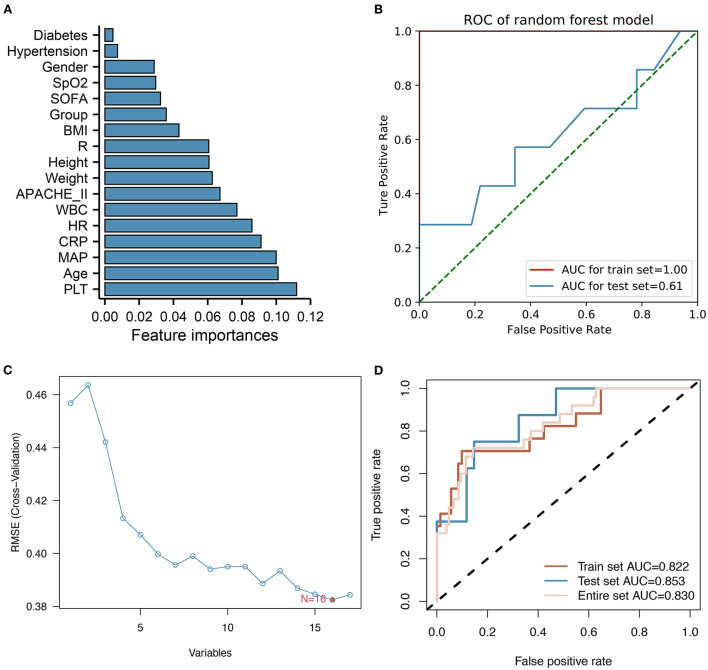
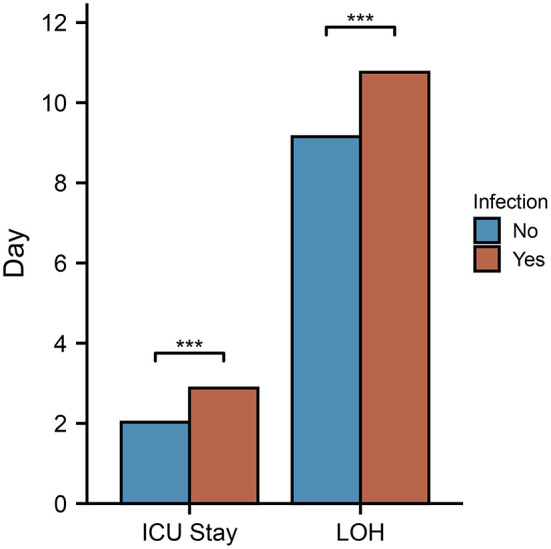
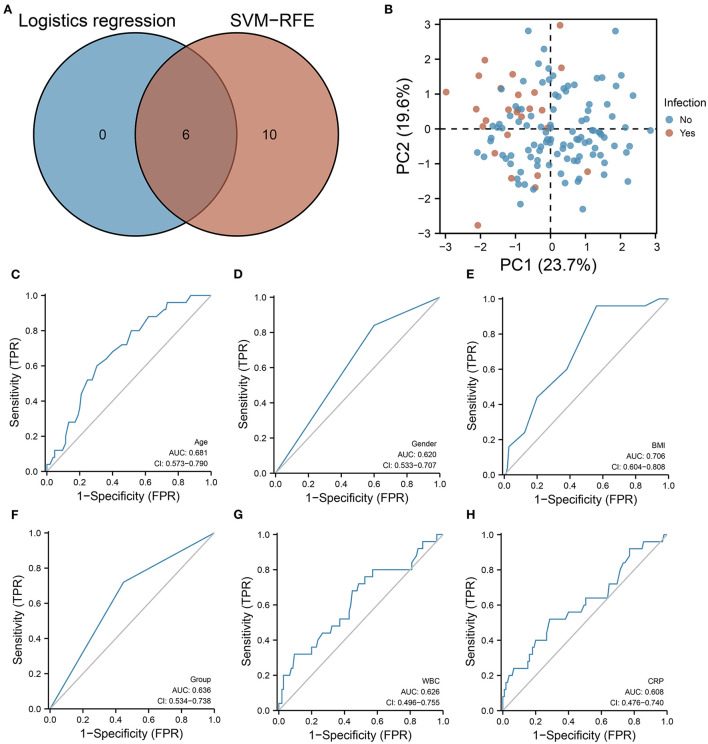
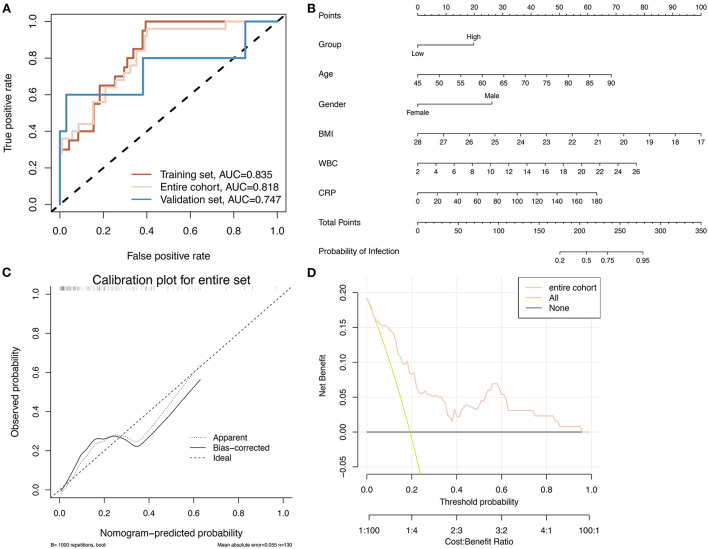
Drug efficacy can be improved by understanding the effects of anesthesia on the neurovascular system. In this study, we used machine learning algorithms to predict the risk of infection in postoperative intensive care unit (ICU) patients who are on non-mechanical ventilation and are receiving hydromorphone analgesia. In this retrospective study, 130 patients were divided into high and low dose groups of hydromorphone analgesic pump patients admitted after surgery. The white blood cells (WBC) count and incidence rate of infection was significantly higher in the high hydromorphone dosage group compared to the low hydromorphone dosage groups ( < 0.05). Furthermore, significant differences in age ( = 0.006), body mass index (BMI) ( = 0.001), WBC count ( = 0.019), C-reactive protein (CRP) ( = 0.038), hydromorphone dosage ( = 0.014), and biological sex ( = 0.024) were seen between the infected and non-infected groups. The infected group also had a longer hospital stay and an extended stay in the intensive care unit compared to the non-infected group. We identified important risk factors for the development of postoperative infections by using machine learning algorithms, including hydromorphone dosage, age, biological sex, BMI, and WBC count. Logistic regression analysis was applied to incorporate these variables to construct infection prediction models and nomograms. The area under curves (AUC) of the model were 0.835, 0.747, and 0.818 in the training group, validation group, and overall pairwise column group, respectively. Therefore, we determined that hydromorphone dosage, age, biological sex, BMI, WBC count, and CRP are significant risk factors in developing postoperative infections.
通过了解麻醉对神经血管系统的影响,可以提高药物疗效。在本研究中,我们使用机器学习算法来预测术后重症监护病房(ICU)中接受非机械通气且正在接受氢吗啡酮镇痛的患者的感染风险。在这项回顾性研究中,130例患者被分为术后接受氢吗啡酮镇痛泵治疗的高剂量组和低剂量组。与低氢吗啡酮剂量组相比,高氢吗啡酮剂量组的白细胞(WBC)计数和感染发生率显著更高(<0.05)。此外,感染组和未感染组在年龄(=0.006)、体重指数(BMI)(=0.001)、WBC计数(=0.019)、C反应蛋白(CRP)(=0.038)、氢吗啡酮剂量(=0.014)和生物学性别(=0.024)方面存在显著差异。与未感染组相比,感染组的住院时间和在重症监护病房的停留时间也更长。我们使用机器学习算法确定了术后感染发生的重要风险因素,包括氢吗啡酮剂量、年龄、生物学性别、BMI和WBC计数。应用逻辑回归分析纳入这些变量以构建感染预测模型和列线图。该模型在训练组、验证组和总体配对列组中的曲线下面积(AUC)分别为0.835、0.747和0.818。因此,我们确定氢吗啡酮剂量、年龄、生物学性别、BMI、WBC计数和CRP是术后感染发生的重要风险因素。