Division of Medical Oncology, University of Washington, Seattle, Washington, USA
Fred Hutchinson Cancer Research Center, Seattle, Washington, USA.
J Immunother Cancer. 2022 Aug;10(8). doi: 10.1136/jitc-2022-004904.
Merkel cell carcinoma (MCC) is a rare, aggressive, cutaneous neuroendocrine neoplasm with annual incidence rates of 0.13-1.6 cases/100,000/year worldwide as of 2018. Chemotherapy for metastatic MCC (mMCC) has high objective response rates (ORRs), but responses are not durable and overall survival (OS) is poor. Avelumab (anti-programmed death-ligand 1) has demonstrated meaningful survival benefit and durable responses in clinical trials for mMCC. This study investigated real-world clinical outcomes in avelumab-treated patients with advanced (stage IIIB/IV) MCC in US academic medical centers.
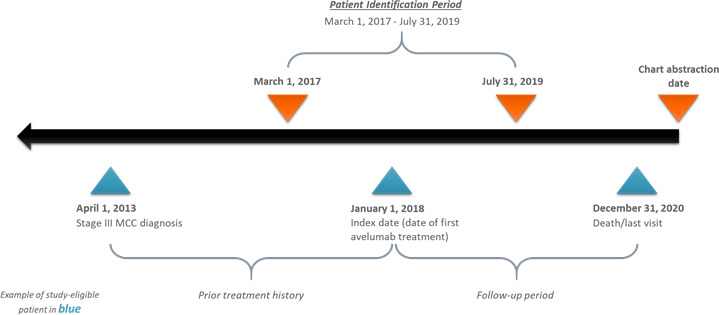
We conducted a retrospective chart review of patients with advanced MCC who initiated avelumab between March 1, 2017, and July 31, 2019, at six US academic centers. Data were requested for eligible patients from index date through December 31, 2020. Descriptive analyses were conducted to assess demographic and clinical characteristics, real-world ORR (rwORR), real-world duration of response, real-world progression-free survival (rwPFS), and OS.
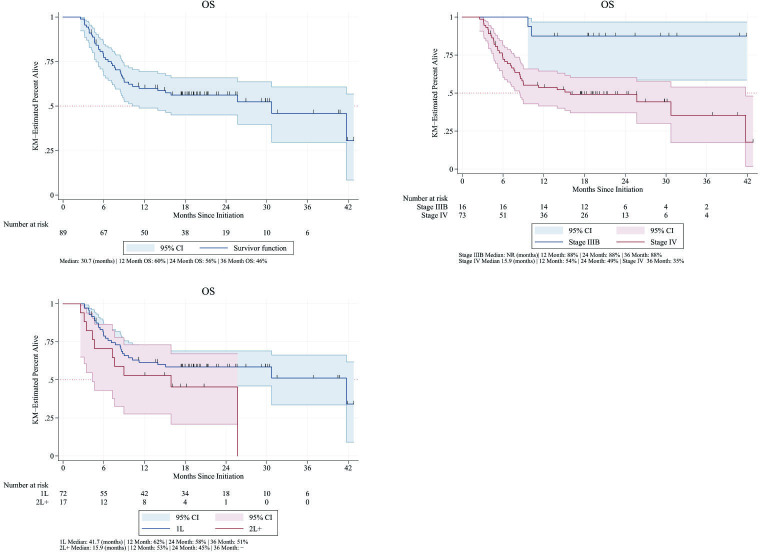
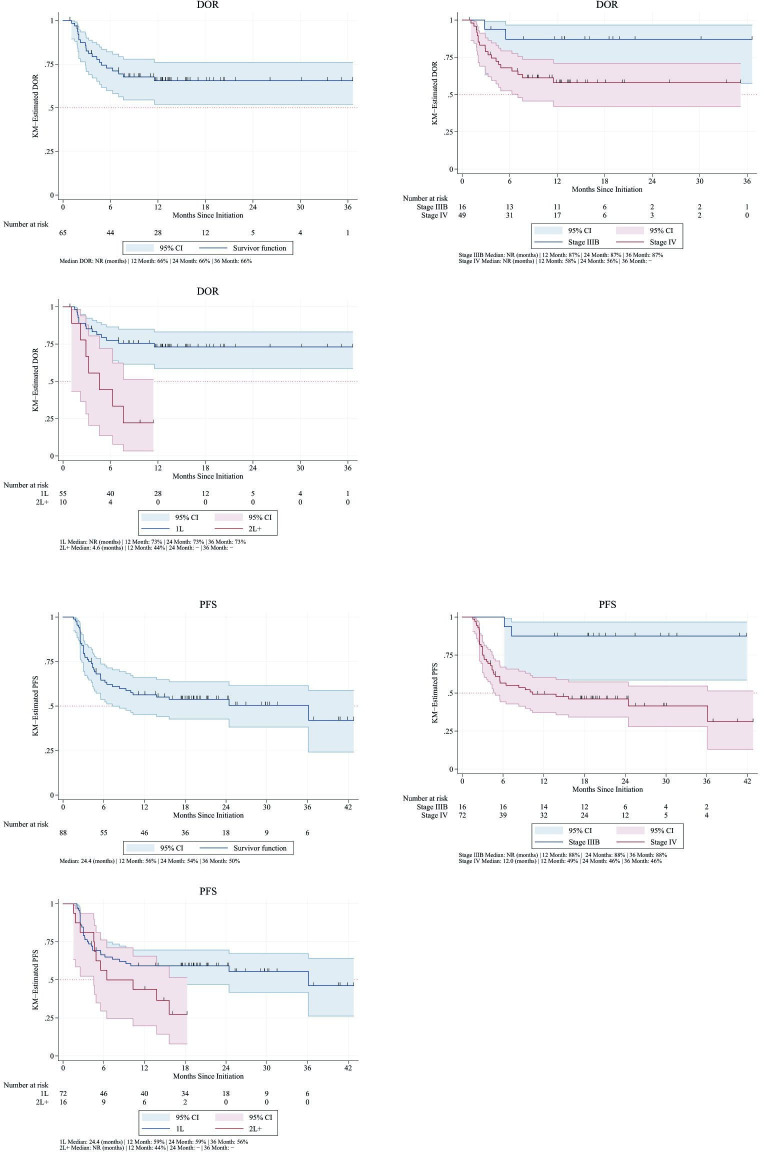
Ninety patients with advanced MCC (82%, stage IV; 18%, stage IIIB) received avelumab. Median follow-up was 20.8 months (95% CI: 19.1 to 24.2). Median age was 68 years (range, 48-83), and the majority of patients were men (58%) and white (93%). The primary tumor was most commonly located on the lower limb (38%), with metastases mostly located in lymph nodes (68%), lung (52%), and viscera (52%). Approximately 42% and 26% of patients had an Eastern Cooperative Oncology Group performance status of 2 and 3, respectively. Seventy-three patients (81%) received avelumab as first-line treatment of advanced MCC, while 17 (19%) received avelumab as second-line or later treatment. The median duration of avelumab treatment was 13.5 months (95% CI: 6.4 to 30.6), with 42% of patients still receiving avelumab by the end of follow-up. Patients with avelumab treatment had an rwORR of 73% (95% CI: 64 to 83), median rwPFS of 24.4 months (95% CI: 8.31 to not estimable (NE)), and median OS of 30.7 months (95% CI: 11.2 to NE).
This real-world study of patients with advanced MCC demonstrated that avelumab treatment resulted in a high response rate with durable responses and prolonged survival. The study findings validate the results demonstrated in prospective clinical trials and other observational studies.
默克尔细胞癌(Merkel cell carcinoma,MCC)是一种罕见的侵袭性皮肤神经内分泌肿瘤,截至 2018 年,全球每年的发病率为 0.13-1.6 例/10 万例。转移性默克尔细胞癌(mMCC)的化疗具有较高的客观缓解率(ORR),但缓解并不持久,总生存期(OS)较差。avelumab(抗程序性死亡配体 1)在 mMCC 的临床试验中表现出有意义的生存获益和持久的缓解。本研究调查了在美国学术医疗中心接受avelumab 治疗的晚期(IIIb/IV 期)Merkel 细胞癌患者的真实世界临床结局。
我们对 2017 年 3 月 1 日至 2019 年 7 月 31 日期间在六家美国学术中心接受 avelumab 治疗的晚期 MCC 患者进行了回顾性图表审查。从索引日期到 2020 年 12 月 31 日,从合格患者处请求数据。进行描述性分析以评估人口统计学和临床特征、真实世界缓解率(rwORR)、真实世界缓解持续时间、真实世界无进展生存期(rwPFS)和 OS。
90 名晚期 MCC 患者(82%为 IV 期;18%为 IIIb 期)接受了 avelumab 治疗。中位随访时间为 20.8 个月(95%CI:19.1 至 24.2)。中位年龄为 68 岁(范围:48-83),大多数患者为男性(58%)和白人(93%)。原发肿瘤最常位于下肢(38%),转移灶最常位于淋巴结(68%)、肺(52%)和内脏(52%)。大约 42%和 26%的患者分别具有东部肿瘤协作组体力状态 2 和 3。73 名(81%)患者将 avelumab 作为治疗晚期 MCC 的一线治疗,17 名(19%)患者将 avelumab 作为二线或更后的治疗。avelumab 治疗的中位持续时间为 13.5 个月(95%CI:6.4 至 30.6),随访结束时仍有 42%的患者在接受 avelumab 治疗。接受avelumab 治疗的患者真实世界缓解率为 73%(95%CI:64 至 83),中位真实世界无进展生存期为 24.4 个月(95%CI:8.31 至不可估计(NE)),中位总生存期为 30.7 个月(95%CI:11.2 至 NE)。
这项针对晚期 MCC 患者的真实世界研究表明,avelumab 治疗可实现高缓解率,缓解持久,生存延长。研究结果验证了前瞻性临床试验和其他观察性研究的结果。