State Key Laboratory for Biology of Plant Diseases and Insect Pests, Institute of Plant Protection, Chinese Academy of Agricultural Sciences, Beijing, China.
Functional and Evolutionary Entomology, Gembloux Agro-Bio Tech, University of Liège, Gembloux, Belgium.
Plant Biotechnol J. 2022 Nov;20(11):2187-2201. doi: 10.1111/pbi.13900. Epub 2022 Aug 19.
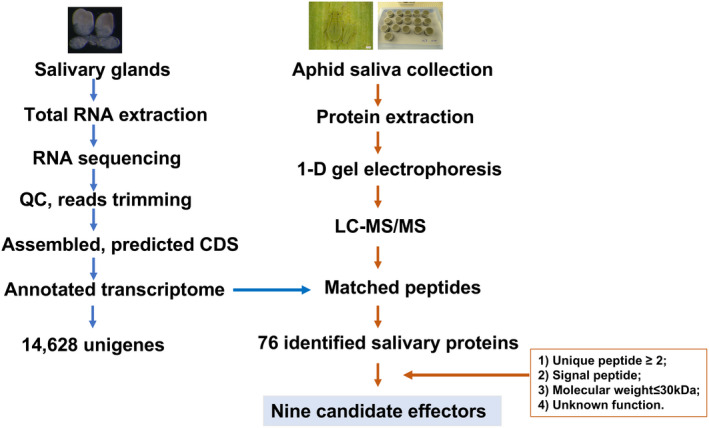
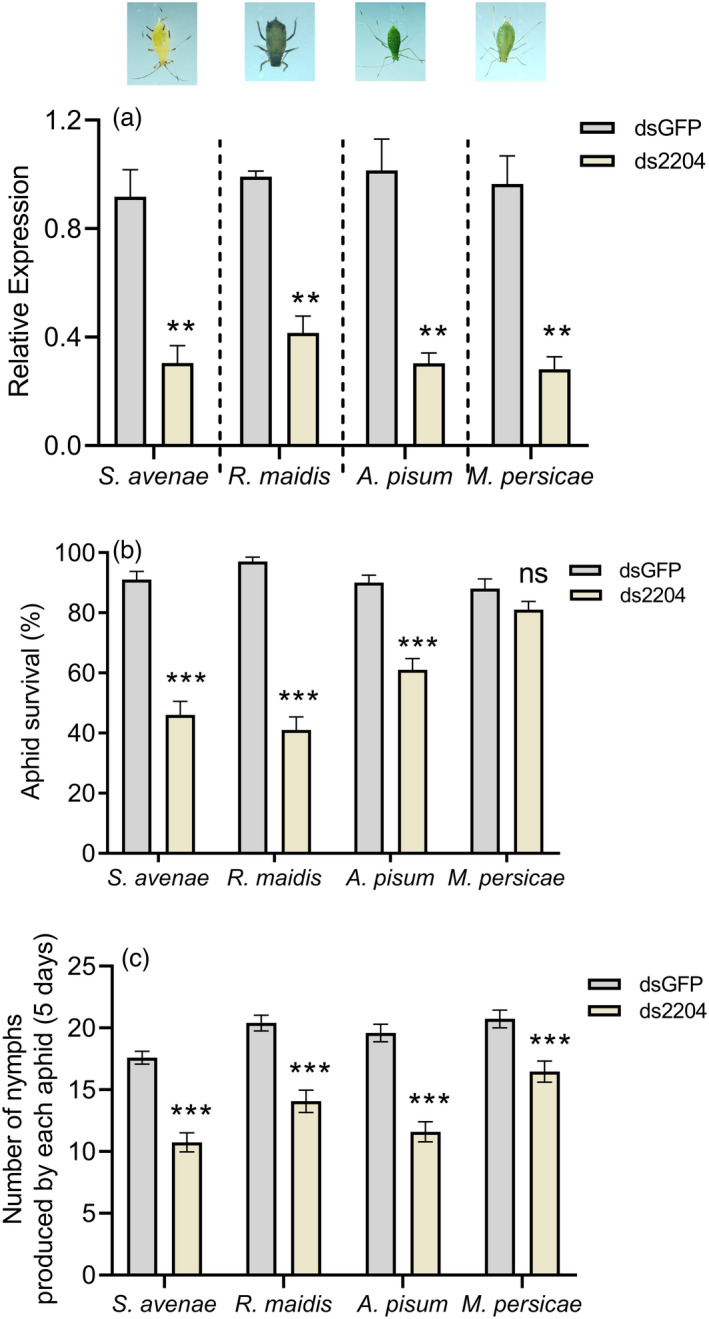
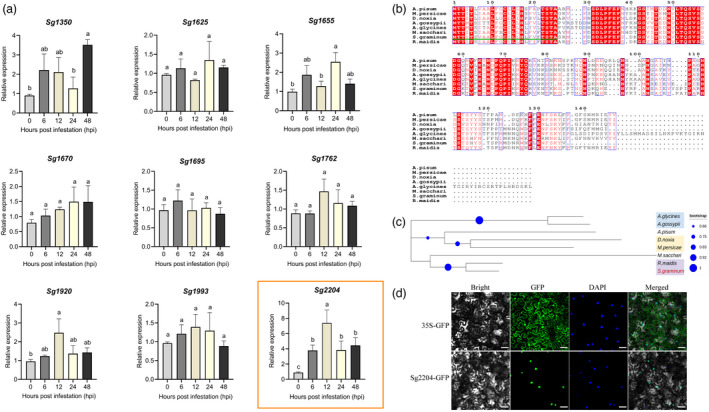
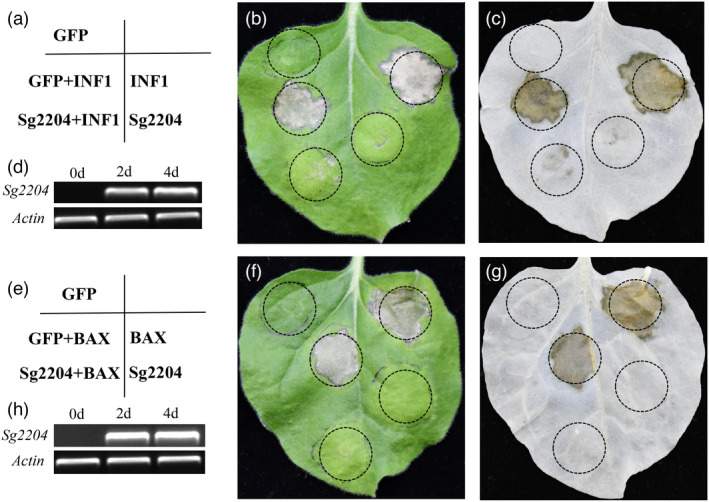
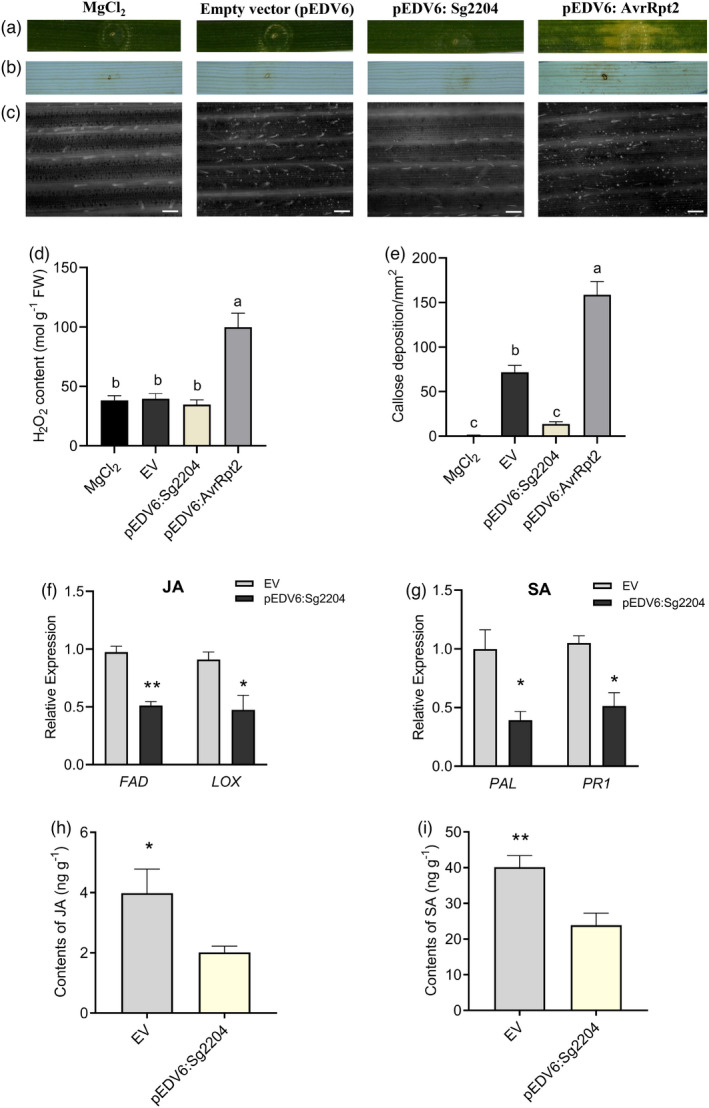
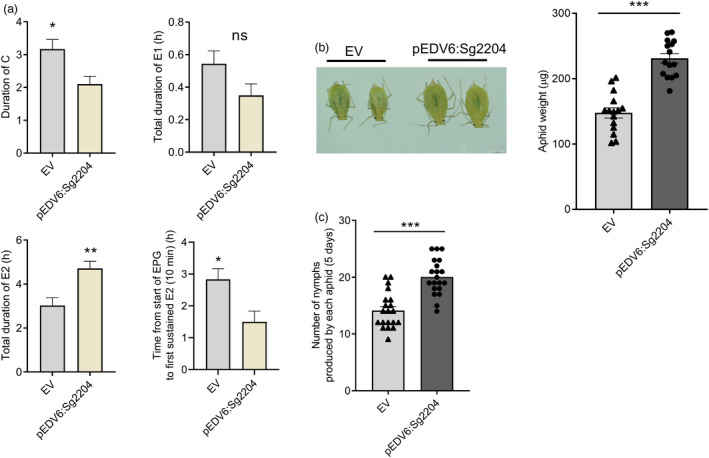
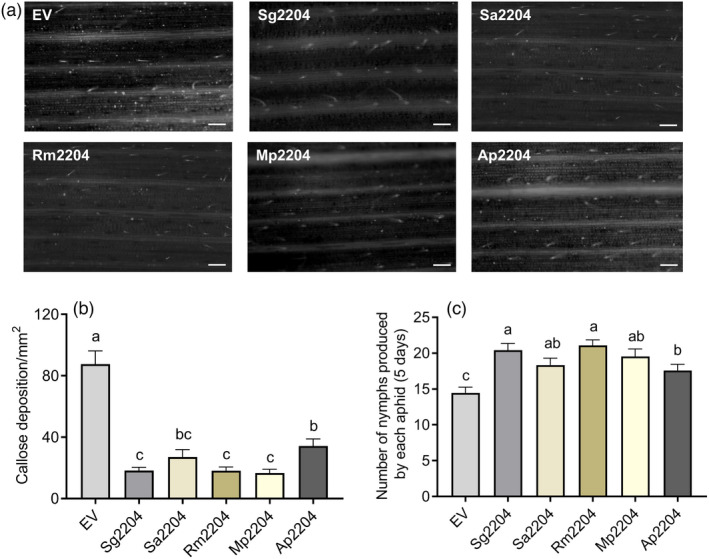
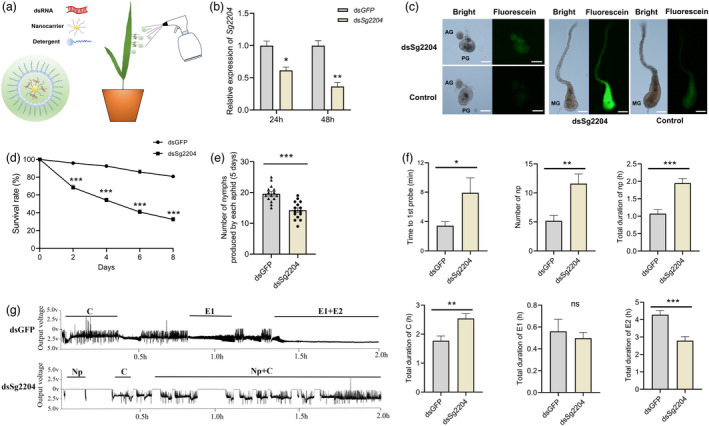
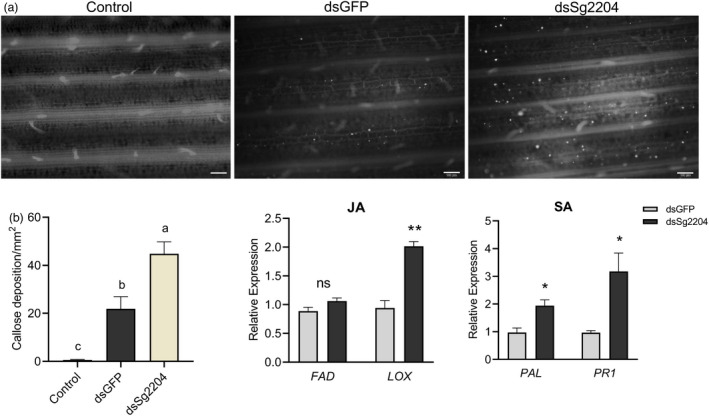
Aphids secrete diverse repertoires of salivary effectors into host plant cells to promote infestation by modulating plant defence. The greenbug Schizaphis graminum is an important cereal aphid worldwide. However, the secreted effectors of S. graminum are still uncharacterized. Here, 76 salivary proteins were identified from the watery saliva of S. graminum using transcriptome and proteome analyses. Among them, a putative salivary effector Sg2204 was significantly up-regulated during aphid feeding stages, and transient overexpression of Sg2204 in Nicotiana benthamiana inhibited cell death induced by BAX or INF1. Delivering Sg2204 into wheat via the type III secretion system of Pseudomonas fluorescens EtAnH suppressed pattern-triggered immunity (PTI)-associated callose deposition. The transcript levels of jasmonic acid (JA)- and salicylic acid (SA)-associated defence genes of wheat were significantly down-regulated, and the contents of both JA and SA were also significantly decreased after delivery of Sg2204 into wheat leaves. Additionally, feeding on wheat expressing Sg2204 significantly increased the weight and fecundity of S. graminum and promoted aphid phloem feeding. Sg2204 was efficiently silenced via spray-based application of the nanocarrier-mediated transdermal dsRNA delivery system. Moreover, Sg2204-silenced aphids induced a stronger wheat defence response and resulted in negative impacts on aphid feeding behaviour, survival and fecundity. Silencing of Sg2204 homologues from four aphid species using nanocarrier-delivered dsRNA also significantly reduced aphid performance on host plants. Thus, our study characterized the salivary effector Sg2204 of S. graminum involved in promoting host susceptibility by suppressing wheat defence, which can also be regarded as a promising RNAi target for aphid control.
蚜虫将多种唾液效应物分泌到宿主植物细胞中,通过调节植物防御来促进侵害。禾谷缢管蚜(Schizaphis graminum)是一种世界性的重要麦蚜。然而,禾谷缢管蚜的分泌效应物仍未被描述。在这里,通过转录组和蛋白质组分析,从禾谷缢管蚜的水样唾液中鉴定出 76 种唾液蛋白。其中,一个假定的唾液效应物 Sg2204 在蚜虫取食阶段显著上调,瞬时过表达 Sg2204 在本氏烟中抑制了 BAX 或 INF1 诱导的细胞死亡。通过荧光假单胞菌 EtAnH 的 III 型分泌系统将 Sg2204 递送至小麦中,抑制了模式触发免疫(PTI)相关的胼胝质沉积。小麦中茉莉酸(JA)和水杨酸(SA)相关防御基因的转录水平显著下调,Sg2204 递送至小麦叶片后,JA 和 SA 的含量也显著降低。此外,在小麦上取食 Sg2204 显著增加了禾谷缢管蚜的体重和繁殖力,并促进了蚜虫韧皮部取食。通过喷雾法应用纳米载体介导的透皮 dsRNA 递药系统可以有效地沉默 Sg2204。此外,沉默 Sg2204 会诱导更强的小麦防御反应,对蚜虫取食行为、存活和繁殖力产生负面影响。使用纳米载体递送 dsRNA 沉默四种蚜虫的 Sg2204 同源物也显著降低了蚜虫在宿主植物上的性能。因此,我们的研究描述了禾谷缢管蚜的唾液效应物 Sg2204 通过抑制小麦防御来促进宿主易感性,这也可以被视为一种有前途的蚜虫控制的 RNAi 靶标。