The Jackson Laboratory, Bar Harbor, Maine, USA.
Department of Pathology, University of California San Diego, La Jolla, California, USA.
Aging Cell. 2022 Sep;21(9):e13666. doi: 10.1111/acel.13666. Epub 2022 Aug 19.
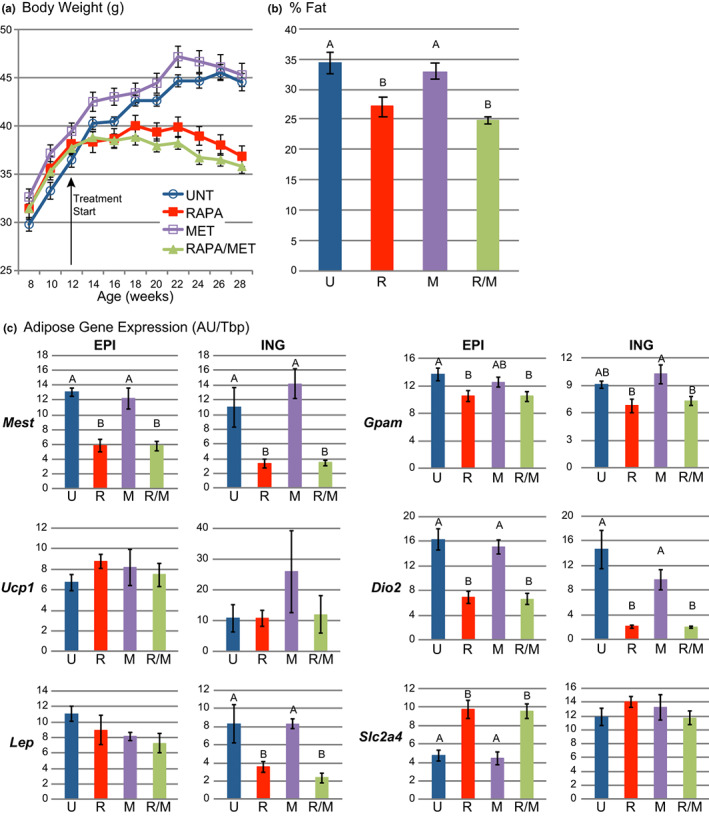
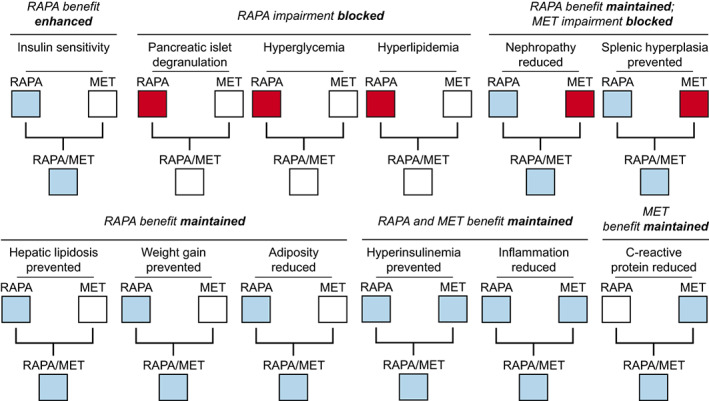
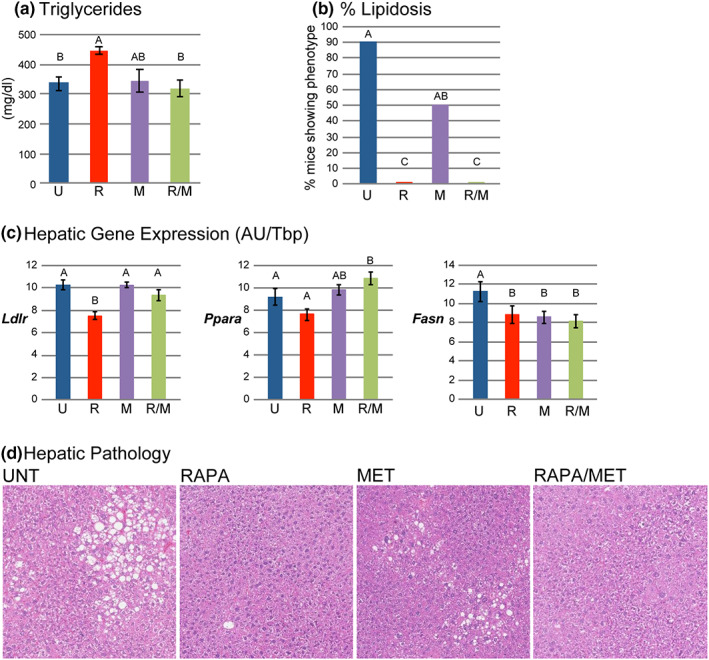
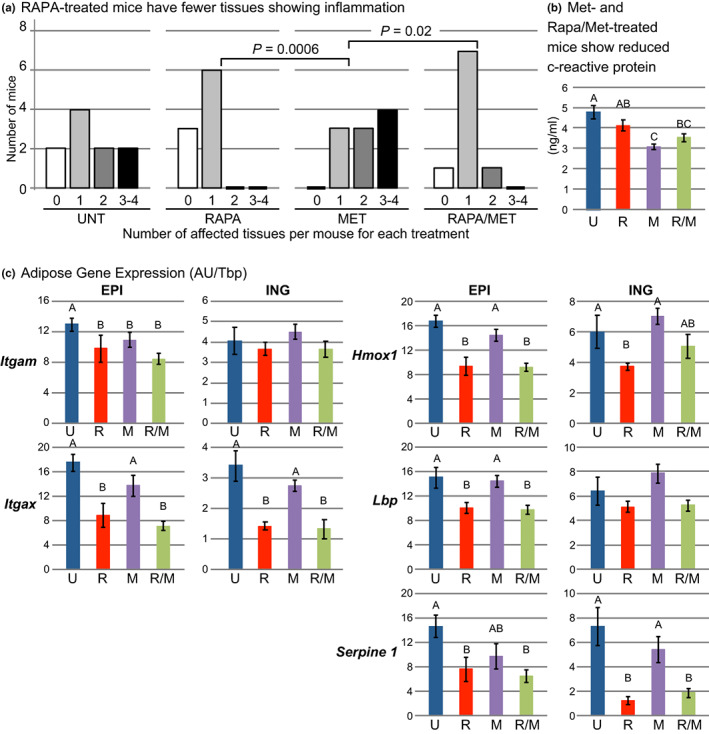
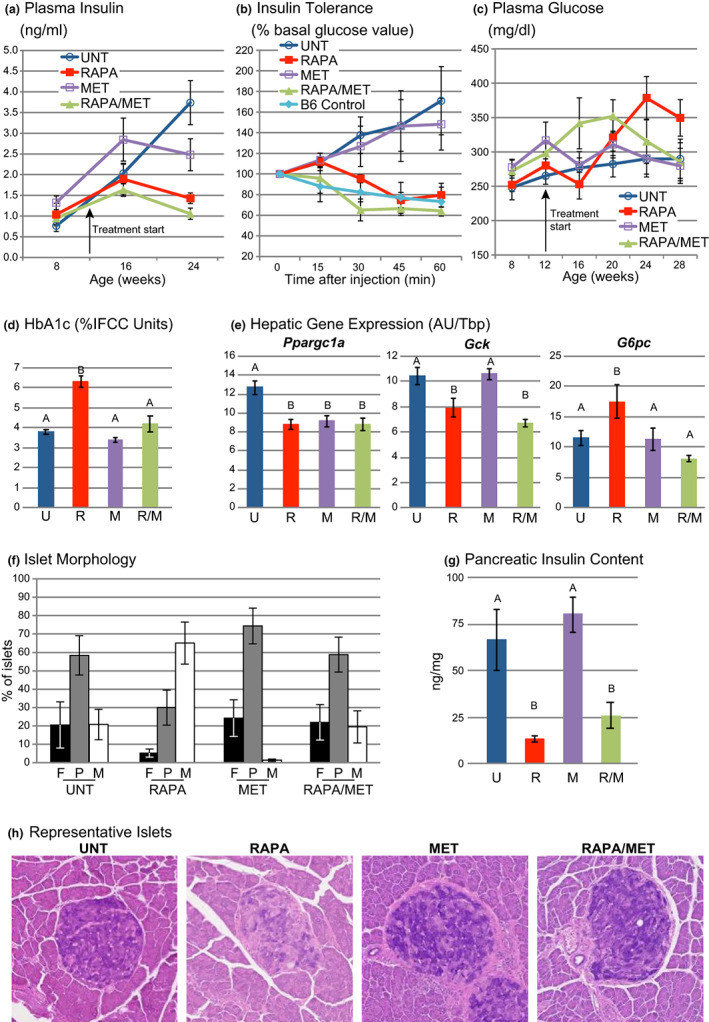
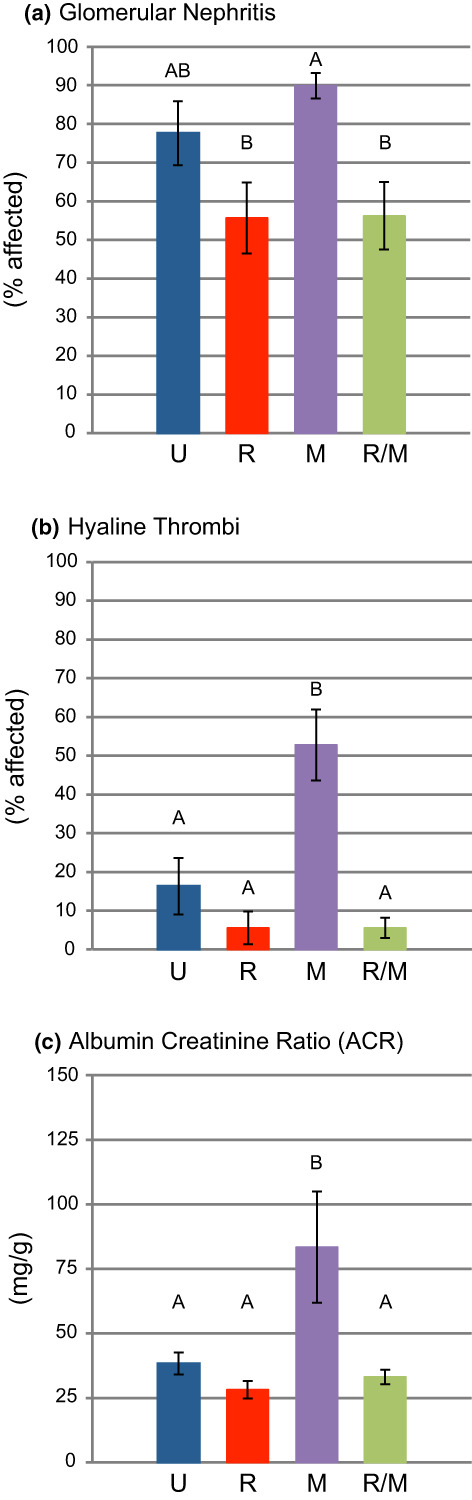
Rapamycin treatment has positive and negative effects on progression of type 2 diabetes (T2D) in a recombinant inbred polygenic mouse model, male NONcNZO10/LtJ (NcZ10). Here, we show that combination treatment with metformin ameliorates negative effects of rapamycin while maintaining its benefits. From 12 to 30 weeks of age, NcZ10 males were fed a control diet or diets supplemented with rapamycin, metformin, or a combination of both. Rapamycin alone reduced weight gain, adiposity, HOMA-IR, and inflammation, and prevented hyperinsulinemia and pre-steatotic hepatic lipidosis, but exacerbated hyperglycemia, hypertriglyceridemia, and pancreatic islet degranulation. Metformin alone reduced hyperinsulinemia and circulating c-reactive protein, but exacerbated nephropathy. Combination treatment retained the benefits of both while preventing many of the deleterious effects. Importantly, the combination treatment reversed effects of rapamycin on markers of hepatic insulin resistance and normalized systemic insulin sensitivity in this inherently insulin-resistant model. In adipose tissue, rapamycin attenuated the expression of genes associated with adipose tissue expansion (Mest, Gpam), inflammation (Itgam, Itgax, Hmox1, Lbp), and cell senescence (Serpine1). In liver, the addition of metformin counteracted rapamycin-induced alterations of G6pc, Ppara, and Ldlr expressions that promote hyperglycemia and hypertriglyceridemia. Both rapamycin and metformin treatment reduced hepatic Fasn expression, potentially preventing lipidosis. These results delineate a state of "insulin signaling restriction" that withdraws endocrine support for further adipogenesis, progression of the metabolic syndrome, and the development of its comorbidities. Our results are relevant for the treatment of T2D, the optimization of current rapamycin-based treatments for posttransplant rejection and various cancers, and for the development of treatments for healthy aging.
雷帕霉素治疗对 2 型糖尿病(T2D)在重组近交多基因小鼠模型(雄性 NONcNZO10/LtJ(NcZ10))中的进展有积极和消极的影响。在这里,我们表明,与二甲双胍联合治疗可以改善雷帕霉素的负面影响,同时保持其益处。从 12 到 30 周龄,NcZ10 雄性喂食对照饮食或补充雷帕霉素、二甲双胍或两者组合的饮食。雷帕霉素单独降低体重增加、肥胖、HOMA-IR 和炎症,并预防高胰岛素血症和前脂肪性肝脂肪变性,但加重高血糖、高甘油三酯血症和胰岛脱颗粒。二甲双胍单独降低高胰岛素血症和循环 c-反应蛋白,但加重肾病。联合治疗保留了两者的益处,同时预防了许多有害影响。重要的是,联合治疗逆转了雷帕霉素对肝胰岛素抵抗标志物的影响,并使这个固有胰岛素抵抗模型的全身胰岛素敏感性正常化。在脂肪组织中,雷帕霉素减弱了与脂肪组织扩张(Mest、Gpam)、炎症(Itgam、Itgax、Hmox1、Lbp)和细胞衰老(Serpine1)相关的基因的表达。在肝脏中,二甲双胍抵消了雷帕霉素诱导的 G6pc、Ppara 和 Ldlr 表达的改变,这些改变促进了高血糖和高甘油三酯血症。雷帕霉素和二甲双胍治疗均降低了肝 Fasn 的表达,可能预防了脂肪变性。这些结果描绘了一种“胰岛素信号限制”的状态,这种状态撤回了对进一步脂肪形成、代谢综合征进展及其合并症的内分泌支持。我们的结果与 T2D 的治疗有关,优化了目前基于雷帕霉素的移植排斥和各种癌症的治疗方法,并为健康老龄化的治疗方法的发展提供了参考。