Department of Biochemistry, University of Washington, Seattle, WA 98195, USA; Howard Hughes Medical Institute, University of Washington, Seattle, WA 98195, USA.
Department of Medicine, Washington University School of Medicine, St. Louis, MO 63110, USA.
Cell Rep. 2022 Aug 30;40(9):111299. doi: 10.1016/j.celrep.2022.111299. Epub 2022 Aug 15.
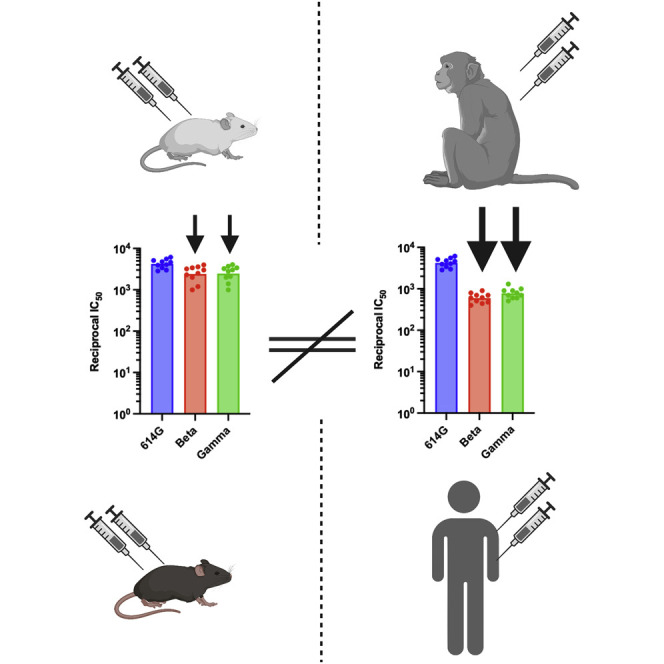
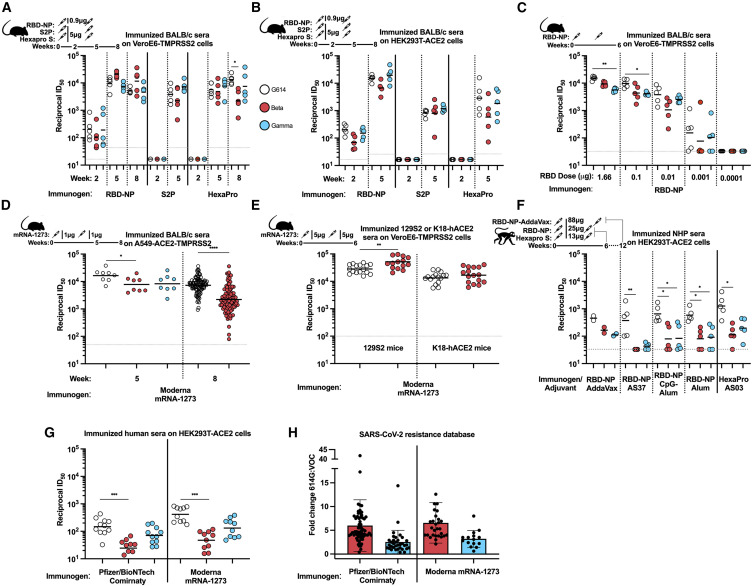
The emergence of severe acute respiratory syndrome coronavirus 2 (SARS-CoV-2) in 2019 has led to the development of a large number of vaccines, several of which are now approved for use in humans. Understanding vaccine-elicited antibody responses against emerging SARS-CoV-2 variants of concern (VOCs) in real time is key to inform public health policies. Serum neutralizing antibody titers are the current best correlate of protection from SARS-CoV-2 challenge in non-human primates and a key metric to understand immune evasion of VOCs. We report that vaccinated BALB/c mice do not recapitulate faithfully the breadth and potency of neutralizing antibody responses elicited by various vaccine platforms against VOCs, compared with non-human primates or humans, suggesting caution should be exercised when interpreting data obtained with this animal model.
2019 年严重急性呼吸综合征冠状病毒 2 (SARS-CoV-2)的出现导致了大量疫苗的研发,其中几种现已获准在人类中使用。实时了解针对新出现的严重急性呼吸综合征冠状病毒 2 变异株(VOCs)的疫苗诱导抗体反应对于制定公共卫生政策至关重要。血清中和抗体滴度是目前在非人类灵长类动物中预防 SARS-CoV-2 挑战的最佳保护相关指标,也是了解 VOC 免疫逃逸的关键指标。我们报告称,与非人类灵长类动物或人类相比,接种疫苗的 BALB/c 小鼠并不能忠实地再现各种疫苗平台针对 VOC 诱导的中和抗体反应的广度和效力,这表明在使用这种动物模型获得的数据时应谨慎解释。