Chair of Biochemistry, Center for Protein Assemblies, Technical University of Munich, Ernst-Otto-Fischer-Str. 8, 85748, Garching, Germany.
Chembiochem. 2022 Dec 5;23(23):e202200341. doi: 10.1002/cbic.202200341. Epub 2022 Sep 15.
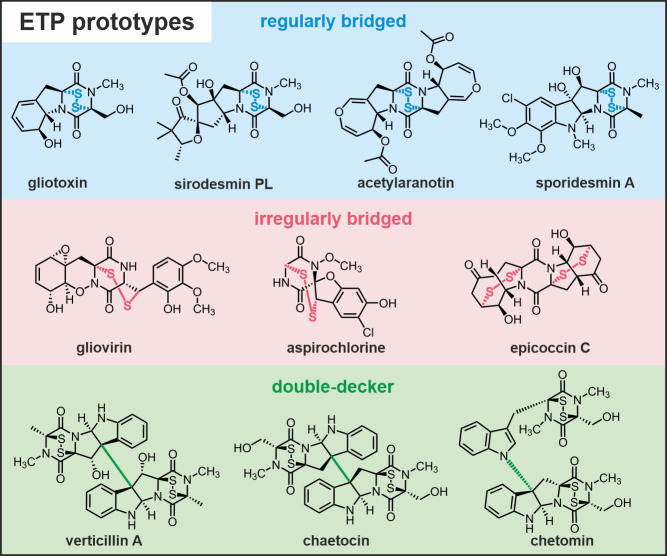
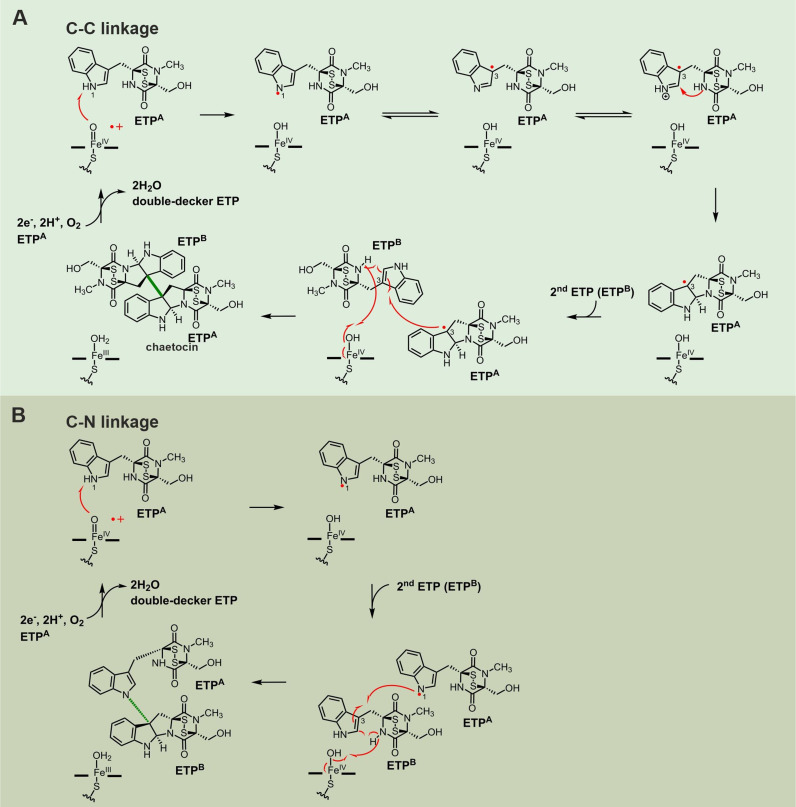
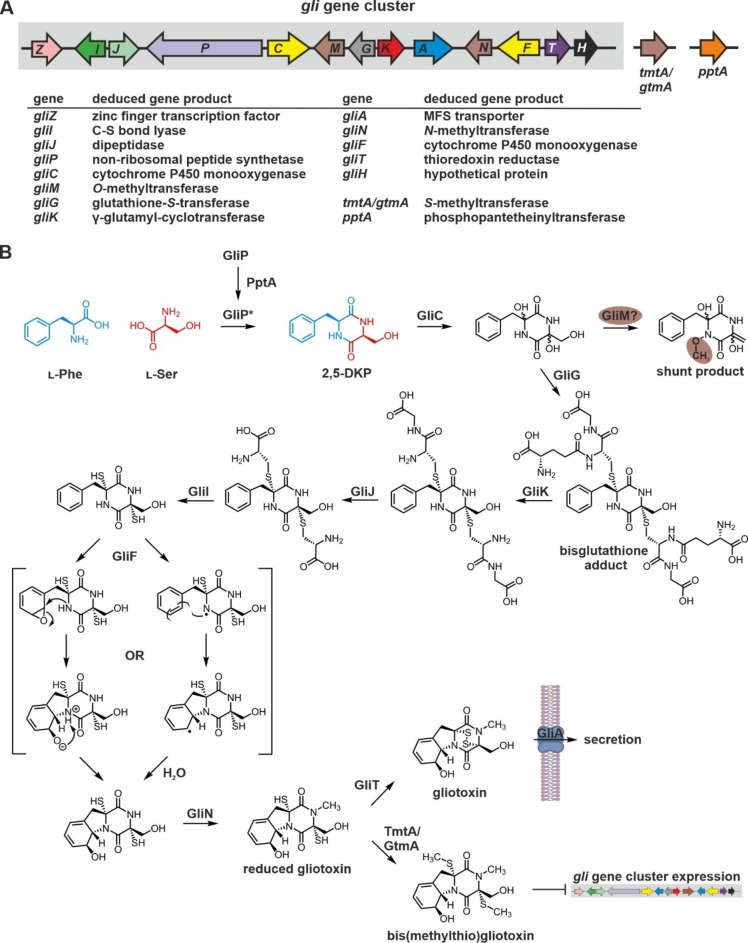
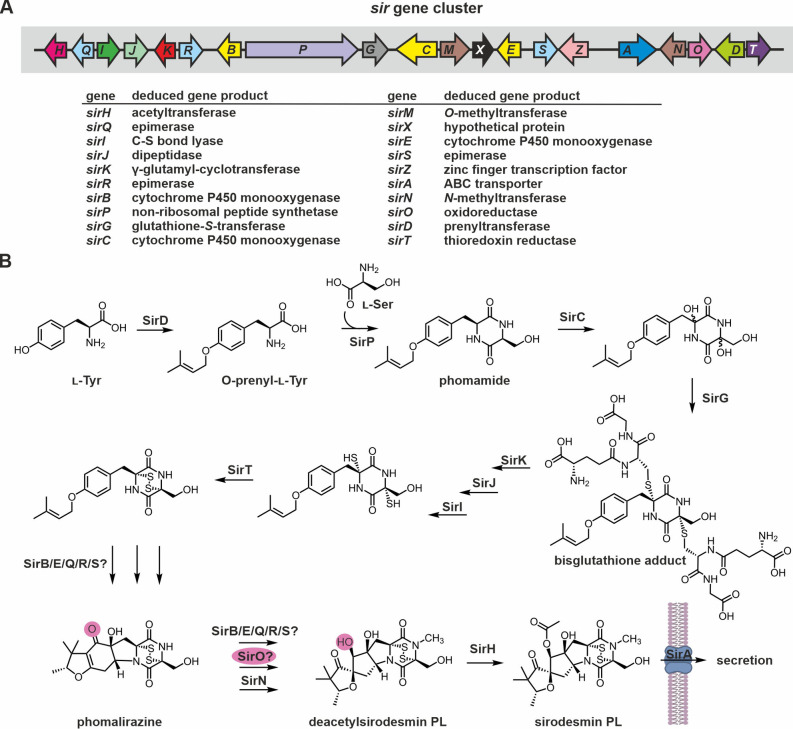
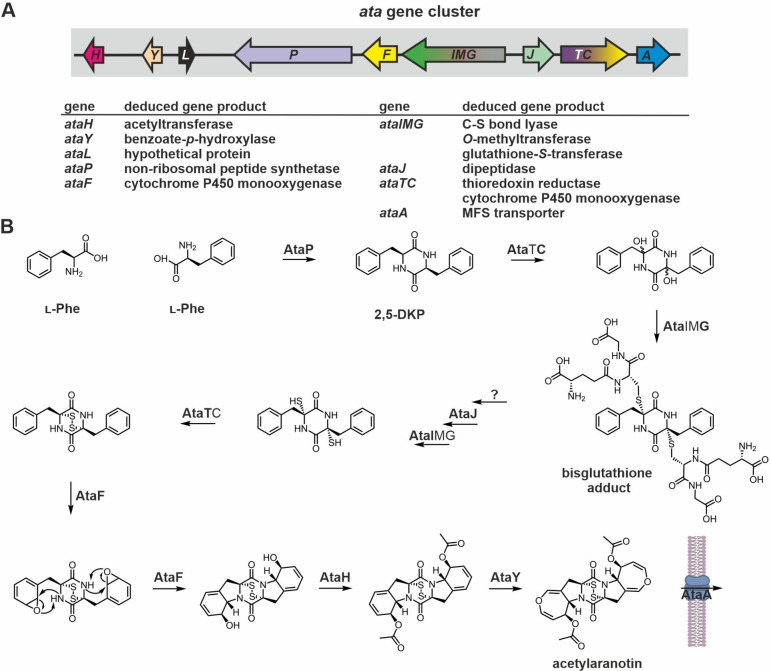
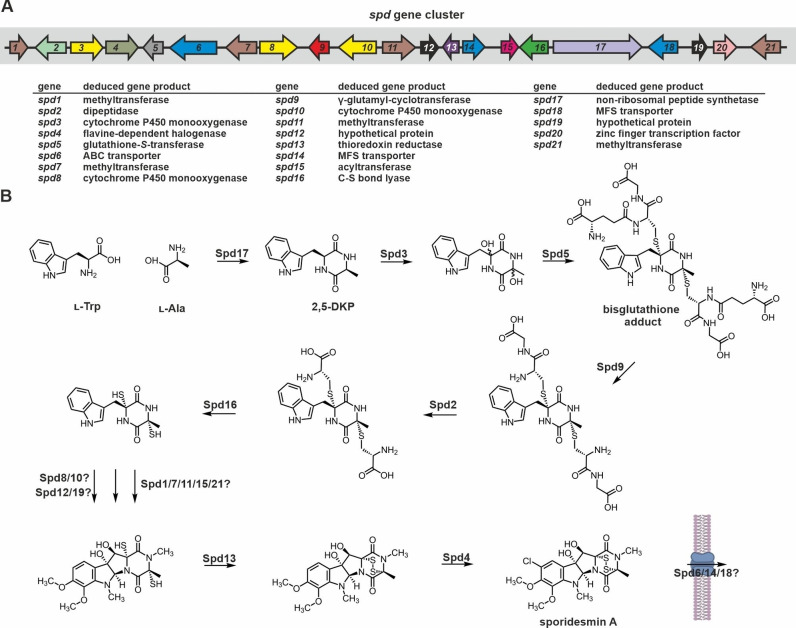
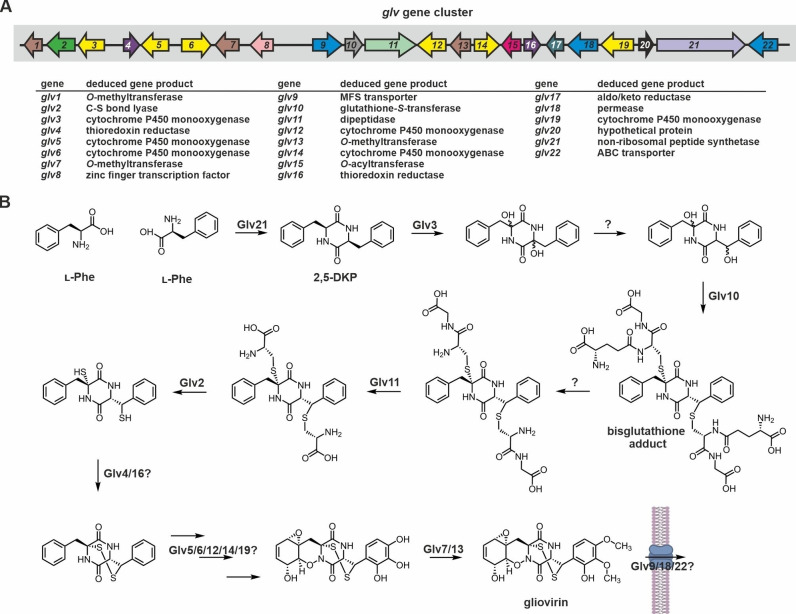
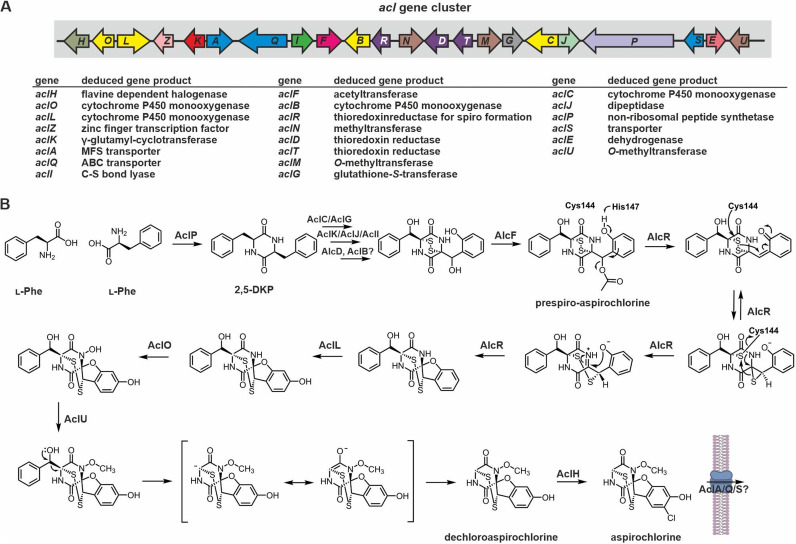
Epipolythiodioxopiperazines (ETPs) are fungal secondary metabolites that share a 2,5-diketopiperazine scaffold built from two amino acids and bridged by a sulfide moiety. Modifications of the core and the amino acid side chains, for example by methylations, acetylations, hydroxylations, prenylations, halogenations, cyclizations, and truncations create the structural diversity of ETPs and contribute to their biological activity. However, the key feature responsible for the bioactivities of ETPs is their sulfide moiety. Over the last years, combinations of genome mining, reverse genetics, metabolomics, biochemistry, and structural biology deciphered principles of ETP production. Sulfurization via glutathione and uncovering of the thiols followed by either oxidation or methylation crystallized as fundamental steps that impact expression of the biosynthesis cluster, toxicity and secretion of the metabolite as well as self-tolerance of the producer. This article showcases structure and activity of prototype ETPs such as gliotoxin and discusses the current knowledge on the biosynthesis routes of these exceptional natural products.
表二氧杂戊环多酮(ETP)是真菌次级代谢产物,具有由两个氨基酸构建的 2,5-二酮哌嗪骨架,并通过硫醚部分桥接。核心和氨基酸侧链的修饰,例如甲基化、乙酰化、羟基化、异戊烯基化、卤化、环化和截断,创造了 ETP 的结构多样性,并有助于其生物活性。然而,负责 ETP 生物活性的关键特征是其硫醚部分。在过去的几年中,通过基因组挖掘、反向遗传学、代谢组学、生物化学和结构生物学的组合,阐明了 ETP 产生的原则。通过谷胱甘肽进行硫代以及随后的硫醇的揭示,接着进行氧化或甲基化,作为影响生物合成簇表达、代谢物毒性和分泌以及生产者自身耐受性的基本步骤结晶。本文展示了原型 ETP(如Gliotoxin)的结构和活性,并讨论了这些特殊天然产物生物合成途径的最新知识。