Sun Yuanlu, Lin Xu, Zhang Qian, Pang Yu, Zhang Xiaohan, Zhao Xuelian, Liu Di, Yang Xiuqin
College of Animal Science and Technology, Northeast Agricultural University, Harbin, China.
Heilongjiang Academy of Agricultural Sciences, Harbin, China.
Front Vet Sci. 2022 Aug 8;9:982258. doi: 10.3389/fvets.2022.982258. eCollection 2022.
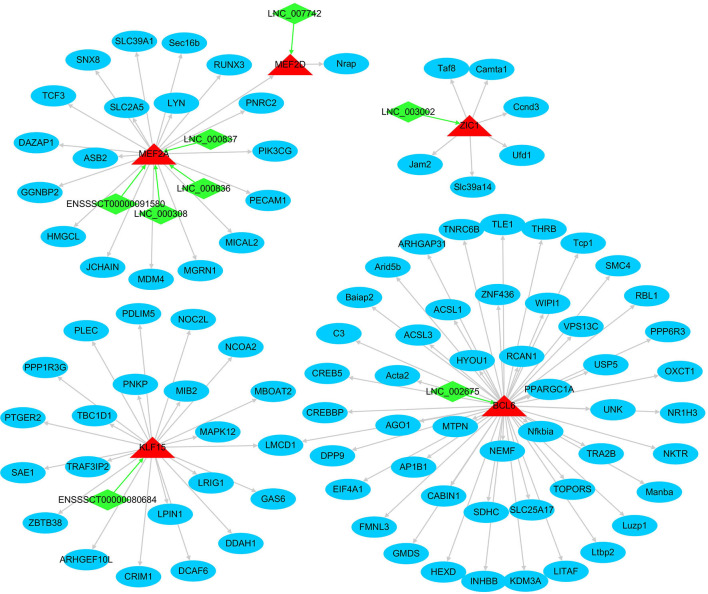
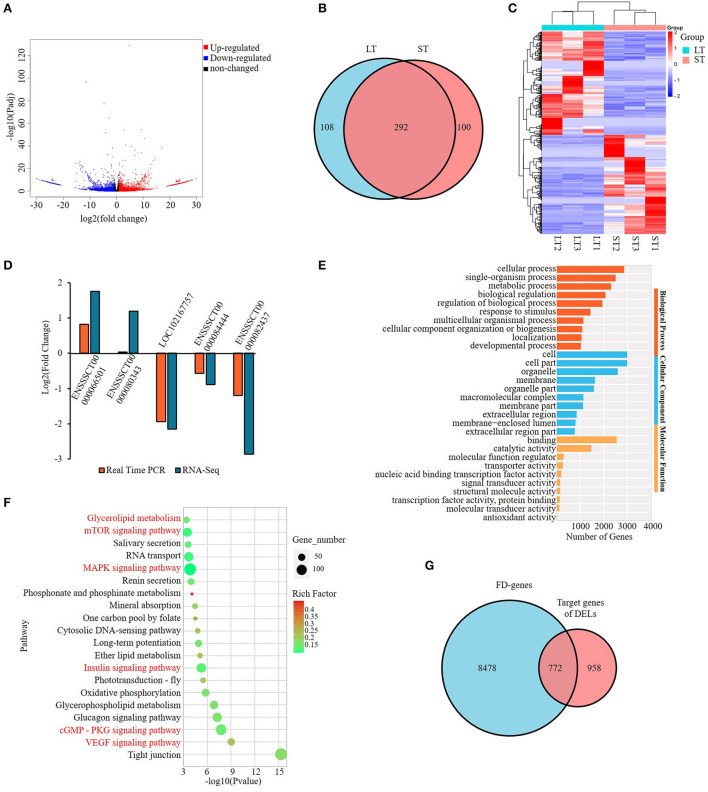
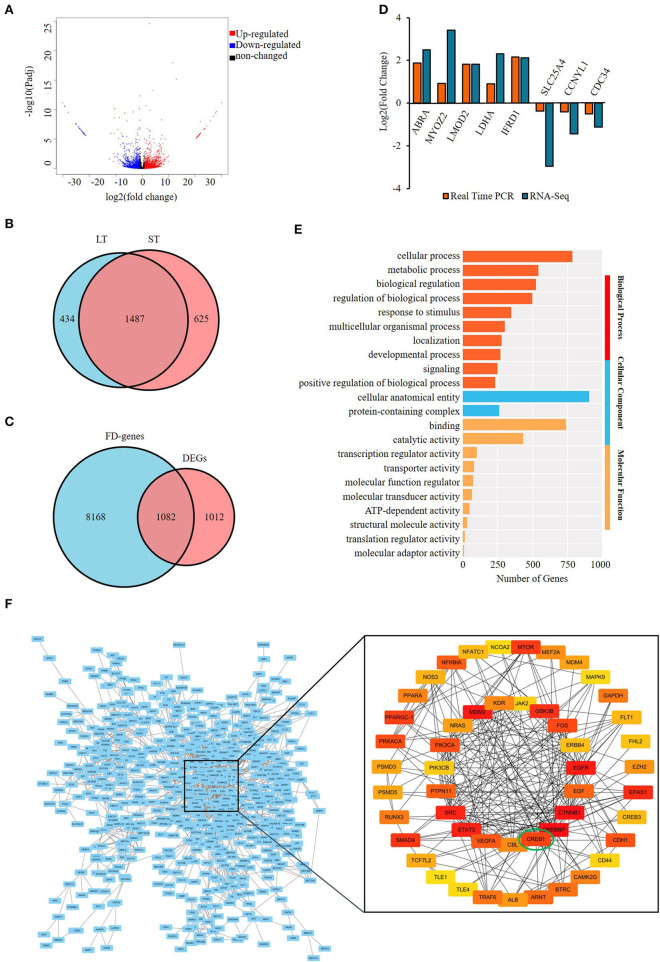
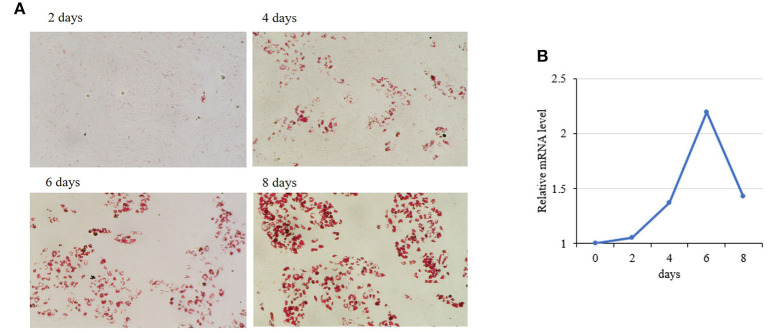
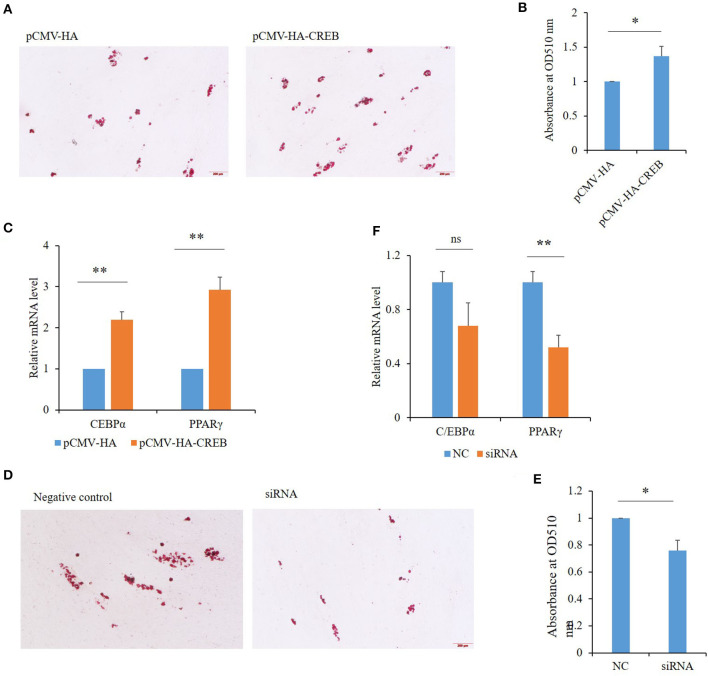
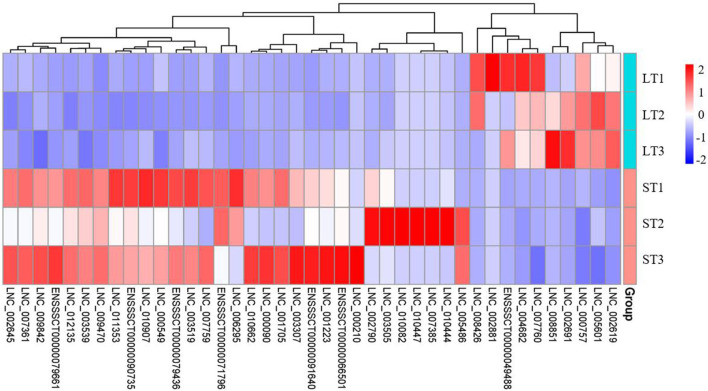
Meat quality is one of the most important traits in pig production. Long non-coding RNAs (lncRNAs) have been involved in diverse biological processes such as muscle development through regulating gene expression. However, studies on lncRNAs lag behind and a comparatively small number of lncRNAs have been identified in pigs. Also, the effects of lncRNAs on meat quality remain to be characterized. Here, we analyzed lncRNAs in longissimus thoracis (LT) and semitendinosus (ST) muscles, being different in meat quality, with RNA-sequencing technology. A total of 500 differentially expressed lncRNAs (DELs) and 2,094 protein-coding genes (DEGs) were identified. Through KEGG analysis on DELs, we first made clear that fat deposition might be the main reason resulting in the differential phenotype of LT and ST, for which cGMP-PKG and VEGF signaling pathways were the most important ones. In total, forty-one key DELs and 50 DEGs involved in the differential fat deposition were then characterized. One of the key genes, cAMP-response element binding protein 1, was selected to confirm its role in porcine adipogenesis with molecular biology methods and found that it promotes the differentiation of porcine preadipocytes, consistent with its higher expression level and intramuscular fat contents in LT than that in ST muscle. Furthermore, through integrated analysis of DELs and DEGs, transcription factors important for differential fat deposition were characterized among which BCL6 has the most target DEGs while MEF2A was targeted by the most DELs. The results provide candidate genes crucial for meat quality, which will contribute to improving meat quality with molecular-breeding strategies.
肉质是生猪生产中最重要的性状之一。长链非编码RNA(lncRNA)通过调节基因表达参与了多种生物学过程,如肌肉发育。然而,关于lncRNA的研究相对滞后,在猪中鉴定出的lncRNA数量较少。此外,lncRNA对肉质的影响仍有待确定。在此,我们利用RNA测序技术分析了背最长肌(LT)和半腱肌(ST)中lncRNA的情况,这两块肌肉的肉质不同。共鉴定出500个差异表达的lncRNA(DEL)和2094个蛋白质编码基因(DEG)。通过对DEL进行KEGG分析,我们首次明确脂肪沉积可能是导致LT和ST差异表型的主要原因,其中cGMP-PKG和VEGF信号通路最为重要。总共鉴定出41个参与差异脂肪沉积的关键DEL和50个DEG。选择关键基因之一的环磷酸腺苷反应元件结合蛋白1,用分子生物学方法证实其在猪脂肪生成中的作用,发现它促进猪前体脂肪细胞的分化,这与其在LT中的表达水平和肌内脂肪含量高于ST肌肉一致。此外,通过对DEL和DEG的综合分析,鉴定出对差异脂肪沉积重要的转录因子,其中BCL6的靶标DEG最多,而MEF2A被最多的DEL靶向。这些结果提供了对肉质至关重要的候选基因,将有助于通过分子育种策略改善肉质。