Esgalhado Graça, Pereira Henrique, Silva Patricia
Department of Psychology and Education, Faculty of Social and Human Sciences, University of Beira Interior, Pólo IV, Estrada do Sineiro, s/n, 6200-209 Covilhã, Portugal.
Institute of Cognitive Psychology, Human and Social Development (IPCDHS), 3000-115 Coimbra, Portugal.
Behav Sci (Basel). 2022 Aug 12;12(8):281. doi: 10.3390/bs12080281.
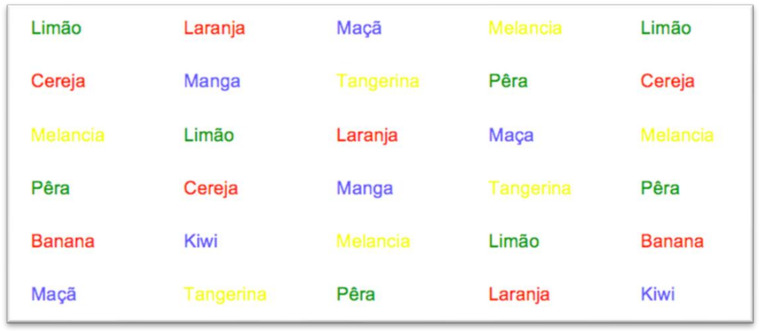
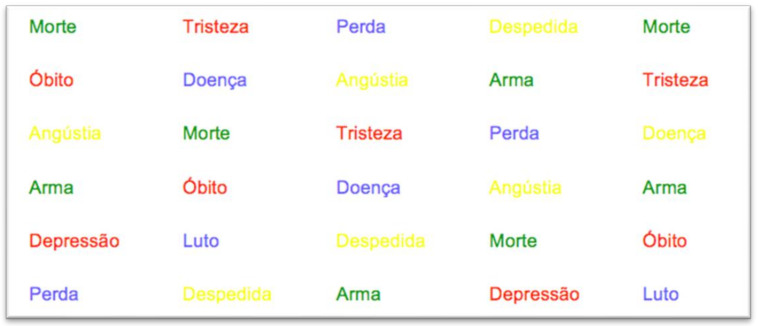
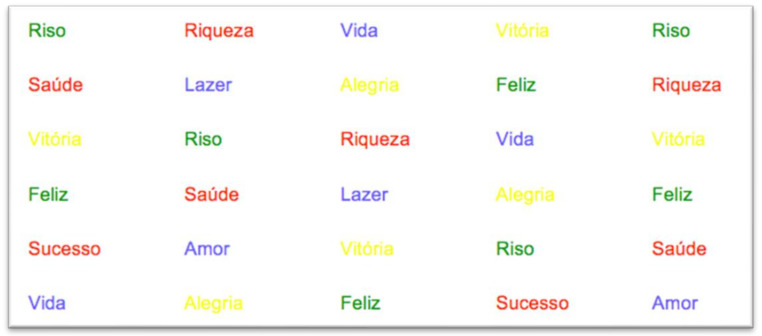
Cognitive instruments, especially those with emotional components, may be useful to address the limitations of self-report scales commonly used to assess suicidal ideation. The aim of this study was to develop an emotional Stroop test for screening suicidal ideation in Portugal. The project was developed in five phases using different samples for each phase. The first two phases were focused on the formulation of the potential words that would compose the slides. For this purpose, five biology teachers (neutral slide) and five mental health professionals (positive and negative slides) were invited to help choose the words that were most representative for each slide. The third phase validated the words defined in the previous phase. In this phase, 300 university students participated ( = 21.66; SD = 3.67; 68% female). They rated the words on a Likert scale in terms of their frequency of use, familiarity, level of understanding, and degree of image evocation. In the fourth phase, the researchers developed the complete version of the test, which consists of three slides with neutral, positive, and negative emotional stimuli, consecutively. Finally, in the fifth phase, we validated the final version of the test through a comparative study between a clinical group and a non-clinical group, each one composed by 50 participants ( = 32; SD = 9.70; 55% female). Results indicated that the clinical group demonstrated significantly higher scores for depression and suicidal ideation and lower scores for the three Stroop tasks. Words related to negative emotions were strongly correlated with suicidal ideation. Finally, the three Stroop slides explained 74.1% of the variance in suicidal ideation. These findings suggest that this test can be a viable complementary measure in the psychological assessment of suicide ideation, and intervention in the field of suicide prevention in Portugal.
认知工具,尤其是那些带有情感成分的工具,可能有助于解决常用于评估自杀意念的自我报告量表的局限性。本研究的目的是开发一种用于筛查葡萄牙自杀意念的情感斯特鲁普测试。该项目分五个阶段进行,每个阶段使用不同的样本。前两个阶段专注于构成幻灯片的潜在词语的制定。为此,邀请了五位生物教师(中性幻灯片)和五位心理健康专业人员(积极和消极幻灯片)来帮助选择最能代表每张幻灯片的词语。第三阶段验证了上一阶段定义的词语。在这个阶段,300名大学生参与其中(平均年龄=21.66岁;标准差=3.67;68%为女性)。他们根据词语的使用频率、熟悉程度、理解水平和图像唤起程度,采用李克特量表对词语进行评分。在第四阶段,研究人员开发了测试的完整版本,该版本由三张依次带有中性、积极和消极情感刺激的幻灯片组成。最后,在第五阶段,我们通过临床组和非临床组之间进行的比较研究,对测试的最终版本进行了验证,每组由50名参与者组成(平均年龄=32岁;标准差=9.70;55%为女性)。结果表明,临床组在抑郁和自杀意念方面的得分显著更高,而在三项斯特鲁普任务中的得分更低。与负面情绪相关的词语与自杀意念密切相关。最后,三张斯特鲁普幻灯片解释了自杀意念中74.1%的方差。这些发现表明,该测试可以作为葡萄牙自杀意念心理评估和自杀预防领域干预的一种可行的补充措施。