Stoner Kimberly A, Nurse Andrea, Koethe Robert W, Hatala Maxwell S, Lehmann David M
Connecticut Agricultural Experiment Station, New Haven, CT 06504, USA.
Climate Change Institute, University of Maine, Orono, ME 04469, USA.
Insects. 2022 Aug 18;13(8):744. doi: 10.3390/insects13080744.
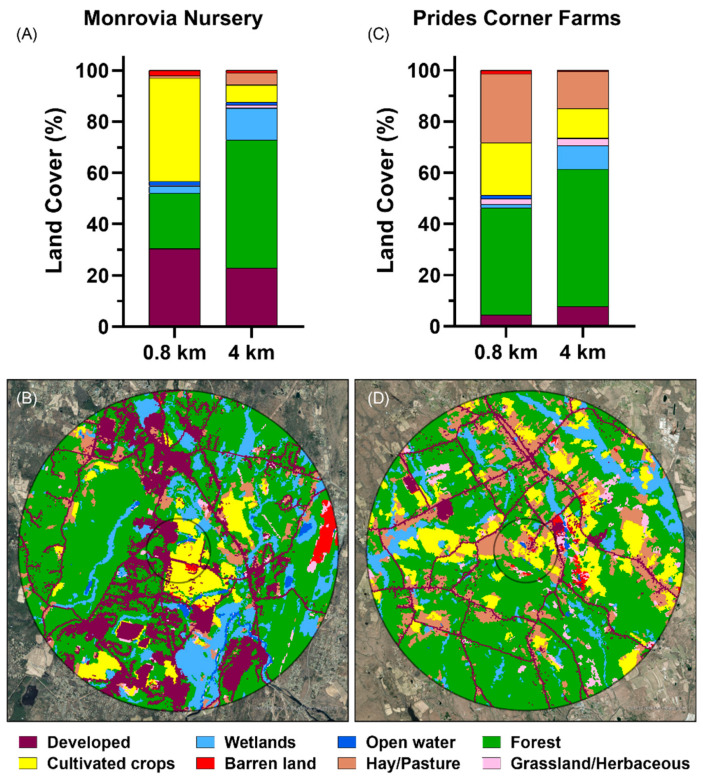
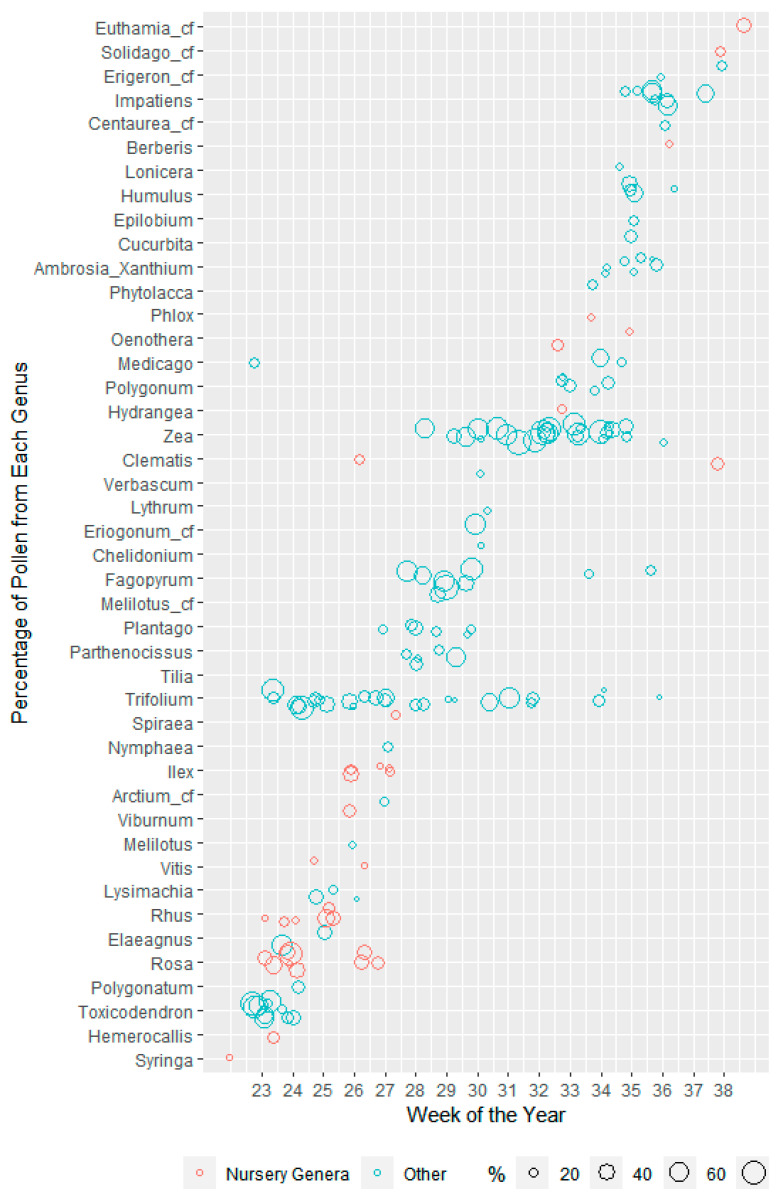
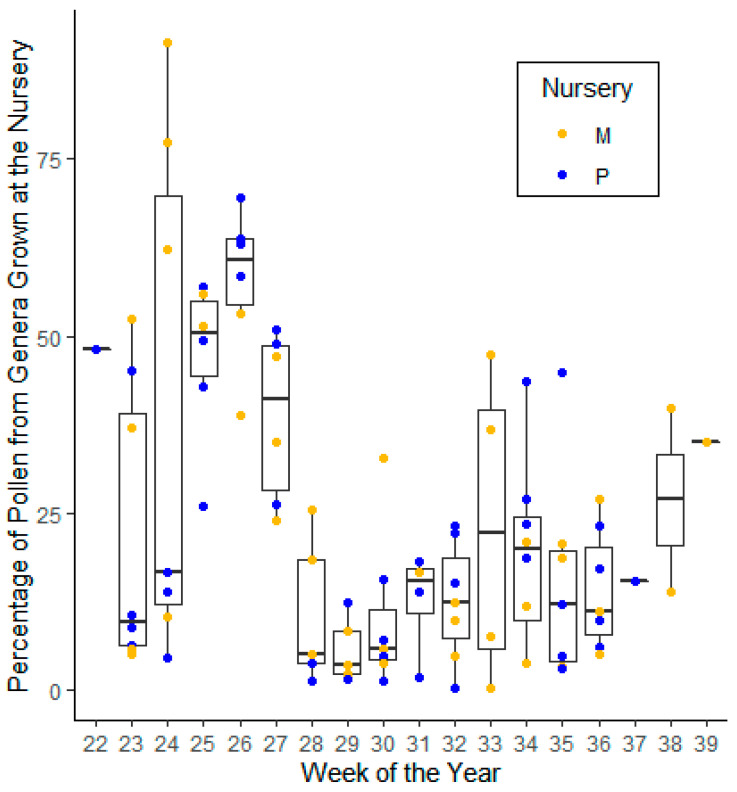
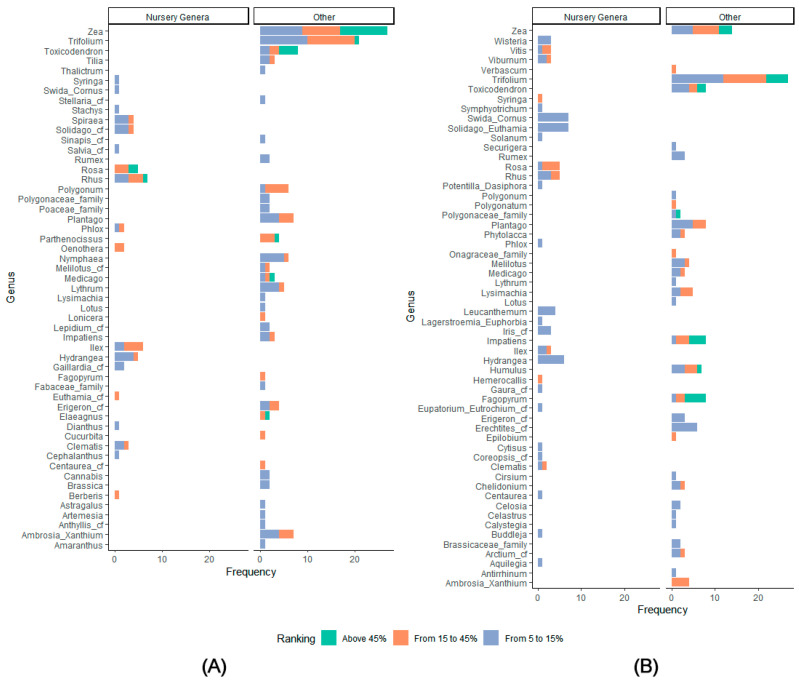
Ornamental nursery plants are both a major agricultural industry in the U.S. and a major feature of the urban and suburban landscape. Interest in their relationship with pollinators is two-fold: the extent to which they provide a nutritional benefit to pollinators, and the extent to which they have the potential to harm pollinators by exposing them to pesticide residues in nectar and pollen. We identified plant genera as sources of trapped pollen collected by honey bee colonies located at commercial ornamental plant nurseries in Connecticut in 2015 and 2018 and quantified the percentage of pollen volume collected from each genus for each weekly sample over two seasons. Plant genera grown at these nurseries, particularly , and , contributed substantially to pollen volume during weeks 23-27 of the year. Among the genera not grown in nurseries, was also important during weeks 23 and 24, and was important in both frequency and quantity throughout the season. was a major component of pollen volume from weeks 28-36 in both sites, even though cropland was not over 11% of land cover at either site.
观赏苗圃植物既是美国的一个主要农业产业,也是城市和郊区景观的一个主要特色。人们对它们与传粉者关系的兴趣体现在两个方面:它们为传粉者提供营养益处的程度,以及它们通过使传粉者接触花蜜和花粉中的农药残留而对传粉者造成伤害的可能性。我们将植物属确定为2015年和2018年位于康涅狄格州商业观赏植物苗圃的蜂群所采集的被困花粉的来源,并对两个季节中每周每个样本从每个属采集的花粉量百分比进行了量化。这些苗圃种植的植物属,特别是[此处原文缺失具体属名]、[此处原文缺失具体属名]和[此处原文缺失具体属名],在一年的第23 - 27周对花粉量有很大贡献。在苗圃中未种植的属中,[此处原文缺失具体属名]在第23周和第24周也很重要,[此处原文缺失具体属名]在整个季节的出现频率和数量方面都很重要。[此处原文缺失具体属名]是两个地点第28 - 36周花粉量的主要组成部分,尽管两个地点的农田覆盖率均未超过11%。