Department of Entomology, Pennsylvania State University, University Park, Pennsylvania, PA, 16802, USA.
Department of Biology, York University, Toronto, ON, M3J 1P3, Canada.
Sci Rep. 2020 Jan 21;10(1):831. doi: 10.1038/s41598-020-57858-2.
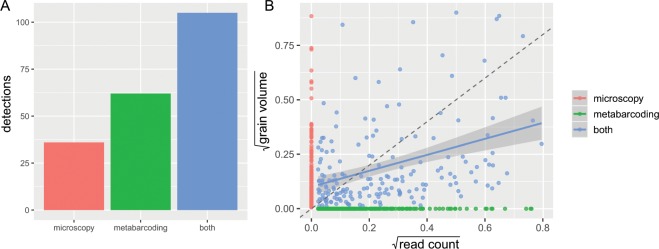
In urban and suburban landscapes characterized by extensive designed greenspaces, the support of pollinator communities hinges significantly on floral resources provided by ornamental plants. The attractiveness of ornamental plants to pollinators, however, cannot be presumed, and some studies suggest that a majority of ornamental plant varieties receive little or no pollinator visitation. Here, we harness the sampling power of the western honey bee, a generalist pollinator whose diet breadth overlaps substantially with that of other pollinators, to survey the utilization of ornamental plants grown at three commercial nurseries in Connecticut, USA. Using a combination of DNA metabarcoding and microscopy, we identify, to genus-level, pollen samples from honey bee colonies placed within each nursery, and we compare our results with nursery plant inventories to identify the subset of cultivated genera that were visited during pollen foraging. Samples were collected weekly from May to September, encompassing the majority of the growing season. Our findings show that some plant genera known to be cultivated as ornamentals in our system, particularly ornamental trees and shrubs (e.g. Hydrangea, Rosa, Spiraea, Syringa, Viburnum), functioned as major pollen sources, but the majority of plants inventoried at our nurseries provided little or no pollen to honey bees. These results are in agreement with a growing body of literature highlighting the special importance of woody plants as resources for flower-visiting insects. We encourage further exploration of the genera highlighted in our data as potential components of pollinator-friendly ornamental greenspace.
在以广泛设计的绿地为特征的城市和郊区景观中,传粉者群落的支持在很大程度上取决于观赏植物提供的花卉资源。然而,观赏植物对传粉者的吸引力不能被假定,一些研究表明,大多数观赏植物品种很少或根本没有受到传粉者的访问。在这里,我们利用西方蜜蜂的采样能力,西方蜜蜂是一种兼性传粉者,其饮食范围与其他传粉者的饮食范围有很大的重叠,来调查美国康涅狄格州三个商业苗圃种植的观赏植物的利用情况。我们使用 DNA 代谢组学和显微镜相结合的方法,从放置在每个苗圃内的蜜蜂群体中识别出花粉样本,鉴定到属级水平,并将我们的结果与苗圃植物清单进行比较,以确定在花粉觅食期间被访问的栽培属的子集。样本从 5 月到 9 月每周采集一次,涵盖了大部分生长季节。我们的研究结果表明,在我们的系统中作为观赏植物栽培的一些已知植物属,特别是观赏树木和灌木(例如绣球花、玫瑰、绣线菊、丁香、荚蒾),作为主要的花粉来源,但我们苗圃中清单上的大多数植物给蜜蜂提供的花粉很少或根本没有。这些结果与越来越多的文献一致,强调了木本植物作为访花昆虫资源的特殊重要性。我们鼓励进一步探索我们数据中突出的属,作为对传粉者友好的观赏绿地的潜在组成部分。