Louro Henriqueta, Gomes Bruno Costa, Saber Anne Thoustrup, Iamiceli Anna Laura, Göen Thomas, Jones Kate, Katsonouri Andromachi, Neophytou Christiana M, Vogel Ulla, Ventura Célia, Oberemm Axel, Duca Radu Corneliu, Fernandez Mariana F, Olea Nicolas, Santonen Tiina, Viegas Susana, Silva Maria João
Department of Human Genetics, National Institute of Health Dr. Ricardo Jorge (INSA), Av. Padre Cruz, 1649-016 Lisbon, Portugal.
Centre for Toxicogenomics and Human Health (ToxOmics), Nova Medical School, Universidade NOVA de Lisboa, Campo dos Mártires da Pátria, 130, 1169-056 Lisbon, Portugal.
Toxics. 2022 Aug 17;10(8):480. doi: 10.3390/toxics10080480.
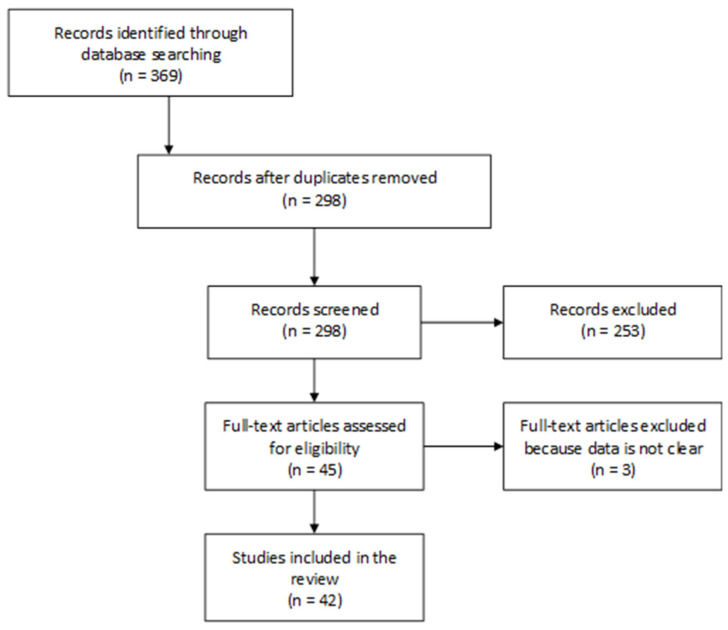
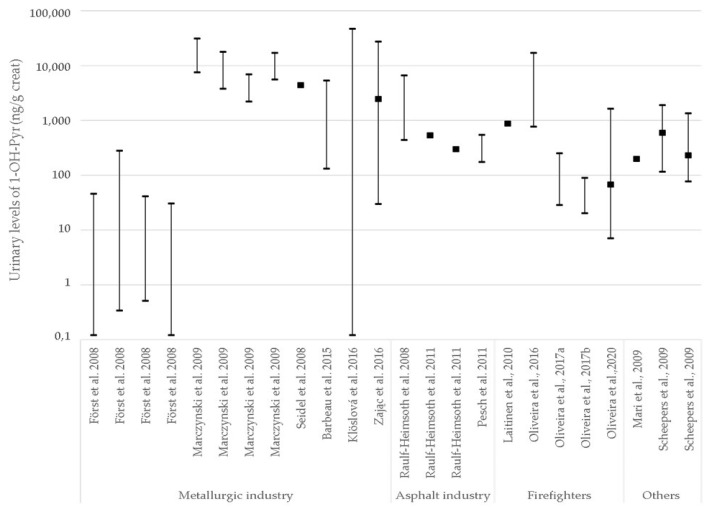
Polycyclic aromatic hydrocarbons (PAHs) are among the chemicals with proven impact on workers' health. The use of human biomonitoring (HBM) to assess occupational exposure to PAHs has become more common in recent years, but the data generated need an overall view to make them more usable by regulators and policymakers. This comprehensive review, developed under the Human Biomonitoring for Europe (HBM4EU) Initiative, was based on the literature available from 2008-2022, aiming to present and discuss the information on occupational exposure to PAHs, in order to identify the strengths and limitations of exposure and effect biomarkers and the knowledge needs for regulation in the workplace. The most frequently used exposure biomarker is urinary 1-hydroxypyrene (1-OH-PYR), a metabolite of pyrene. As effect biomarkers, those based on the measurement of oxidative stress (urinary 8-oxo-dG adducts) and genotoxicity (blood DNA strand-breaks) are the most common. Overall, a need to advance new harmonized approaches both in data and sample collection and in the use of appropriate biomarkers in occupational studies to obtain reliable and comparable data on PAH exposure in different industrial sectors, was noted. Moreover, the use of effect biomarkers can assist to identify work environments or activities of high risk, thus enabling preventive risk mitigation and management measures.
多环芳烃(PAHs)是已证实对工人健康有影响的化学物质之一。近年来,使用人体生物监测(HBM)来评估职业性多环芳烃暴露变得更为普遍,但所产生的数据需要一个整体视角,以便监管机构和政策制定者能更好地利用。这项在欧洲人体生物监测(HBM4EU)倡议下开展的全面综述基于2008年至2022年的现有文献,旨在呈现和讨论职业性多环芳烃暴露的信息,以确定暴露和效应生物标志物的优势与局限性以及工作场所监管的知识需求。最常用的暴露生物标志物是尿中1-羟基芘(1-OH-PYR),它是芘的一种代谢产物。作为效应生物标志物,基于氧化应激测量(尿中8-氧代脱氧鸟苷加合物)和遗传毒性(血液DNA链断裂)的标志物最为常见。总体而言,人们注意到需要在数据和样本收集以及职业研究中使用适当生物标志物方面推进新的统一方法,以获取不同工业部门多环芳烃暴露的可靠且可比的数据。此外,使用效应生物标志物有助于识别高风险的工作环境或活动,从而实现预防性风险缓解和管理措施。