Pierre Thibaut, Selhane Fatine, Zareski Elise, Garcia Camilo, Fizazi Karim, Loriot Yohann, Patrikidou Anna, Naoun Natacha, Bernard-Tessier Alice, Baumert Hervé, Lebacle Cédric, Blanchard Pierre, Rocher Laurence, Balleyguier Corinne
Department of Radiology, Gustave Roussy, 114 Rue Edouard-Vaillant, 94800 Villejuif, France.
School of Medicine, University of Paris-Saclay, Cancer Campus, 94800 Villejuif, France.
Cancers (Basel). 2022 Aug 17;14(16):3965. doi: 10.3390/cancers14163965.
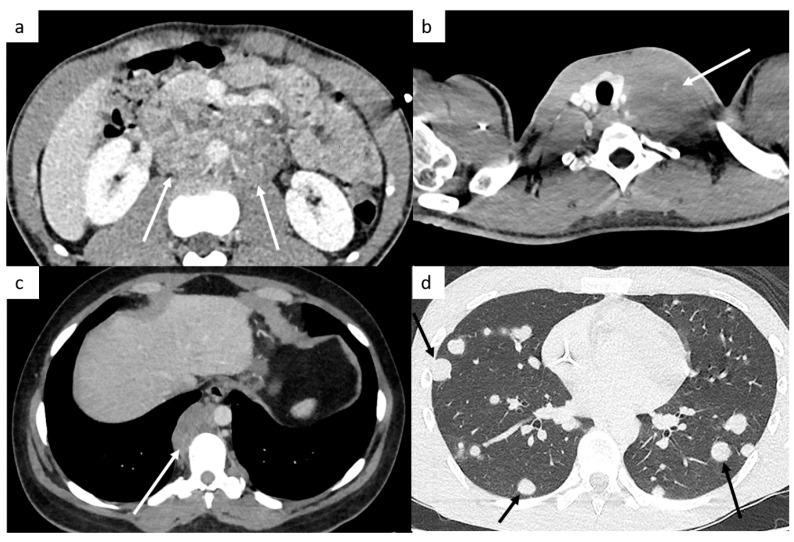
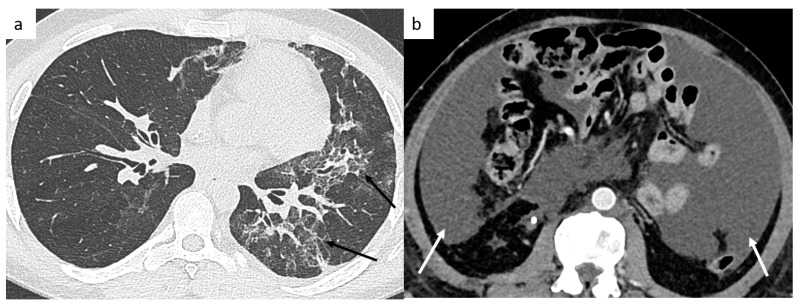
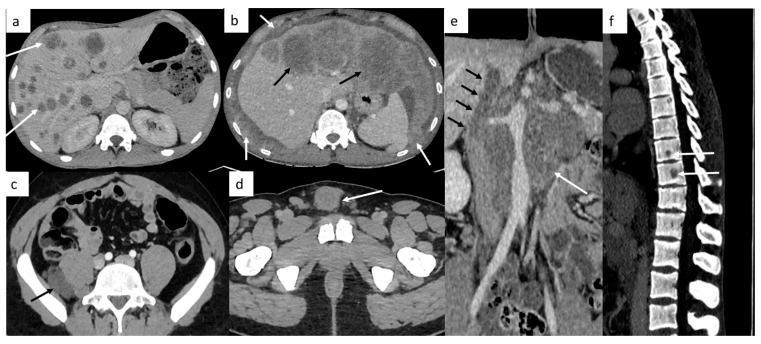
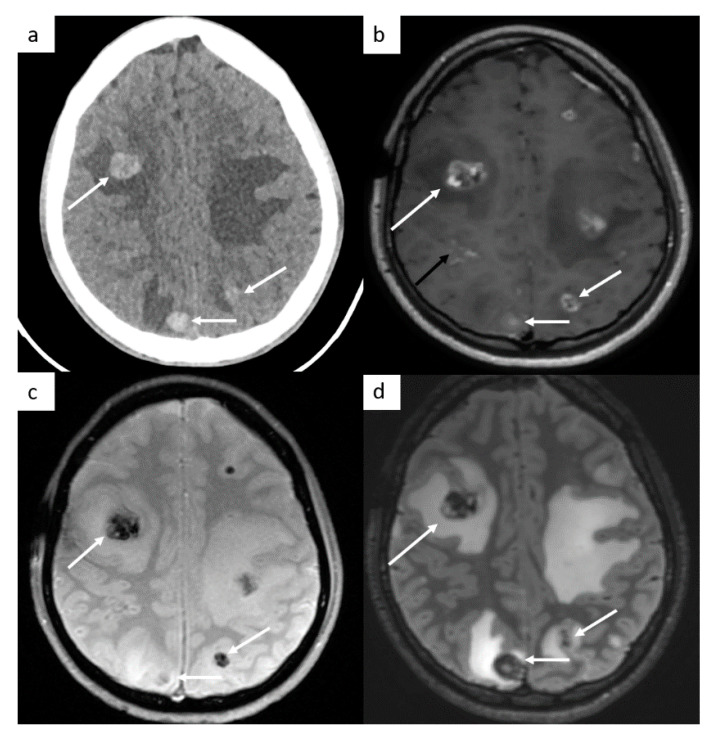
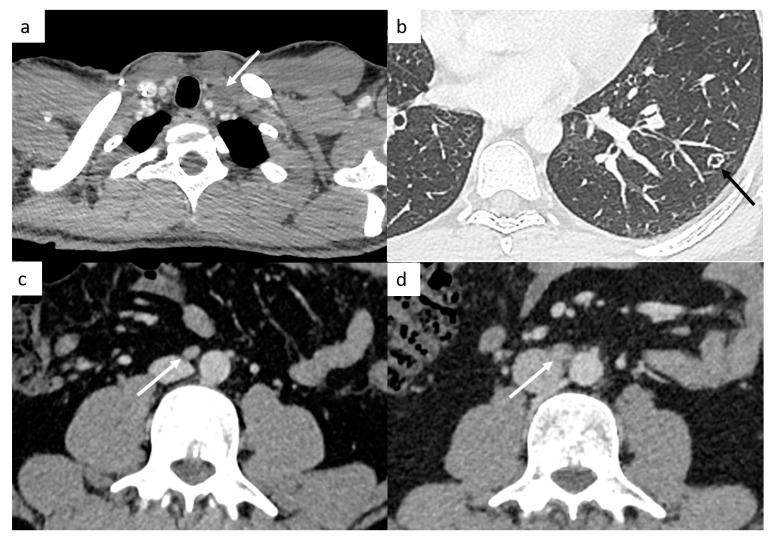
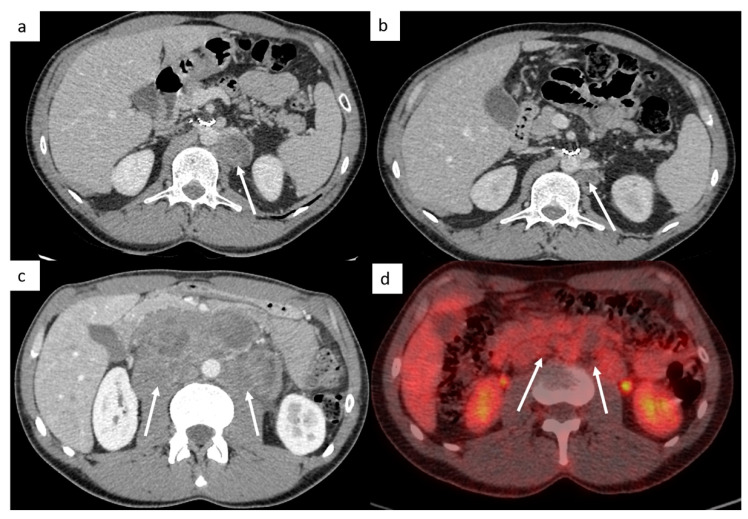
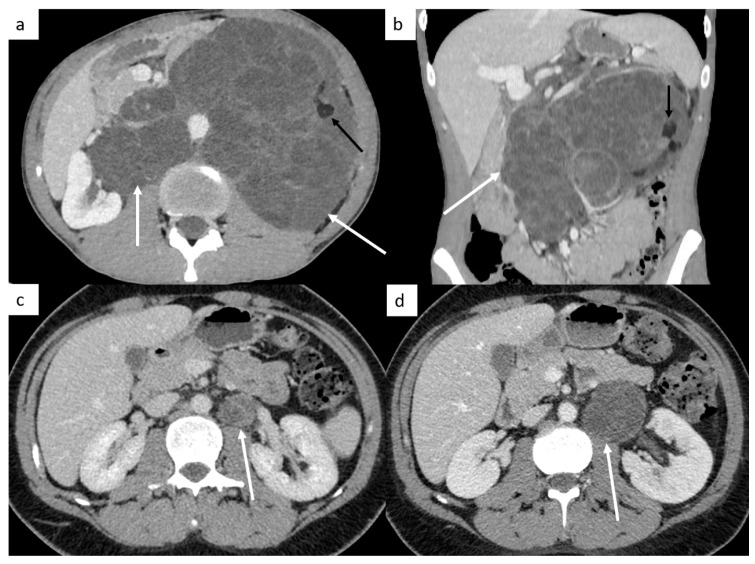
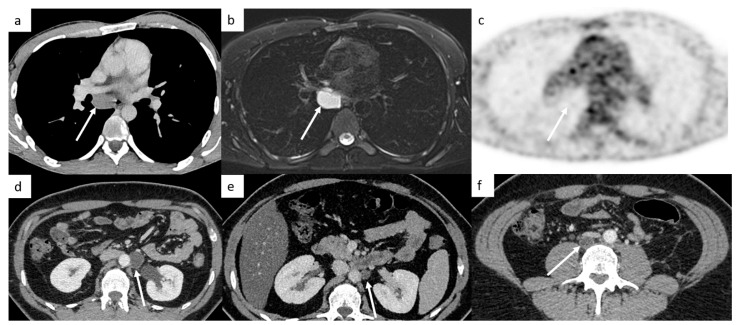
Ultrasound imaging of the testis represents the standard-of-care initial imaging for the diagnosis of TGCT, whereas computed tomography (CT) plays an integral role in the initial accurate disease staging (organ-confined, regional lymph nodes, or sites of distant metastases), in monitoring the response to therapy in patients who initially present with non-confined disease, in planning surgical approaches for residual masses, in conducting follow-up surveillance and in determining the extent of recurrence in patients who relapse after treatment completion. CT imaging has also an important place in diagnosing complications of treatments. The aims of this article are to review these different roles of CT in primary TGCT and focus on different pitfalls that radiologists need to be aware of.
睾丸超声成像代表了睾丸生殖细胞肿瘤(TGCT)诊断的标准护理初始成像,而计算机断层扫描(CT)在初始准确疾病分期(器官局限、区域淋巴结或远处转移部位)、监测初始表现为非局限性疾病患者的治疗反应、规划残留肿块的手术方法、进行随访监测以及确定治疗完成后复发患者的复发范围方面发挥着不可或缺的作用。CT成像在诊断治疗并发症方面也具有重要地位。本文的目的是回顾CT在原发性TGCT中的这些不同作用,并关注放射科医生需要注意的不同陷阱。