Department of Horticulture, Suncheon National University, 255 Jungang-ro, Suncheon 57922, Jeonnam, Korea.
Department of Horticulture, PPS Co., Ltd., #51 Hagalro86beon-gil, Giheung-gu, Yongin-si 17096, Gyeonggi-do, Korea.
Genes (Basel). 2022 Aug 17;13(8):1468. doi: 10.3390/genes13081468.
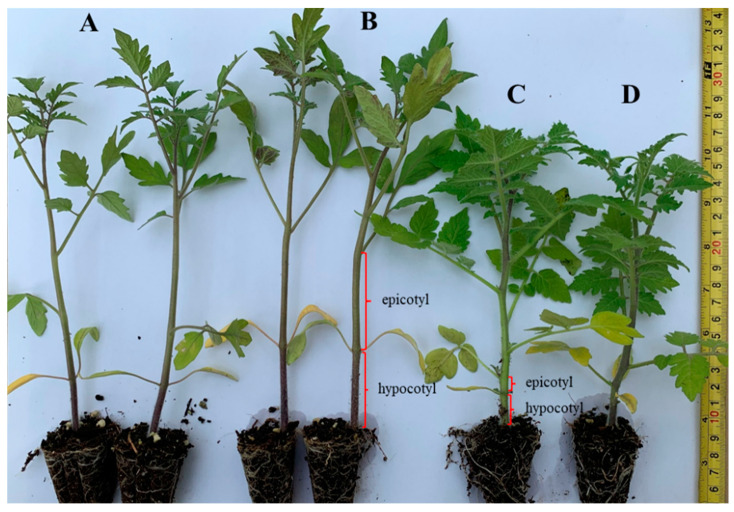
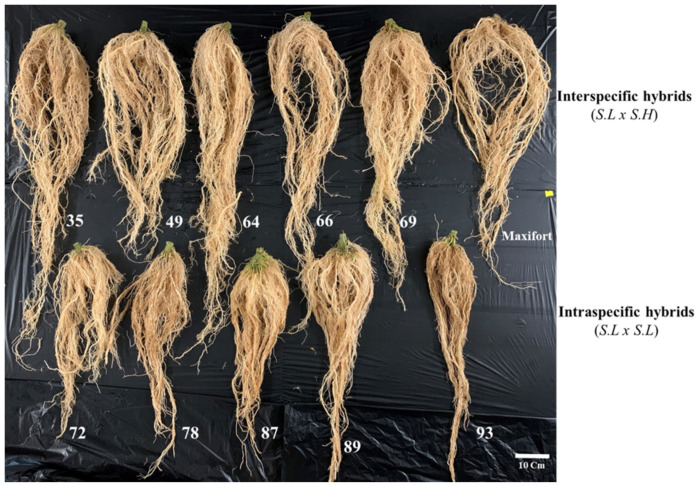
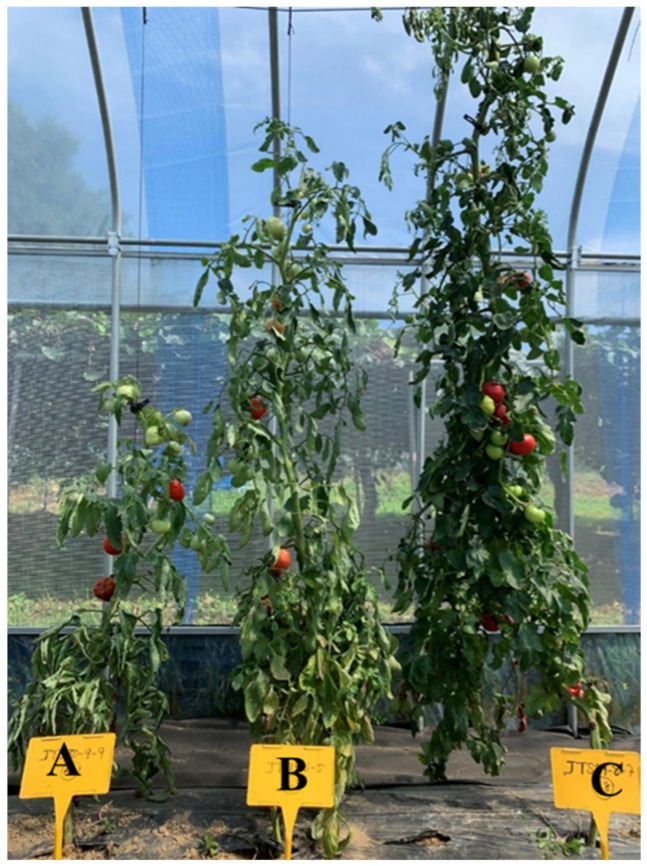
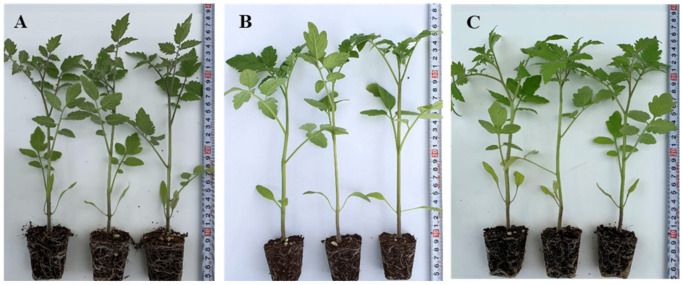
Tomato rootstocks are important to increase yield and control soil-borne pathogens, increasing vigor for a longer crop cycle and tolerance to biotic and abiotic stress. This study, conducted in the greenhouse of Sunchon National University during the period from 2019 to 2022, aimed to identify local soil-borne-disease resistant interspecific and intraspecific tomato hybrid rootstocks. The 71 interspecific hybrids ( × ) showed that the germination vigor (GV) was less than Maxifort, except for several combinations. The germination rate (GP) of cross-species hybrids showed a different pattern according to the hybrid combinations, of which three combinations showed less than 30%. The horticultural traits, such as GV and GP, of the intraspecies hybrid ( × ) combination were significantly improved compared to that of Maxifort. In 71 combinations ( × ) and 25 combinations ( × ), MAS was used to evaluate the resistance of eight genes related to soil-borne pathogens, four genes related to vector-mediated pathogens, and three genes related to air-borne pathogens. The results showed that the new hybrid combination had improved resistance over the commercial-stock Maxifort. Therefore, interspecies and intraspecies hybrid techniques for breeding commercial rootstocks can be utilized as a way to improve horticultural properties and resistance to soil-borne diseases in tomato.
番茄砧木对于提高产量和控制土传病原菌至关重要,它可以增强作物活力,延长生长周期,并提高对生物和非生物胁迫的耐受性。本研究于 2019 年至 2022 年在顺天国立大学温室进行,旨在鉴定具有本地抗土传病害的番茄种间和种内杂种砧木。71 个种间杂种(×)的研究结果表明,除了几种组合外,其发芽活力(GV)均小于 Maxifort。种间杂种的发芽率(GP)根据杂种组合表现出不同的模式,其中有三个组合的发芽率低于 30%。与 Maxifort 相比,种内杂种(×)组合的园艺性状,如 GV 和 GP,有显著改善。在 71 个组合(×)和 25 个组合(×)中,利用 MAS 评估了与土传病原菌相关的 8 个基因、与媒介传播病原菌相关的 4 个基因和与空气传播病原菌相关的 3 个基因的抗性。结果表明,新的杂种组合在商业品种 Maxifort 上具有更高的抗性。因此,种间和种内杂种技术可用于培育商业砧木,从而改善番茄的园艺特性和土传病害抗性。