Department of Psychiatry, Ajou University School of Medicine, Suwon 16500, Korea.
Gwangju Smile Center for Crime Victims, Gwangju 61480, Korea.
Int J Environ Res Public Health. 2022 Aug 18;19(16):10252. doi: 10.3390/ijerph191610252.
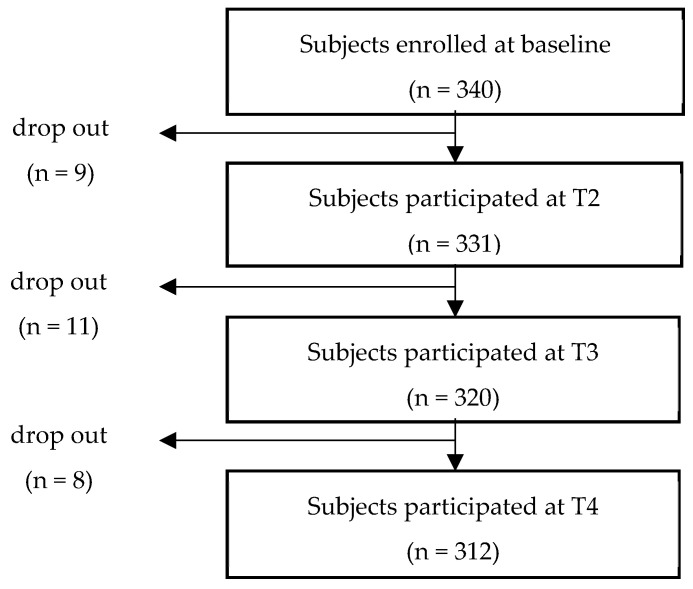
The use of electronic screen devices has a negative effect on sleep. The purpose of this study is to longitudinally examine the effects of various screen use on sleep problems in children under 7 years of age. A total of 314 caregivers of children aged 4−7 years from three cities in Korea were recruited and responded to a self-administered questionnaire from 2017 to 2020. As a result of the analysis of the mixed model designed as a two-leveled structure, the use frequency of smartphones significantly predicted children’s sleep problems (β = 0.328, p < 0.001) compared to that of TV, PC, and tablet PC. In addition, the frequency of smartphone screen use showed a weak but significant correlation with bedtime resistance (r = 0.067, p = 0.009), sleep duration (r = 0.089, p <0.001), nighttime awakening (r = 0.066, p = 0.010), and daytime sleepiness (r = 0.102, p < 0.001). The results of this study suggest that screen time education in Korea should focus on smartphones above all else.
电子屏幕设备的使用对睡眠有负面影响。本研究旨在纵向探讨 7 岁以下儿童各种屏幕使用与睡眠问题的关系。本研究共招募了来自韩国三个城市的 314 名 4-7 岁儿童的照顾者,并在 2017 年至 2020 年期间对他们进行了自我管理式问卷调查。由于采用了两级结构的混合模型分析,与电视、个人电脑和平板电脑相比,智能手机的使用频率显著预测了儿童的睡眠问题(β=0.328,p<0.001)。此外,智能手机屏幕使用频率与上床入睡抵抗(r=0.067,p=0.009)、睡眠时间(r=0.089,p<0.001)、夜间觉醒(r=0.066,p=0.010)和日间嗜睡(r=0.102,p<0.001)呈弱但显著相关。本研究结果表明,韩国的屏幕时间教育应特别关注智能手机。