Department of Ophthalmology and Visual Sciences, University of Alabama at Birmingham, 1670 University BLVD, VH490, Birmingham, AL 35294, USA.
Hugh Kaul Precision Medicine Institute, Department of Medicine, University of Alabama at Birmingham, Birmingham, AL 35294, USA.
Int J Mol Sci. 2022 Aug 15;23(16):9141. doi: 10.3390/ijms23169141.
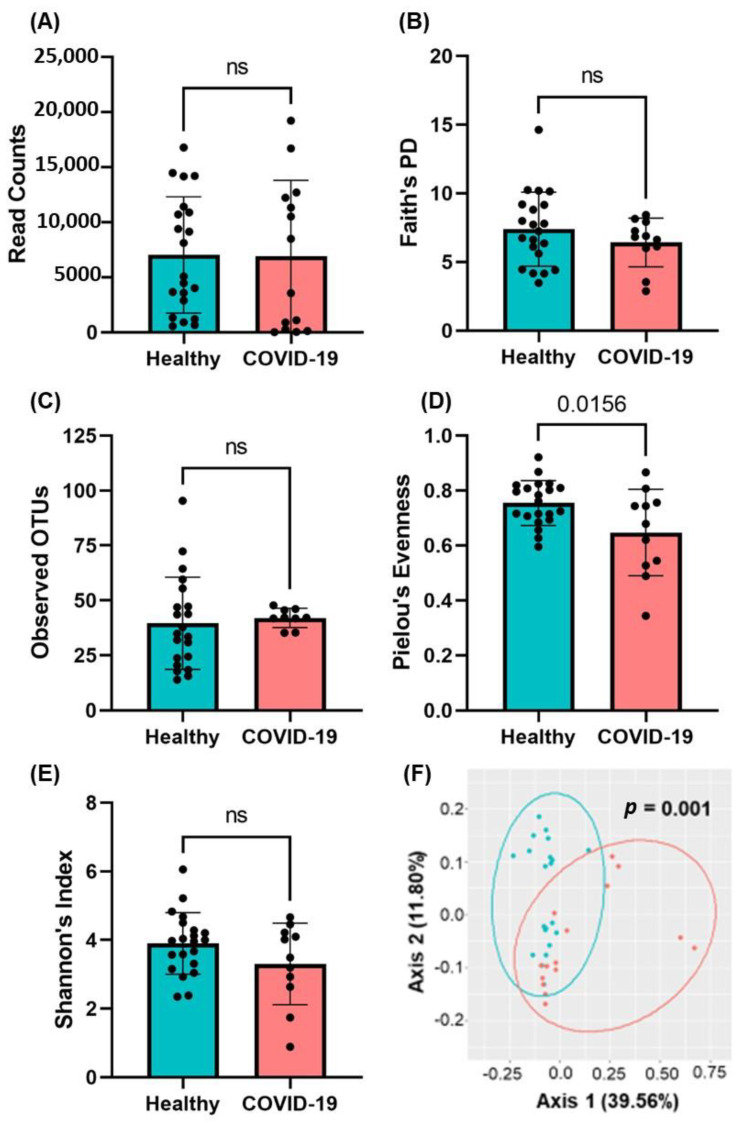
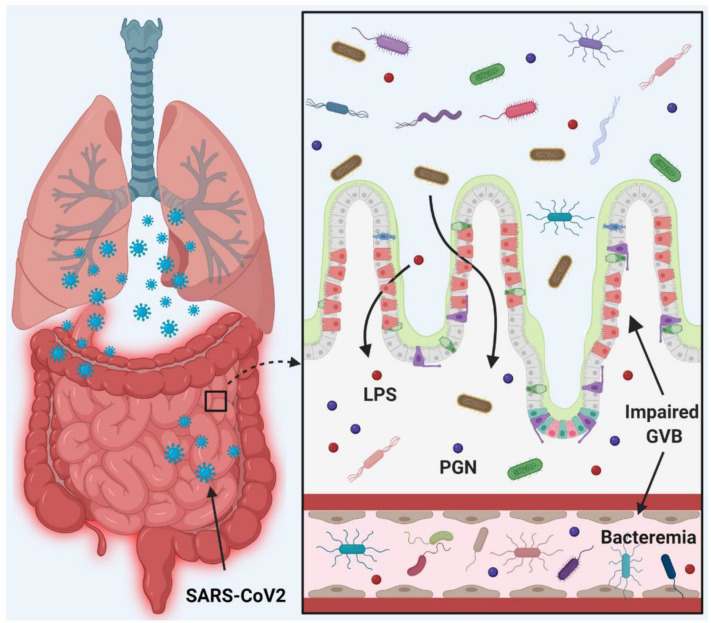
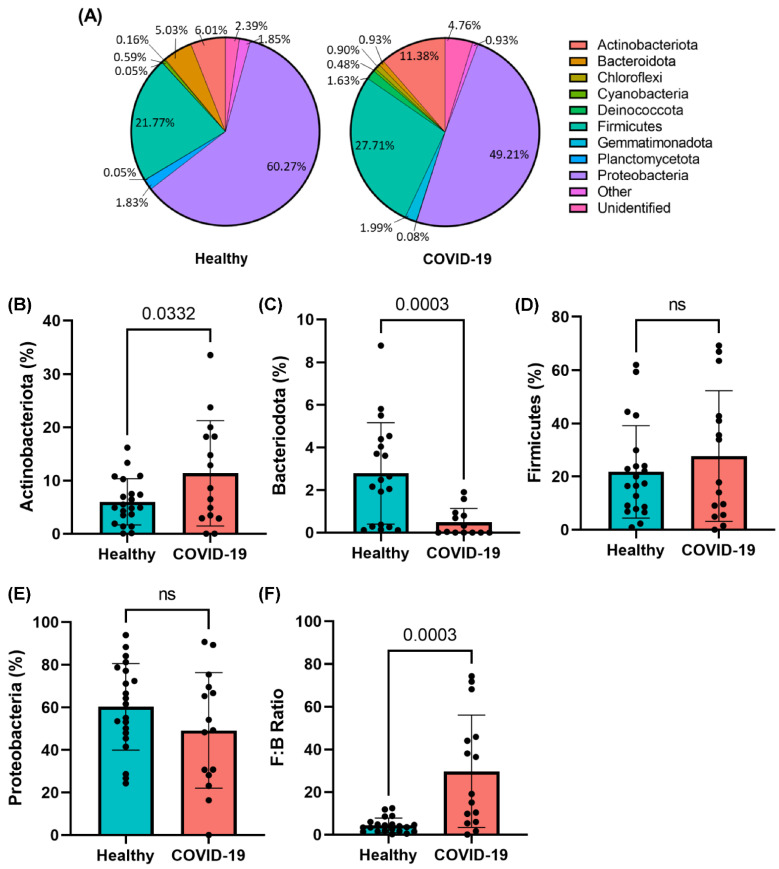
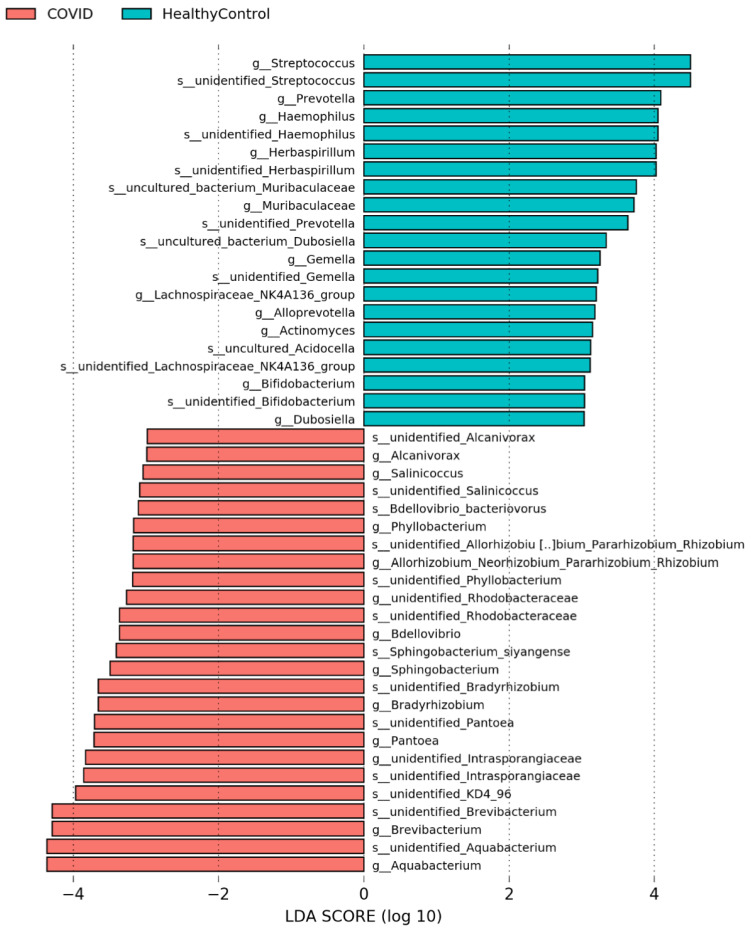
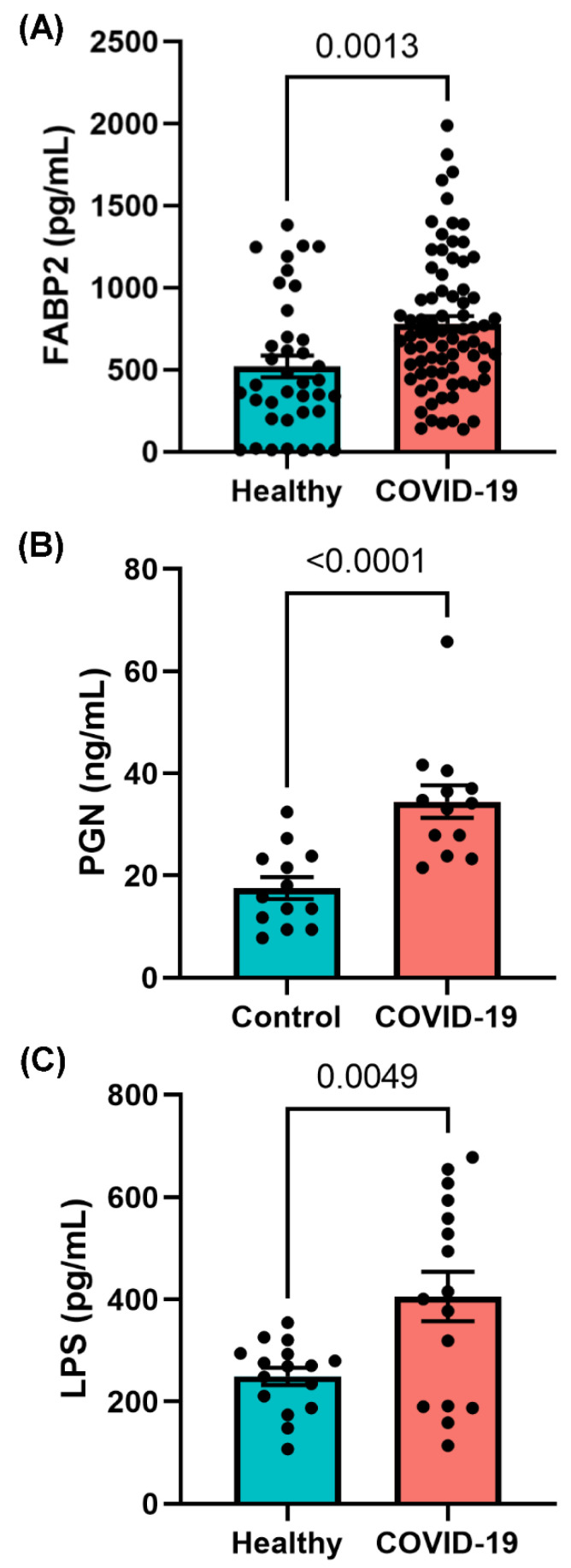
The gut is a well-established route of infection and target for viral damage by SARS-CoV-2. This is supported by the clinical observation that about half of COVID-19 patients exhibit gastrointestinal (GI) complications. We aimed to investigate whether the analysis of plasma could provide insight into gut barrier dysfunction in patients with COVID-19 infection. Plasma samples of COVID-19 patients (n = 146) and healthy individuals (n = 47) were collected during hospitalization and routine visits. Plasma microbiome was analyzed using 16S rRNA sequencing and gut permeability markers including fatty acid binding protein 2 (FABP2), peptidoglycan (PGN), and lipopolysaccharide (LPS) in both patient cohorts. Plasma samples of both cohorts contained predominately Proteobacteria, Firmicutes, Bacteroides, and Actinobacteria. COVID-19 subjects exhibit significant dysbiosis (p = 0.001) of the plasma microbiome with increased abundance of Actinobacteria spp. (p = 0.0332), decreased abundance of Bacteroides spp. (p = 0.0003), and an increased Firmicutes:Bacteroidetes ratio (p = 0.0003) compared to healthy subjects. The concentration of the plasma gut permeability marker FABP2 (p = 0.0013) and the gut microbial antigens PGN (p < 0.0001) and LPS (p = 0.0049) were significantly elevated in COVID-19 patients compared to healthy subjects. These findings support the notion that the intestine may represent a source for bacteremia and contribute to worsening COVID-19 outcomes. Therapies targeting the gut and prevention of gut barrier defects may represent a strategy to improve outcomes in COVID-19 patients.
肠道是 SARS-CoV-2 感染和病毒损伤的既定途径。这一观点得到了临床观察的支持,大约一半的 COVID-19 患者表现出胃肠道(GI)并发症。我们旨在研究分析血浆是否可以提供对 COVID-19 感染患者肠道屏障功能障碍的深入了解。在住院和常规就诊期间收集了 COVID-19 患者(n = 146)和健康个体(n = 47)的血浆样本。使用 16S rRNA 测序分析血浆微生物组,并在两个患者队列中检测脂肪酸结合蛋白 2(FABP2)、肽聚糖(PGN)和脂多糖(LPS)等肠道通透性标志物。两个队列的血浆样本均主要含有变形菌门、厚壁菌门、拟杆菌门和放线菌门。COVID-19 患者的血浆微生物组发生显著失调(p = 0.001),其中放线菌门丰度增加(p = 0.0332),拟杆菌门丰度降低(p = 0.0003),厚壁菌门/拟杆菌门比值增加(p = 0.0003)。与健康个体相比,COVID-19 患者的血浆肠道通透性标志物 FABP2 浓度(p = 0.0013)以及肠道微生物抗原 PGN(p < 0.0001)和 LPS(p = 0.0049)显著升高。这些发现支持了肠道可能是菌血症的来源并导致 COVID-19 结局恶化的观点。针对肠道的治疗方法和预防肠道屏障缺陷可能是改善 COVID-19 患者结局的策略。