Department of Molecular Biology, Institute for Biological Research "Siniša Stanković", National Institute of Republic of Serbia, University of Belgrade, 11060 Belgrade, Serbia.
Department of Cell and Tissue Biology, Faculty of Biology, University of Belgrade, 11060 Belgrade, Serbia.
Int J Mol Sci. 2022 Aug 18;23(16):9309. doi: 10.3390/ijms23169309.
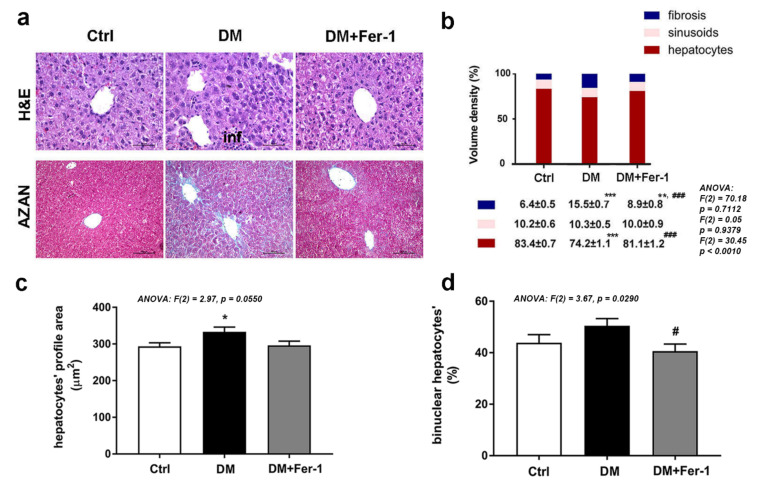
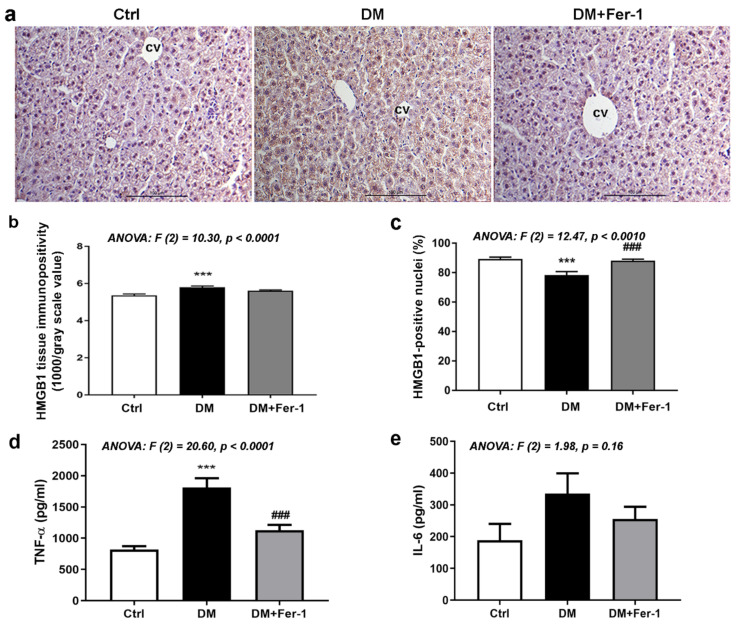
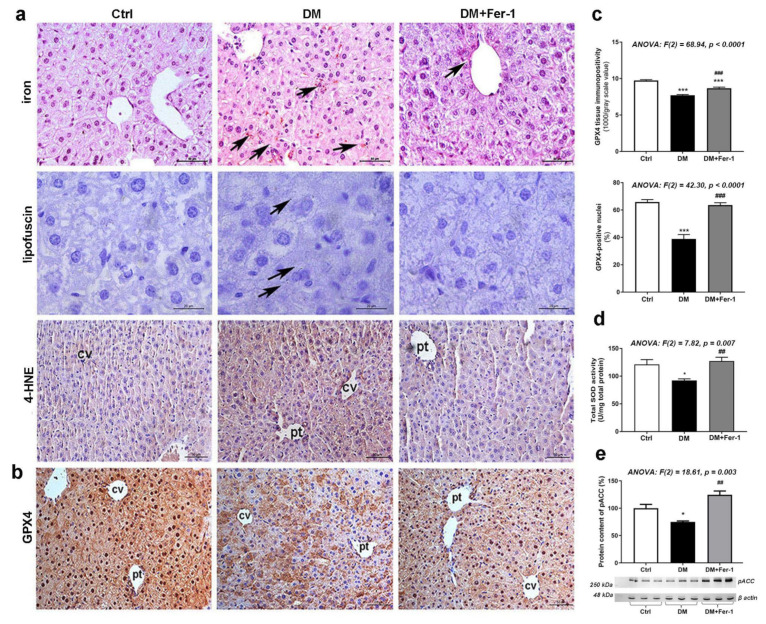
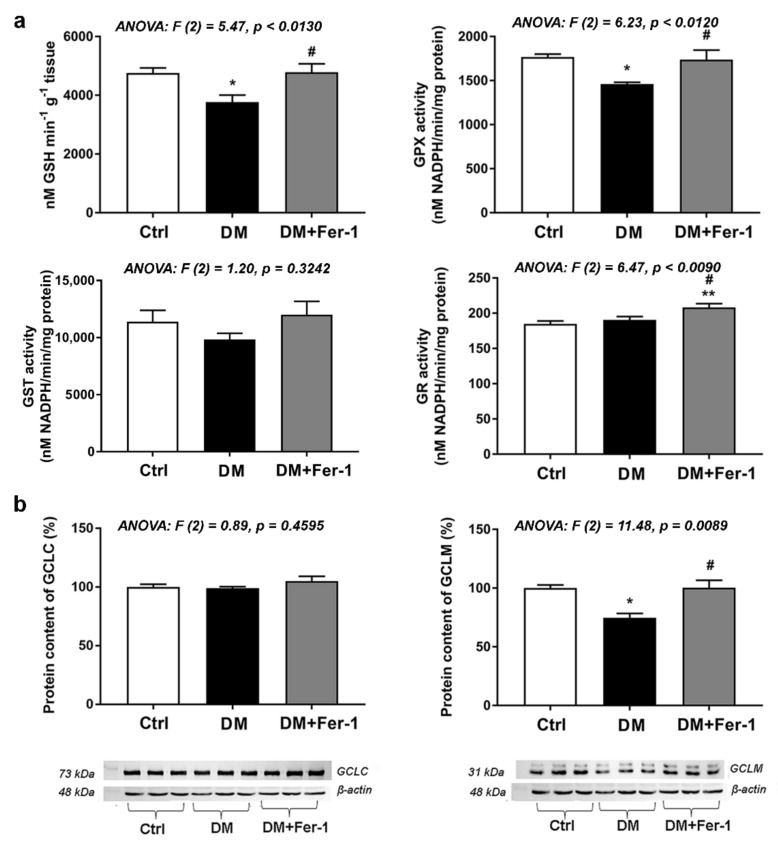
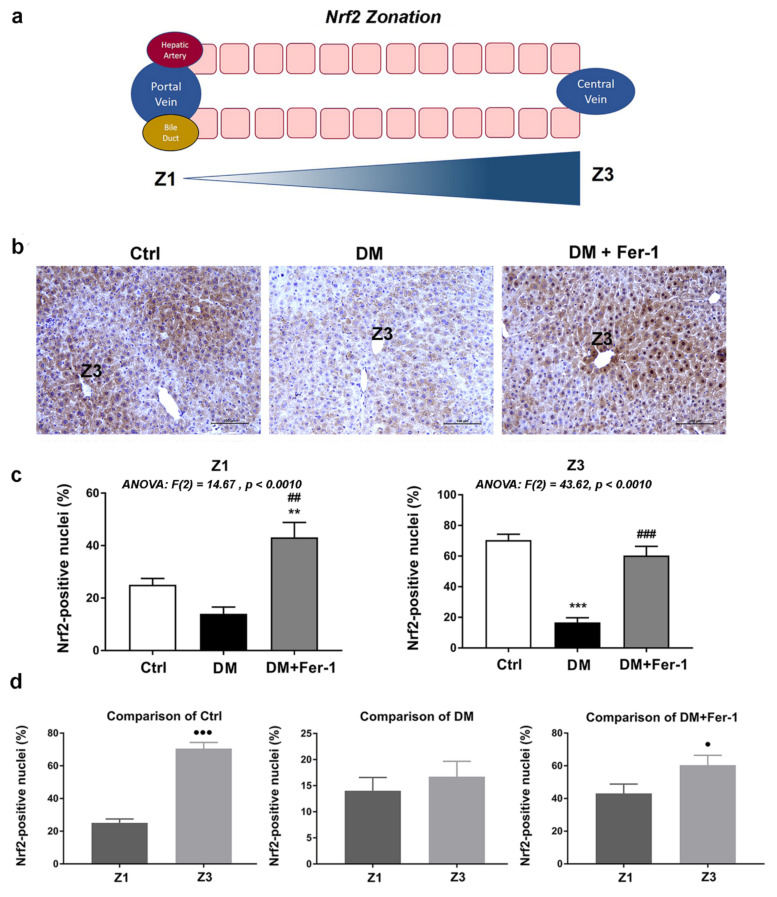
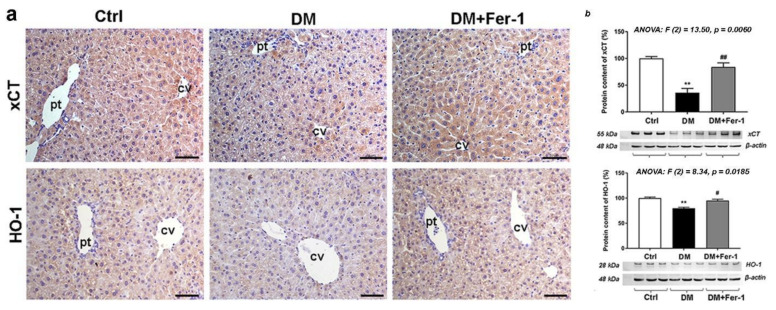
Cell death plays an important role in diabetes-induced liver dysfunction. Ferroptosis is a newly defined regulated cell death caused by iron-dependent lipid peroxidation. Our previous studies have shown that high glucose and streptozotocin (STZ) cause β-cell death through ferroptosis and that ferrostatin-1 (Fer-1), an inhibitor of ferroptosis, improves β-cell viability, islet morphology, and function. This study was aimed to examine in vivo the involvement of ferroptosis in diabetes-related pathological changes in the liver. For this purpose, male C57BL/6 mice, in which diabetes was induced with STZ (40 mg/kg/5 consecutive days), were treated with Fer-1 (1 mg/kg, from day 1-21 day). It was found that in diabetic mice Fer-1 improved serum levels of ALT and triglycerides and decreased liver fibrosis, hepatocytes size, and binucleation. This improvement was due to the Fer-1-induced attenuation of ferroptotic events in the liver of diabetic mice, such as accumulation of pro-oxidative parameters (iron, lipofuscin, 4-HNE), decrease in expression level/activity of antioxidative defense-related molecules (GPX4, Nrf2, xCT, GSH, GCL, HO-1, SOD), and HMGB1 translocation from nucleus into cytosol. We concluded that ferroptosis contributes to diabetes-related pathological changes in the liver and that the targeting of ferroptosis represents a promising approach in the management of diabetes-induced liver injury.
细胞死亡在糖尿病引起的肝功能障碍中发挥重要作用。铁死亡是一种新定义的受铁依赖性脂质过氧化调节的细胞死亡。我们之前的研究表明,高葡萄糖和链脲佐菌素(STZ)通过铁死亡导致β细胞死亡,铁死亡抑制剂Fer-1(Fer-1)可提高β细胞活力、胰岛形态和功能。本研究旨在体内研究铁死亡在糖尿病相关肝病变中的作用。为此,用 STZ(40mg/kg/5 天连续)诱导雄性 C57BL/6 小鼠产生糖尿病,并用 Fer-1(1mg/kg,从第 1 天到第 21 天)进行处理。结果发现,在糖尿病小鼠中,Fer-1 可改善血清 ALT 和甘油三酯水平,并减少肝纤维化、肝细胞大小和双核化。这种改善归因于 Fer-1 诱导的糖尿病小鼠肝中铁死亡事件的减弱,如促氧化参数(铁、脂褐素、4-HNE)的积累、抗氧化防御相关分子(GPX4、Nrf2、xCT、GSH、GCL、HO-1、SOD)的表达水平/活性降低以及 HMGB1 从细胞核向细胞质易位。我们得出结论,铁死亡导致糖尿病相关的肝病变,靶向铁死亡可能是治疗糖尿病引起的肝损伤的一种有前途的方法。