Wu Shunlong, Li Zhaodong, Li Haiyu, Liao Kui
Department of Oncology, The First Affiliated Hospital of Chongqing Medical University, Chongqing 400016, China.
Basic Medical College, Chongqing Medical University, Chongqing 400016, China.
Life (Basel). 2022 Jul 27;12(8):1129. doi: 10.3390/life12081129.
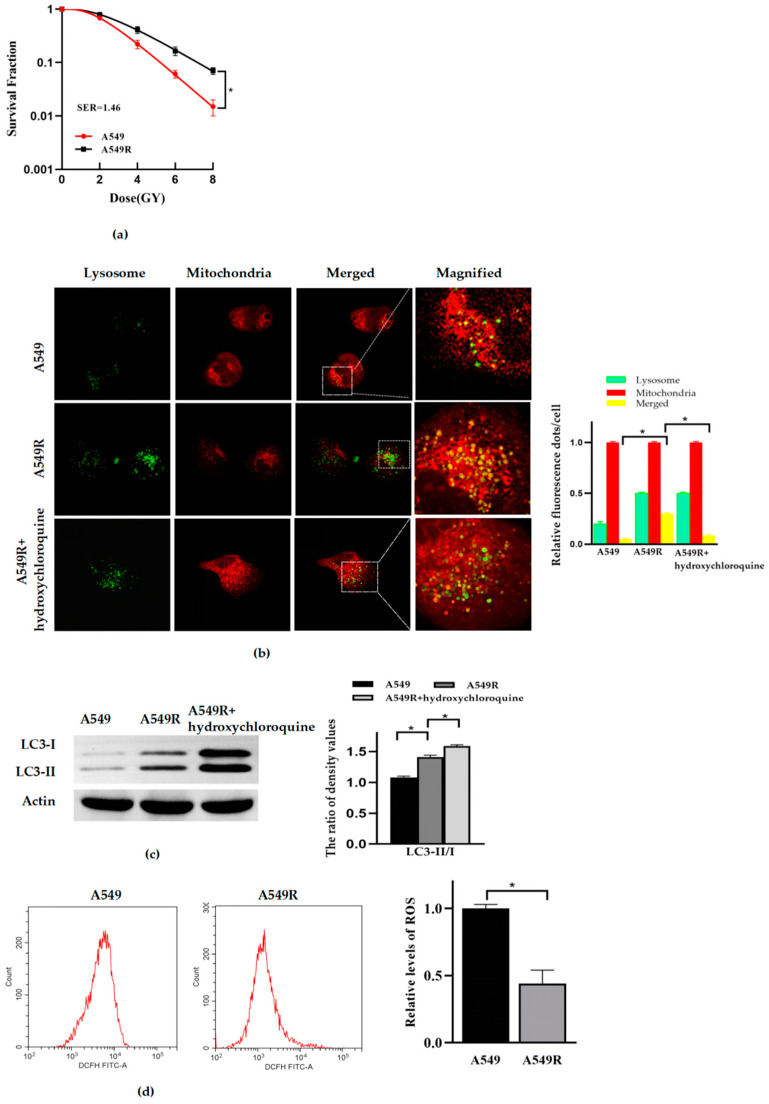
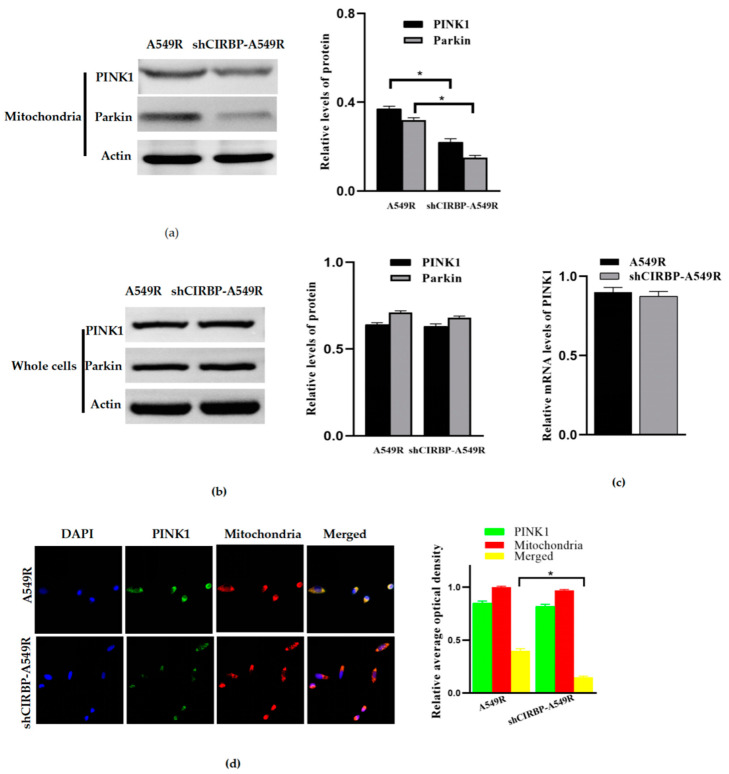
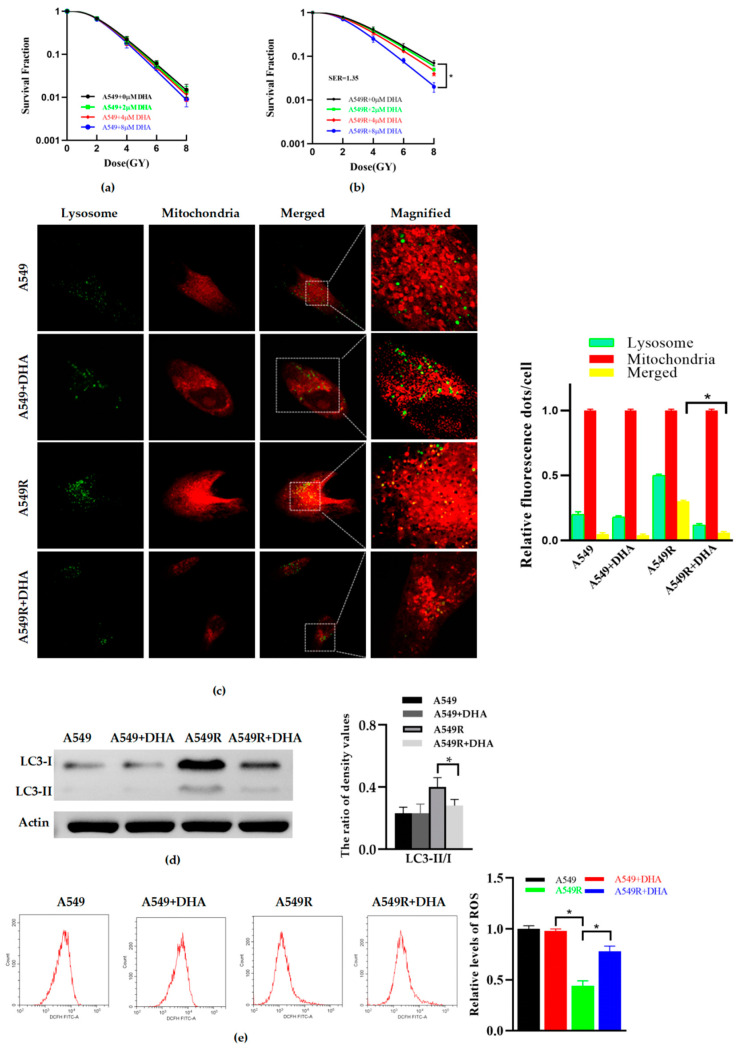
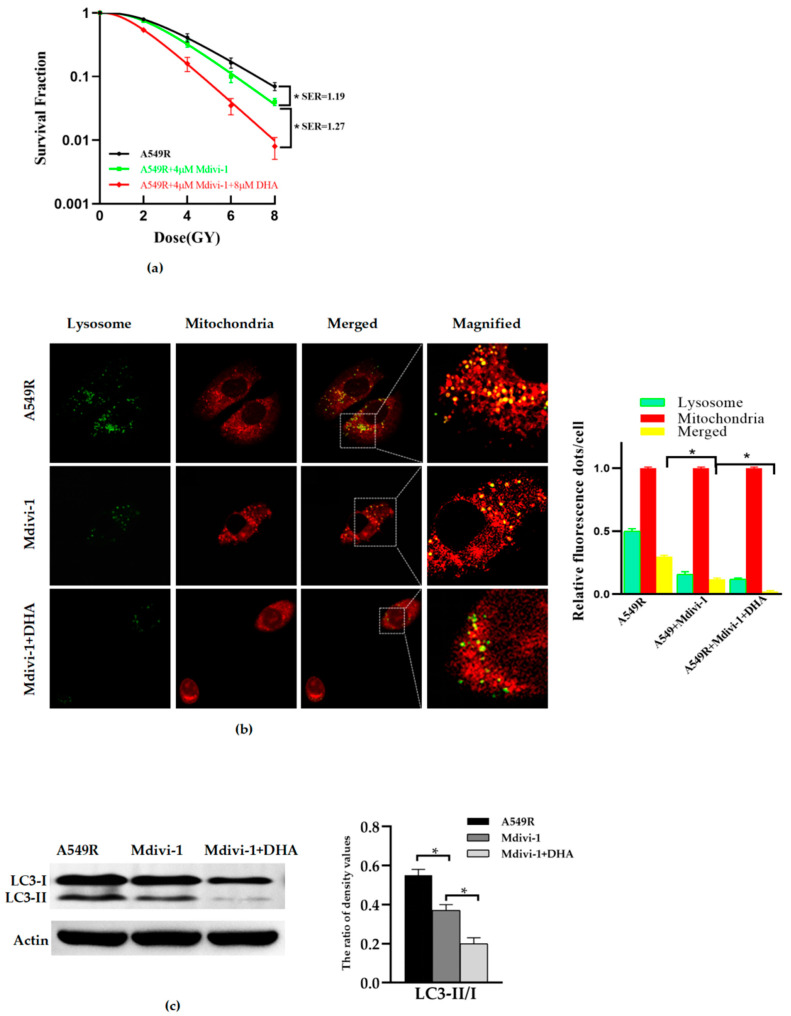
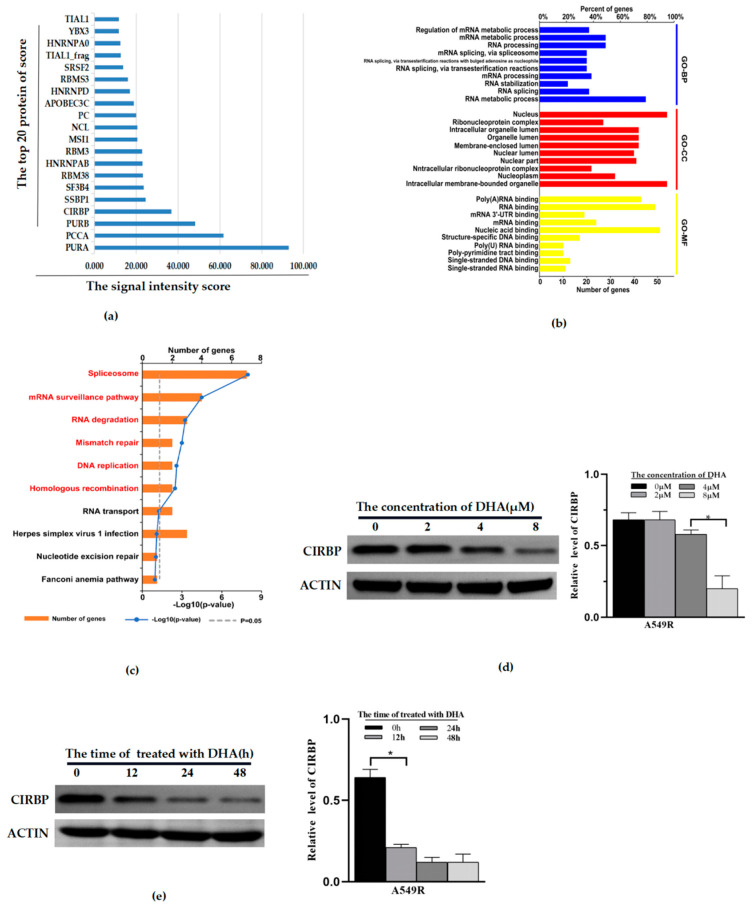
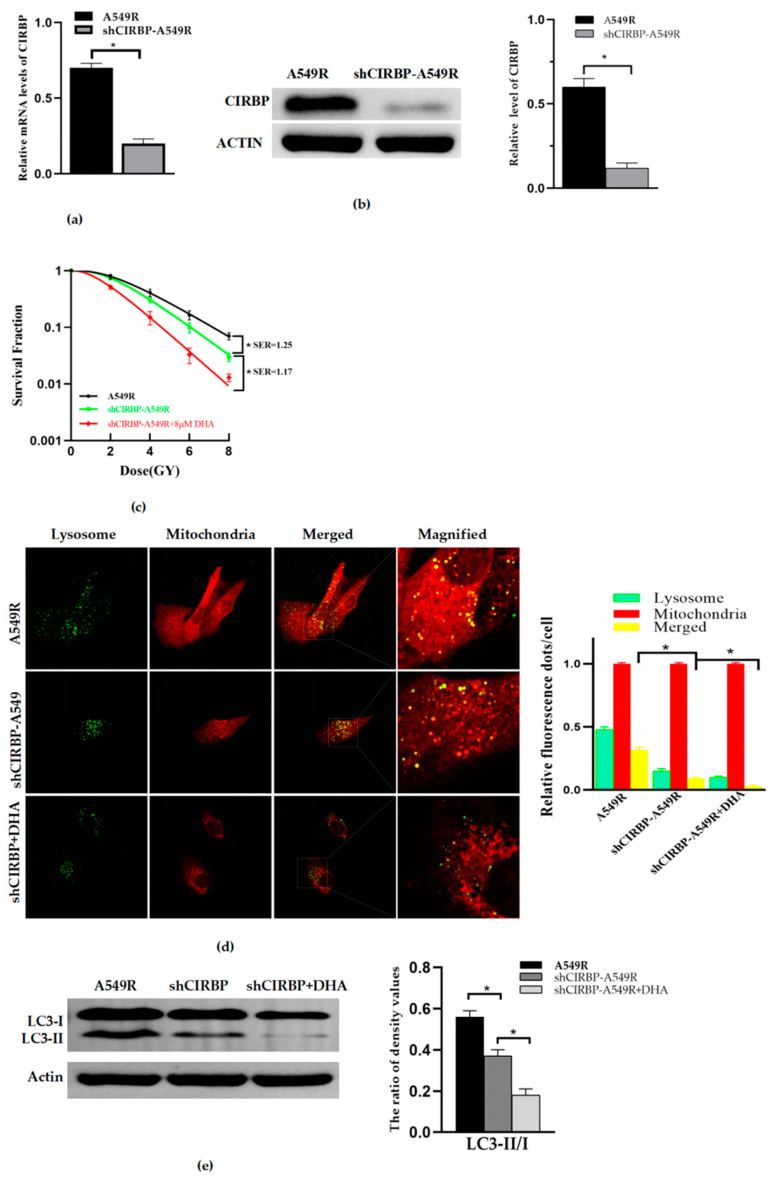
Radiotherapy is a major therapeutic strategy for lung cancer, and radiation resistance (radioresistance) is an important cause of residual and recurring cancer after treatment. However, the mechanism of radioresistance remains unclear. Mitochondrial autophagy (mitophagy), an important selective autophagy, plays an important role in maintaining cell homeostasis and affects the response to therapy. Recent studies have shown that dihydroartemisinin (DHA), a derivative of artemisinin, can increase the sensitivity to treatment in multiple types of cancer, including lung cancer. The purpose of this study was to elucidate the function and molecular mechanisms of DHA-regulating mitophagy and DHA-reducing radioresistance in lung cancer A549 cells. We first constructed the radioresistant lung cancer A549 cells model (A549R) through fractional radiation, then elucidated the function and mechanism of DHA-regulating mitophagy to reduce the radioresistance of lung cancer by genomic, proteomic, and bioinformatic methods. The results showed that fractional radiation can significantly induce radioresistance and mitophagy in A549 cells, DHA can reduce mitophagy and radioresistance, and the inhibition of mitophagy can reduce radioresistance. Protein chip assay and bioinformatics analysis showed the following: Cold-Inducible RNA Binding Protein (CIRBP) might be a potential target of DHA-regulating mitophagy; CIRBP is highly expressed in A549R cells; the knockdown of CIRBP increases the effect of DHA, reduces mitophagy and radioresistance, and inhibits the mitophagy-related PINK1/Parkin pathway. In conclusion, we believe that DHA reduces radiation-induced mitophagy and radioresistance of lung cancer A549 cells via CIRBP inhibition.
放射治疗是肺癌的主要治疗策略,而辐射抗性是治疗后癌症残留和复发的重要原因。然而,辐射抗性的机制仍不清楚。线粒体自噬作为一种重要的选择性自噬,在维持细胞稳态中发挥重要作用,并影响治疗反应。最近的研究表明,青蒿素衍生物双氢青蒿素(DHA)可提高包括肺癌在内的多种癌症的治疗敏感性。本研究旨在阐明DHA调控肺癌A549细胞线粒体自噬及降低辐射抗性的功能和分子机制。我们首先通过分次照射构建了辐射抗性肺癌A549细胞模型(A549R),然后通过基因组学、蛋白质组学和生物信息学方法阐明DHA调控线粒体自噬以降低肺癌辐射抗性的功能和机制。结果表明,分次照射可显著诱导A549细胞的辐射抗性和线粒体自噬,DHA可降低线粒体自噬和辐射抗性,抑制线粒体自噬可降低辐射抗性。蛋白质芯片检测和生物信息学分析显示:冷诱导RNA结合蛋白(CIRBP)可能是DHA调控线粒体自噬的潜在靶点;CIRBP在A549R细胞中高表达;敲低CIRBP可增强DHA的作用,降低线粒体自噬和辐射抗性,并抑制线粒体自噬相关的PINK1/Parkin通路。总之,我们认为DHA通过抑制CIRBP降低肺癌A549细胞辐射诱导的线粒体自噬和辐射抗性。