School of Agriculture and Food, Faculty of Veterinary and Agricultural Sciences, The University of Melbourne Australia, Parkville, VIC 3010, Australia.
Faculty of Biological Sciences, The University of Leeds, Leeds LS2 9JT, UK.
Molecules. 2022 Aug 11;27(16):5126. doi: 10.3390/molecules27165126.
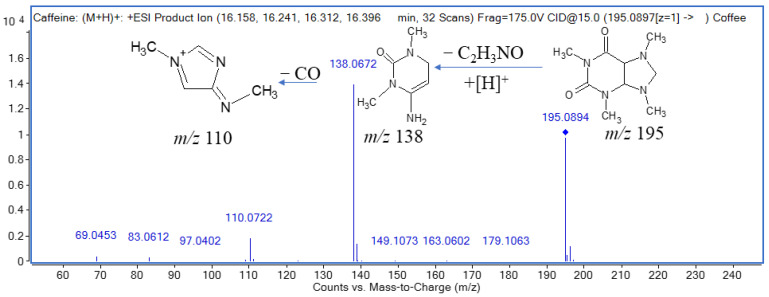
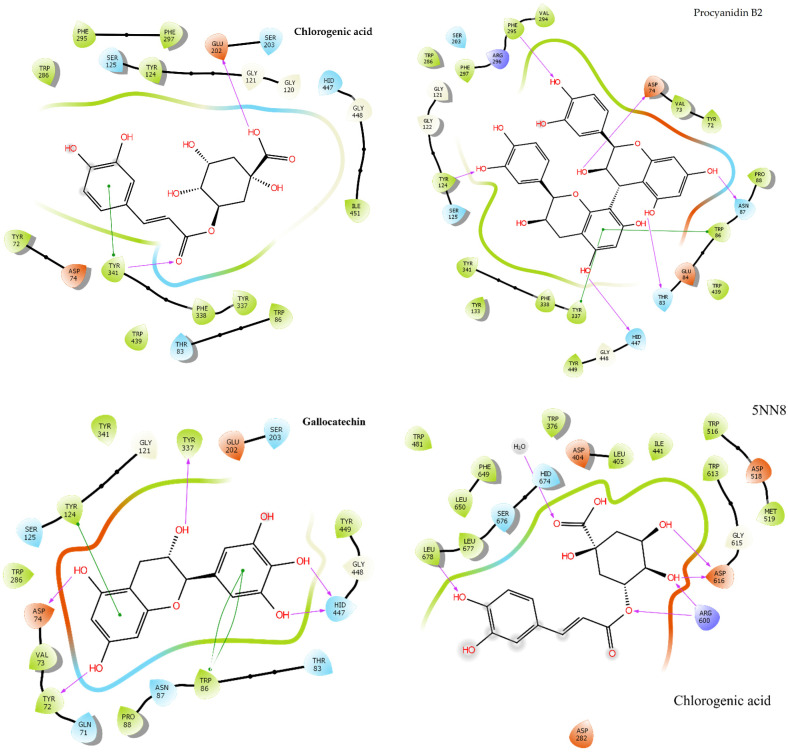
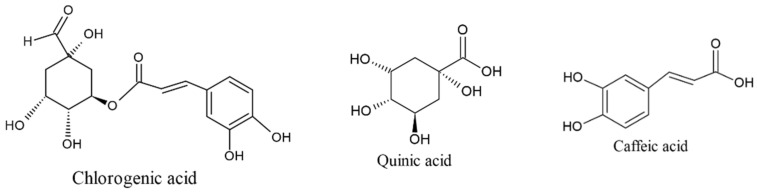
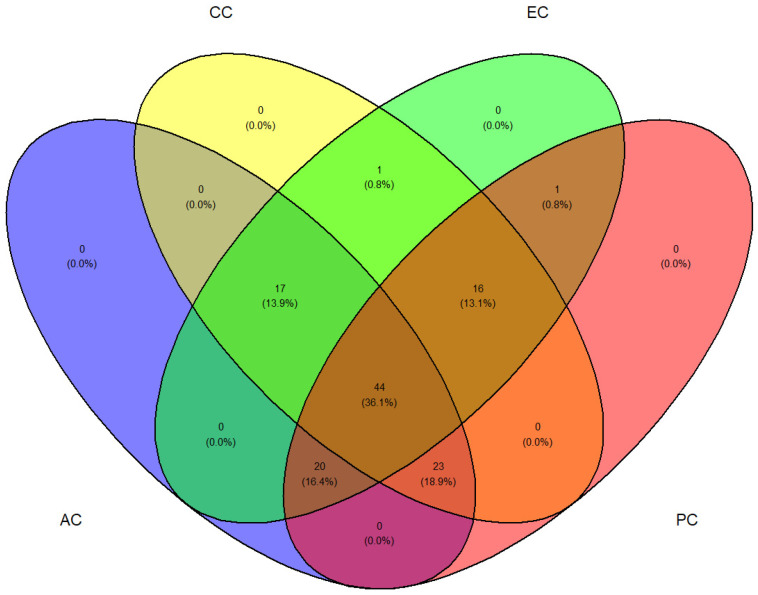
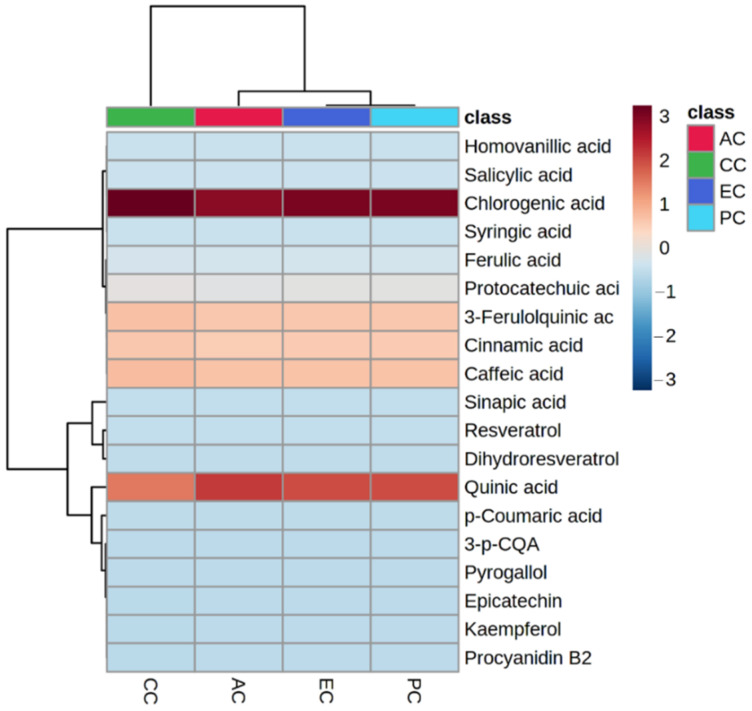
Coffee is the most widely used beverage globally and contains many bioactive compounds, including phenolic compounds, alkaloids, triterpenes, organic acids, amino acids, hormones, and fatty acids. The main objective of this study was the comparative profiling of Australian, Colombian, Ethiopian, and Peruvian using LC-ESI-QTOF-MS/MS. In this study, we tentatively identified 136 bioactive metabolites, including five (05) organic acids, six (06) alkaloids, three (03) amino acids (l-phenylalanine, l-tyrosine, and l-pyroglutamic acid), two (02) hormones (melatonin and serotonin), two fatty acids, one (01) furopyrans (goniothalenol), one (01) carotenoid (crocetin), three (03) terpenoids, thirty-eight (38) phenolic acids, forty-one (41) flavonoids, five (05) stilbenes, three (03) lignans and twenty-three (23) other polyphenols in . The highest TPC value (17.74 ± 0.32 mg GAE/g) was measured in Colombian coffee while the lowest TPC value (10.24 ± 0.73 mg GAE/g) was in Peruvian coffee. Colombian coffee has a higher antioxidant potential than other studied coffee samples. A total of nineteen phenolic metabolites were mapped through LC-MS/MS. Quinic acid derivatives were quantified in higher concentrations than other metabolites. Furthermore, molecular docking predicted that chlorogenic acid is a main bioactive compound that contributes to anti-Alzheimer and anti-diabetic activities of . The obtained results indicate that contains a vast number of bioactive compounds which have potential health benefits. Furthermore, research could be conducted to validate the effect of these metabolites on the flavor profile of coffee beverages.
咖啡是全球使用最广泛的饮料,含有许多生物活性化合物,包括酚类化合物、生物碱、三萜、有机酸、氨基酸、激素和脂肪酸。本研究的主要目的是使用 LC-ESI-QTOF-MS/MS 对澳大利亚、哥伦比亚、埃塞俄比亚和秘鲁的咖啡进行比较分析。在本研究中,我们暂定鉴定了 136 种生物活性代谢物,包括 5 种有机酸、6 种生物碱、3 种氨基酸(l-苯丙氨酸、l-酪氨酸和 l-焦谷氨酸)、2 种激素(褪黑素和血清素)、2 种脂肪酸、1 种呋喃并吡喃(goniothalenol)、1 种类胡萝卜素(藏红花酸)、3 种萜类、38 种酚酸、41 种黄酮类、5 种芪类、3 种木脂素和 23 种其他多酚类物质。哥伦比亚咖啡的总多酚含量(17.74±0.32mgGAE/g)最高,而秘鲁咖啡的总多酚含量(10.24±0.73mgGAE/g)最低。哥伦比亚咖啡的抗氧化潜力高于其他研究的咖啡样品。通过 LC-MS/MS 共鉴定了 19 种酚类代谢物。奎尼酸衍生物的含量高于其他代谢物。此外,分子对接预测绿原酸是一种主要的生物活性化合物,有助于咖啡的抗老年痴呆和抗糖尿病活性。研究结果表明,咖啡含有大量的生物活性化合物,具有潜在的健康益处。此外,可以开展研究来验证这些代谢物对咖啡饮料风味特征的影响。