
具有增强光催化性能的共暴露面状 WO 纳米晶体的水热合成
Hydrothermal Synthesis of Co-Exposed-Faceted WO Nanocrystals with Enhanced Photocatalytic Performance.
作者信息
Niu Xianjun, Du Yien, He Jing, Li Xiaodong, Wen Guangming
机构信息
Department of Chemistry and Chemical Engineering, Jinzhong University, Jinzhong 030619, China.
Department of Scientific Research, Jinzhong University, Jinzhong 030619, China.
出版信息
Nanomaterials (Basel). 2022 Aug 22;12(16):2879. doi: 10.3390/nano12162879.
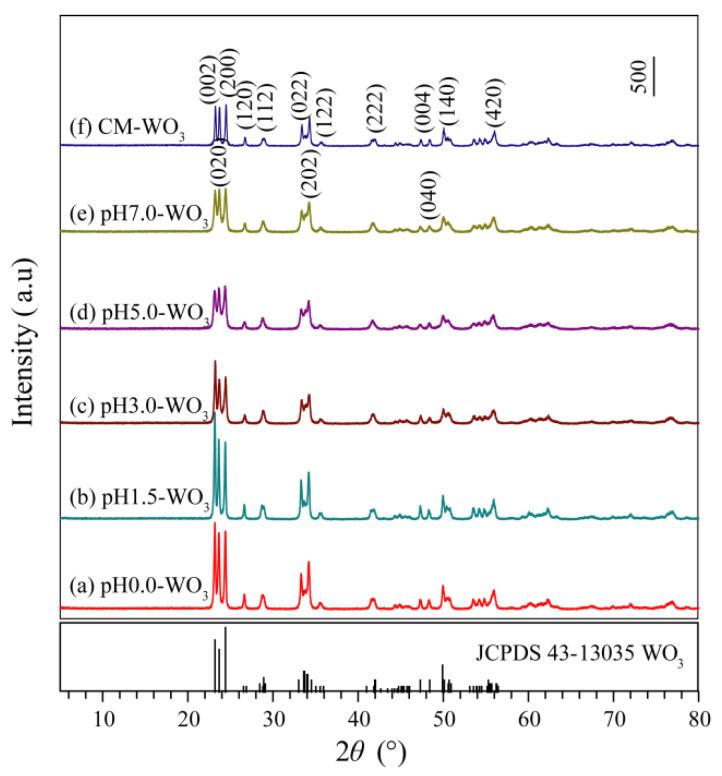
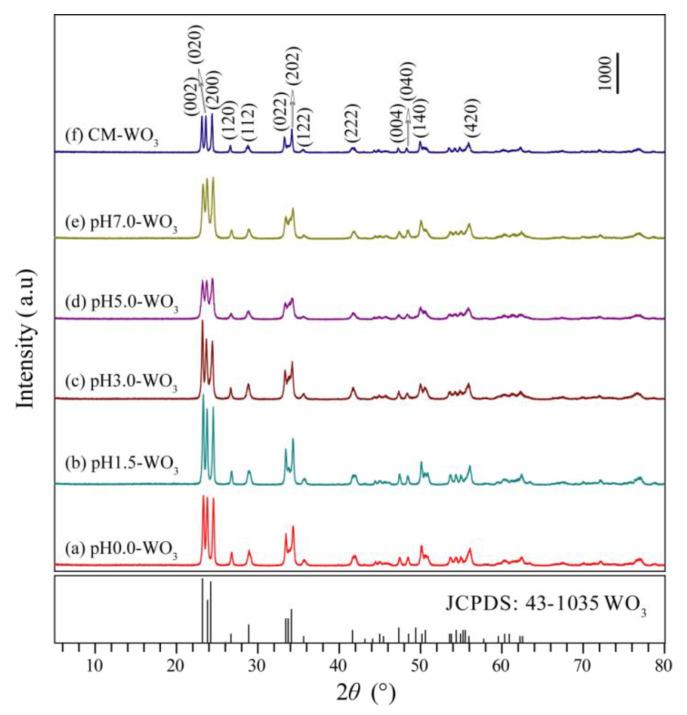
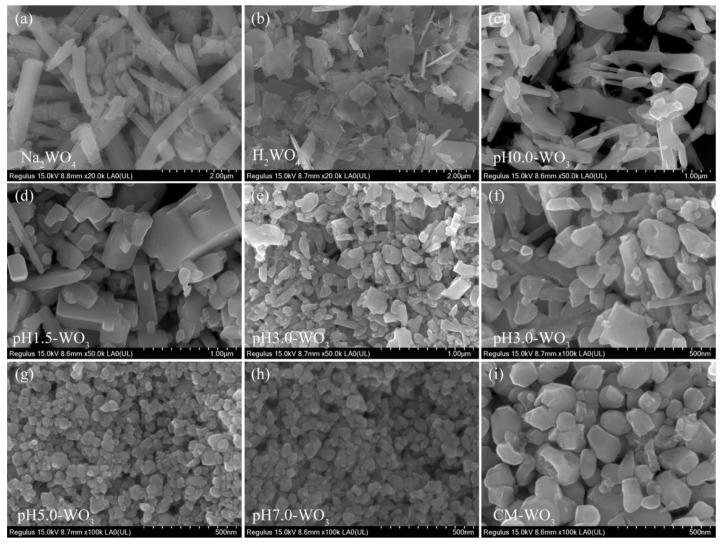
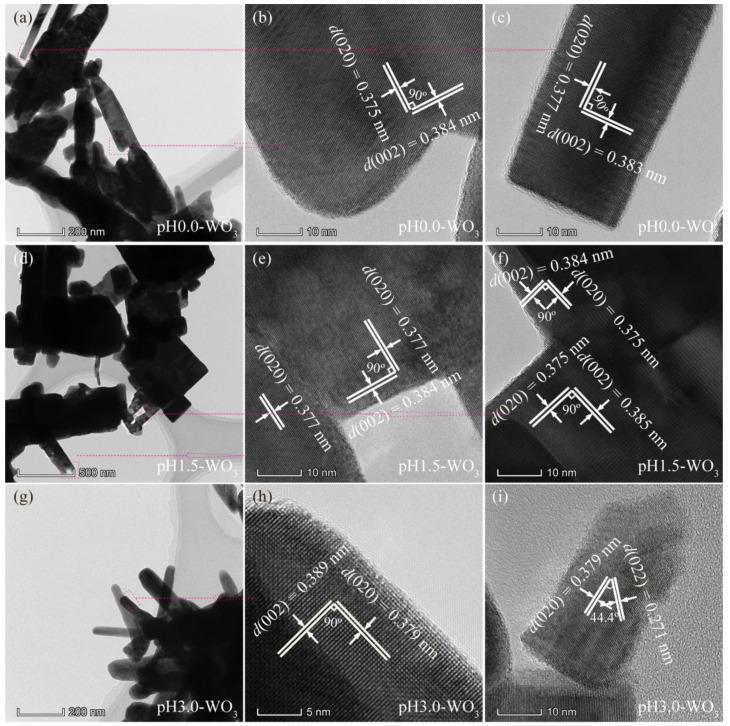
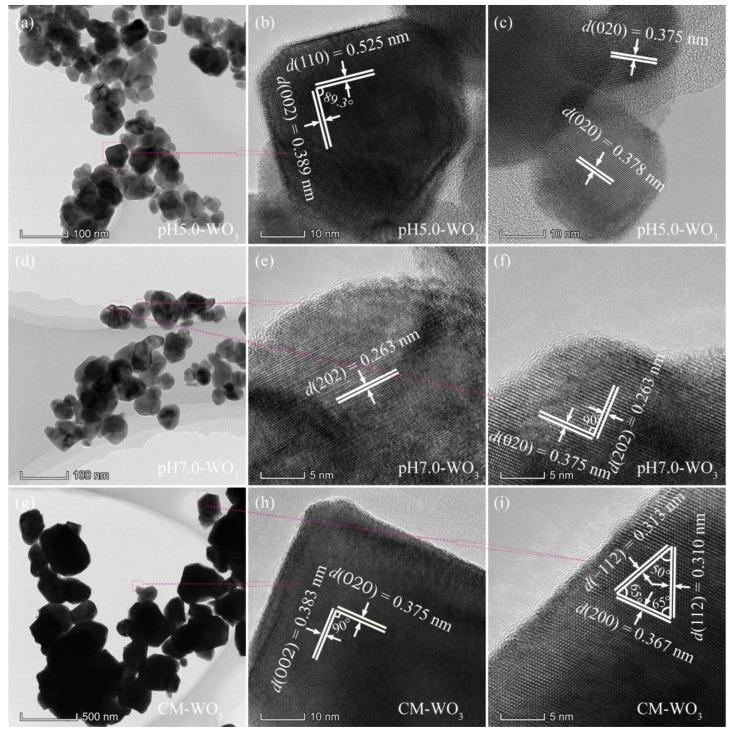
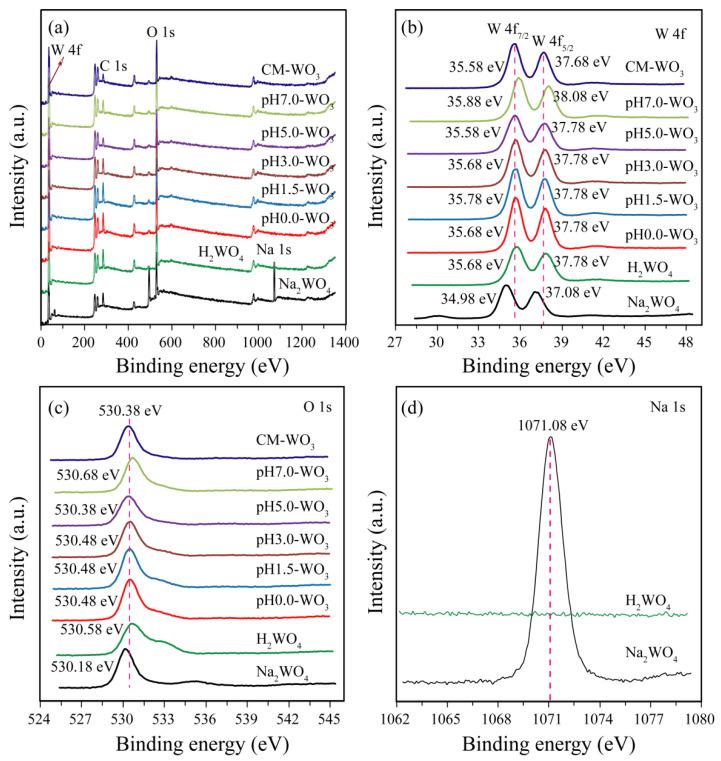
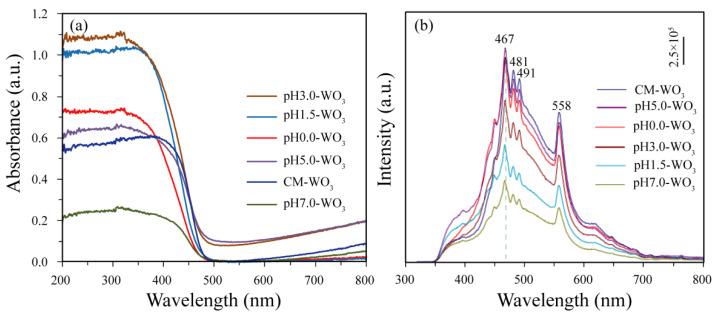
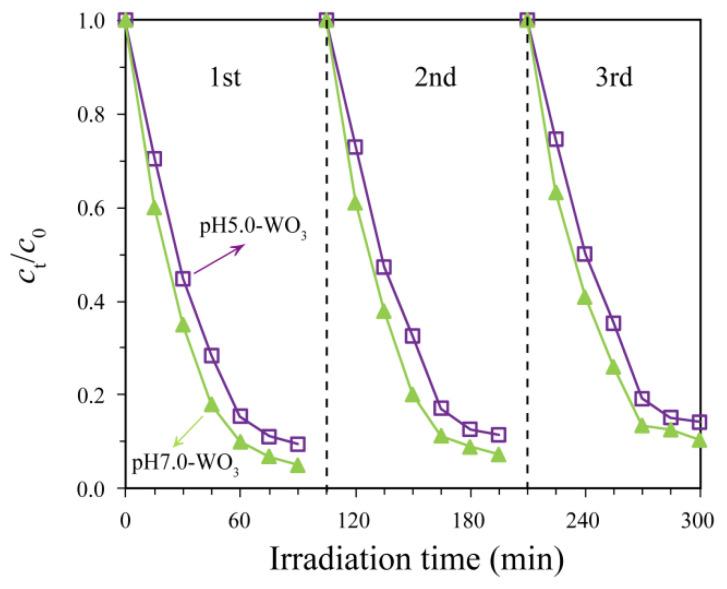
In this paper, rod-shaped, cuboid-shaped, and irregular WO nanocrystals with different co-exposed crystal facets were prepared for the first time by a simple hydrothermal treatment of tungstic acid colloidal suspension with desired pH values. The crystal structure, morphology, specific surface area, pore size distribution, chemical composition, electronic states of the elements, optical properties, and charge migration behavior of as-obtained WO products were characterized by powder X-ray diffraction (XRD), field emission scanning electron microscopy (FESEM), transmission electron microscopy (TEM), high-resolution transmission electron microscopy (HRTEM), X-ray photoelectron spectroscopy (XPS), fully automatic specific surface area and porosity analyzer, UV-vis absorption spectra, photoluminescence (PL) spectra, and electrochemical impedance spectroscopy (EIS). The photocatalytic performances of the synthesized pH-WO nanocrystals ( = 0.0, 1.5, 3.0, 5.0, and 7.0) were evaluated and compared with the commercial WO (CM-WO) nanocrystals. The pH7.0-WO nanocrystals with co-exposed {202} and {020} facets exhibited highest photocatalytic activity for the degradation of methylene blue solution, which can be attributed to the synergistic effects of the largest specific surface area, the weakest luminescence peak intensity and the smallest arc radius diameter.
在本文中,首次通过对具有所需pH值的钨酸胶体悬浮液进行简单的水热处理,制备了具有不同共暴露晶面的棒状、长方体状和不规则形状的WO纳米晶体。通过粉末X射线衍射(XRD)、场发射扫描电子显微镜(FESEM)、透射电子显微镜(TEM)、高分辨率透射电子显微镜(HRTEM)、X射线光电子能谱(XPS)、全自动比表面积和孔隙率分析仪、紫外可见吸收光谱、光致发光(PL)光谱和电化学阻抗谱(EIS)对所得WO产物的晶体结构、形态、比表面积、孔径分布、化学成分、元素的电子态、光学性质和电荷迁移行为进行了表征。对合成的pH-WO纳米晶体(pH = 0.0、1.5、3.0、5.0和7.0)的光催化性能进行了评估,并与商业WO(CM-WO)纳米晶体进行了比较。具有共暴露{202}和{020}晶面的pH7.0-WO纳米晶体对亚甲基蓝溶液的降解表现出最高的光催化活性,这可归因于最大比表面积、最弱发光峰强度和最小弧半径直径的协同效应。




 Zotero 插件