College of Civil Engineering, Chongqing University, Chongqing 400044, China.
China Merchants Chongqing Communications Technology Research & Design Institute Co., Ltd., Chongqing 400067, China.
Sensors (Basel). 2022 Aug 18;22(16):6185. doi: 10.3390/s22166185.
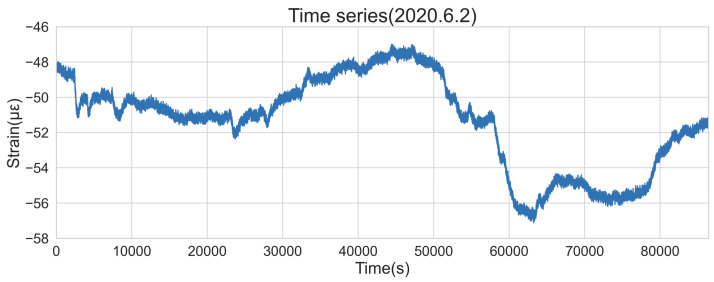
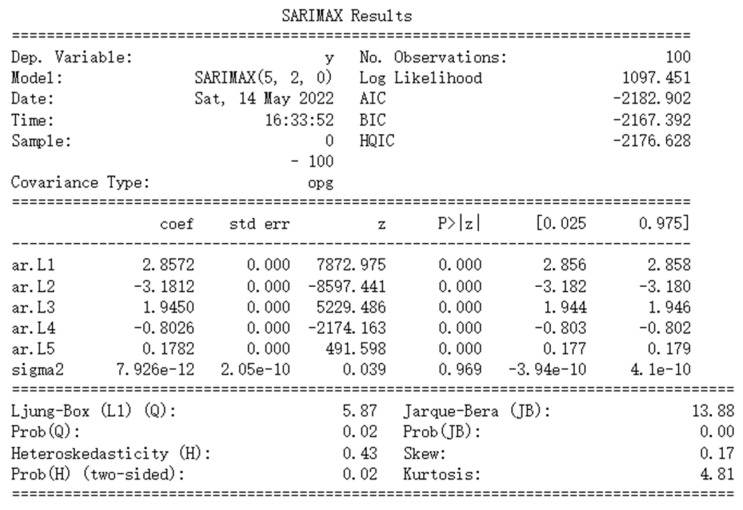
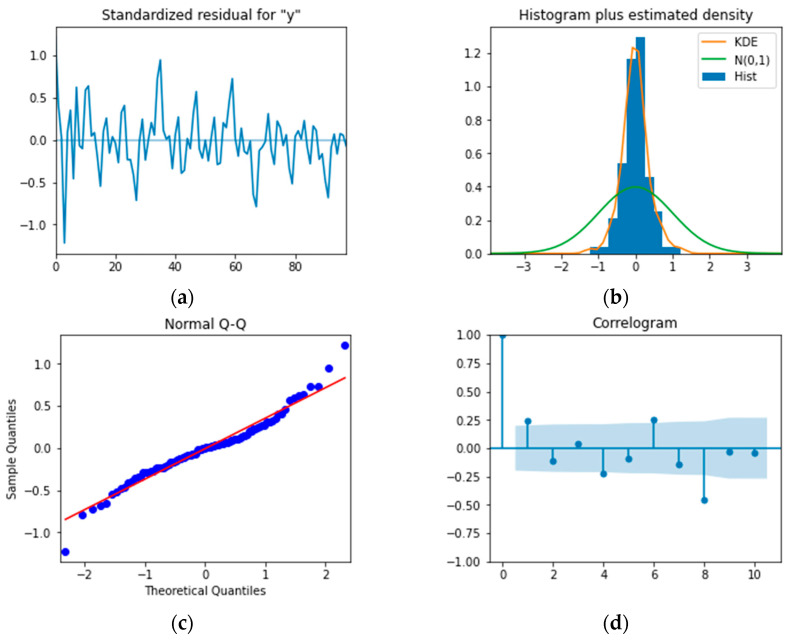
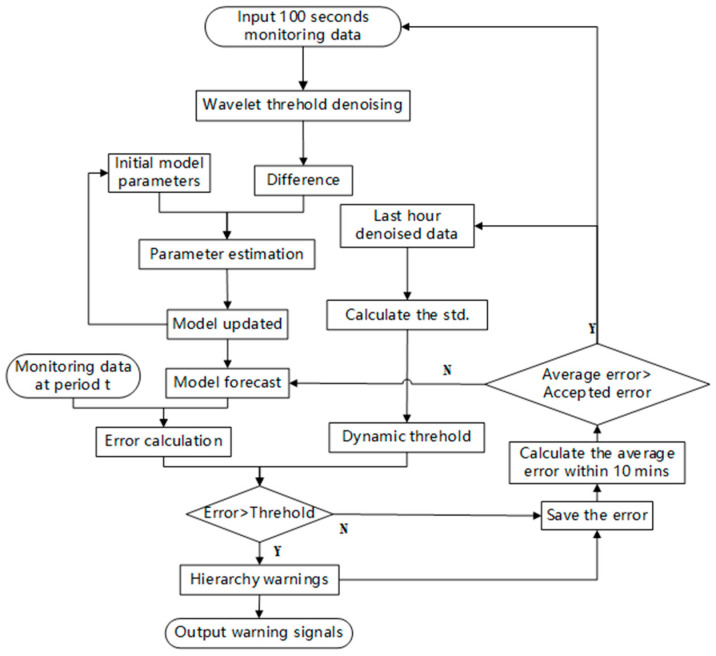
Structural health monitoring (SHM) is gradually replacing traditional manual detection and is becoming a focus of the research devoted to the operation and maintenance of tunnel structures. However, in the face of massive SHM data, the autonomous early warning method is still required to further reduce the burden of manual analysis. Thus, this study proposed a dynamic warning method for SHM data based on ARIMA and applied it to the concrete strain data of the Hong Kong-Zhuhai-Macao Bridge (HZMB) immersed tunnel. First, wavelet threshold denoising was applied to filter noise from the SHM data. Then, the feasibility and accuracy of establishing an ARIMA model were verified, and it was adopted to predict future time series of SHM data. After that, an anomaly detection scheme was proposed based on the dynamic model and dynamic threshold value, which set the confidence interval of detected anomalies based on the statistical characteristics of the historical series. Finally, a hierarchical warning system was defined to classify anomalies according to their detection threshold and enable hierarchical treatments. The illustrative example of the HZMB immersed tunnel verified that a three-level (5.5 σ, 6.5 σ, and 7.5 σ) dynamic warning schematic can give good results of anomalies detection and greatly improves the efficiency of SHM data management of the tunnel.
结构健康监测(SHM)逐渐取代传统的人工检测,成为隧道结构运维研究的重点。然而,面对海量的 SHM 数据,仍然需要自主预警方法来进一步减轻人工分析的负担。因此,本研究提出了一种基于 ARIMA 的 SHM 数据动态预警方法,并将其应用于港珠澳大桥(HZMB)沉管隧道的混凝土应变数据中。首先,应用小波阈值去噪对 SHM 数据中的噪声进行过滤。然后,验证了建立 ARIMA 模型的可行性和准确性,并采用该模型对未来 SHM 数据的时间序列进行预测。之后,提出了一种基于动态模型和动态阈值的异常检测方案,根据历史序列的统计特征确定检测异常的置信区间。最后,定义了一个分层预警系统,根据检测阈值对异常进行分类,并进行分层处理。HZMB 沉管隧道的实例验证表明,三级(5.5σ、6.5σ和 7.5σ)动态预警方案可以很好地检测异常,并大大提高了隧道 SHM 数据管理的效率。