Al-Sammarraie Nadia, Mahmood Mohammed, Ray Swapan K
Department of Pathology, Microbiology, and Immunology, University of South Carolina School of Medicine, Columbia, SC, USA.
Neural Regen Res. 2023 Mar;18(3):492-496. doi: 10.4103/1673-5374.350190.
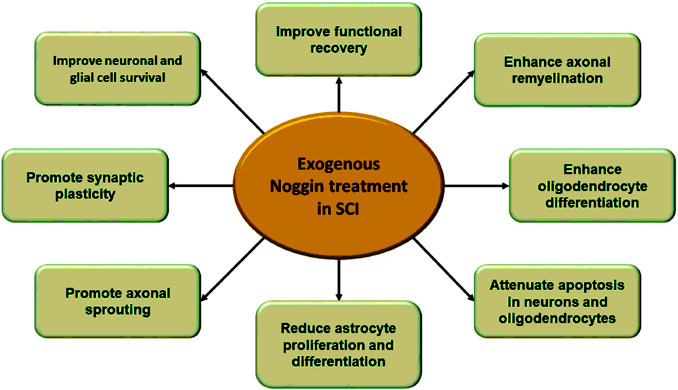
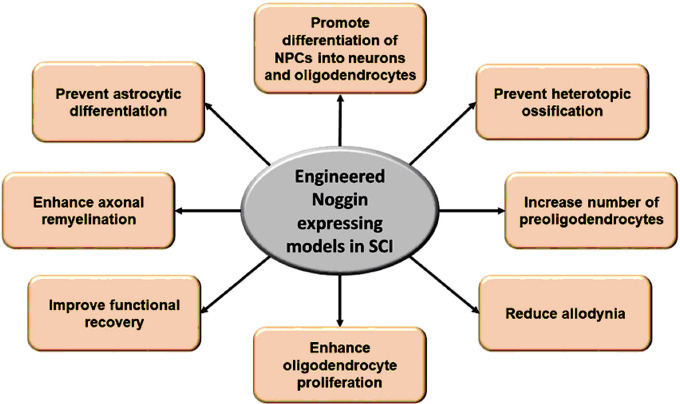
Spinal cord injury is one of the leading causes of morbidity and mortality among young adults in many countries including the United States. Difficulty in the regeneration of neurons is one of the main obstacles that leave spinal cord injury patients with permanent paralysis in most instances. Recent research has found that preventing acute and subacute secondary cellular damages to the neurons and supporting glial cells can help slow the progression of spinal cord injury pathogenesis, in part by reactivating endogenous regenerative proteins including Noggin that are normally present during spinal cord development. Noggin is a complex protein and natural inhibitor of the multifunctional bone morphogenetic proteins, and its expression is high during spinal cord development and after induction of spinal cord injury. In this review article, we first discuss the change in expression of Noggin during pathogenesis in spinal cord injury. Second, we discuss the current research knowledge about the neuroprotective role of Noggin in preclinical models of spinal cord injury. Lastly, we explain the gap in the knowledge for the use of Noggin in the treatment of spinal cord injury. The results from extensive in vitro and in vivo research have revealed that the therapeutic efficacy of Noggin treatment remains debatable due to its neuroprotective effects observed only in early phases of spinal cord injury but little to no effect on altering pathogenesis and functional recovery observed in the chronic phase of spinal cord injury. Furthermore, clinical information regarding the role of Noggin in the alleviation of progression of pathogenesis, its therapeutic efficacy, bioavailability, and safety in human spinal cord injury is still lacking and therefore needs further investigation.
脊髓损伤是包括美国在内的许多国家年轻成年人发病和死亡的主要原因之一。神经元再生困难是导致脊髓损伤患者在大多数情况下永久性瘫痪的主要障碍之一。最近的研究发现,预防神经元和支持性神经胶质细胞的急性和亚急性继发性细胞损伤,有助于减缓脊髓损伤发病机制的进展,部分原因是重新激活内源性再生蛋白,包括脊髓发育过程中正常存在的Noggin。Noggin是一种复杂的蛋白质,是多功能骨形态发生蛋白的天然抑制剂,其在脊髓发育期间以及脊髓损伤诱导后表达较高。在这篇综述文章中,我们首先讨论脊髓损伤发病机制中Noggin表达的变化。其次,我们讨论目前关于Noggin在脊髓损伤临床前模型中的神经保护作用的研究知识。最后,我们解释在使用Noggin治疗脊髓损伤方面的知识差距。广泛的体外和体内研究结果表明,Noggin治疗的疗效仍存在争议,因为其神经保护作用仅在脊髓损伤的早期阶段观察到,而在脊髓损伤的慢性阶段对改变发病机制和功能恢复几乎没有影响。此外,关于Noggin在减轻发病机制进展、其治疗效果、生物利用度和在人类脊髓损伤中的安全性方面的临床信息仍然缺乏,因此需要进一步研究。