Department of Defense Biotechnology High Performance Computing Software Applications Institute, Telemedicine and Advanced Technology Research Center, United States Army Medical Research and Development Command, ATTN: FCMR-TT, 504 Scott Street, Fort Detrick, MD, 21702-5012, USA.
The Henry M. Jackson Foundation for the Advancement of Military Medicine, Inc., 6720-A Rockledge Drive, Bethesda, MD, 20817, USA.
Sci Rep. 2022 Aug 26;12(1):14605. doi: 10.1038/s41598-022-17967-6.
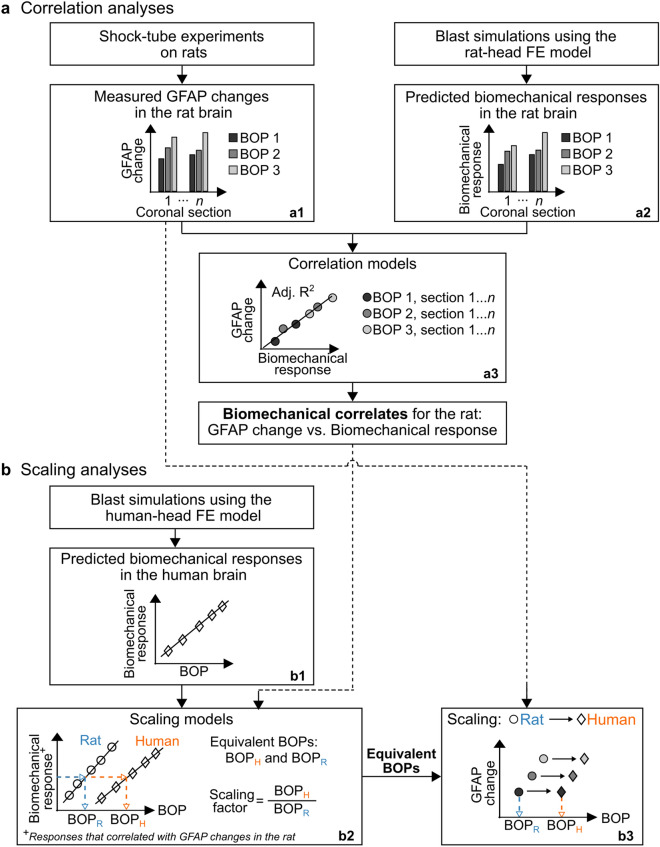
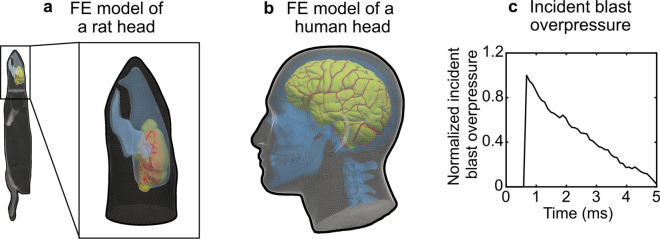
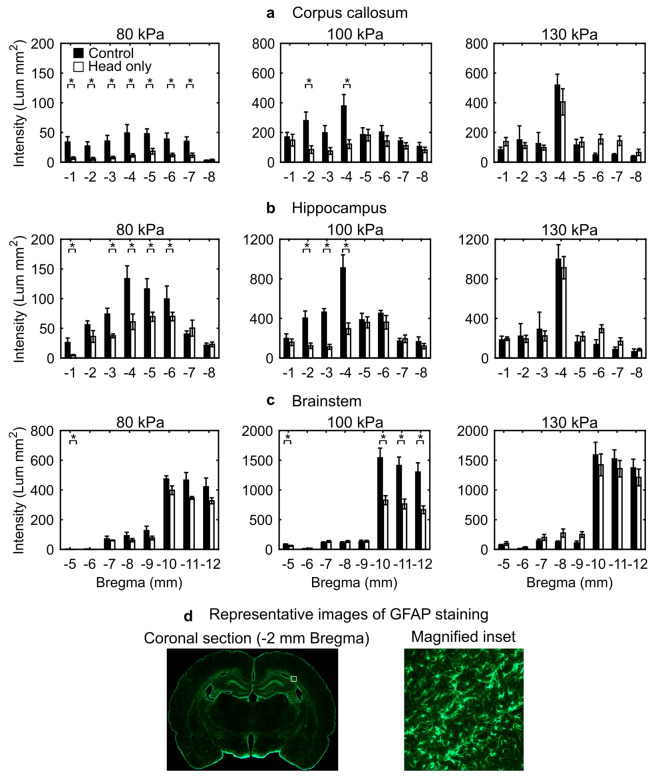
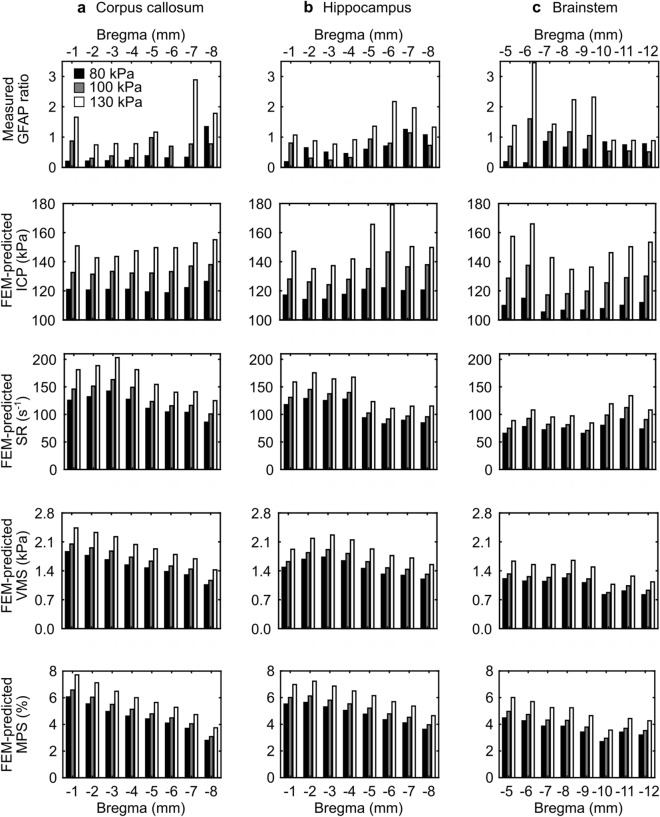
Animal studies provide valuable insights on how the interaction of blast waves with the head may injure the brain. However, there is no acceptable methodology to scale the findings from animals to humans. Here, we propose an experimental/computational approach to project observed blast-induced molecular changes in the rat brain to the human brain. Using a shock tube, we exposed rats to a range of blast overpressures (BOPs) and used a high-fidelity computational model of a rat head to correlate predicted biomechanical responses with measured changes in glial fibrillary acidic protein (GFAP) in rat brain tissues. Our analyses revealed correlates between model-predicted strain rate and measured GFAP changes in three brain regions. Using these correlates and a high-fidelity computational model of a human head, we determined the equivalent BOPs in rats and in humans that induced similar strain rates across the two species. We used the equivalent BOPs to project the measured GFAP changes in the rat brain to the human. Our results suggest that, relative to the rat, the human requires an exposure to a blast wave of a higher magnitude to elicit similar brain-tissue responses. Our proposed methodology could assist in the development of safety guidelines for blast exposure.
动物研究为研究冲击波与头部相互作用如何损伤大脑提供了有价值的见解。然而,目前尚无可接受的方法将动物研究的结果推广到人类。在这里,我们提出了一种实验/计算方法,将在大鼠脑中观察到的爆炸诱导的分子变化投射到人类大脑中。我们使用激波管使大鼠暴露于一系列爆炸超压(BOP)下,并使用大鼠头部的高保真计算模型来关联预测的生物力学响应与大鼠脑组织中胶质纤维酸性蛋白(GFAP)的测量变化。我们的分析揭示了模型预测的应变率与三个脑区测量的 GFAP 变化之间的相关性。利用这些相关性和人类头部的高保真计算模型,我们确定了在大鼠和人类中诱导两种物种中相似应变率的等效 BOP。我们使用等效 BOP 将大鼠脑中测量的 GFAP 变化投射到人类。我们的结果表明,与大鼠相比,人类需要暴露在更高强度的爆炸波下才能引起类似的脑组织反应。我们提出的方法可以帮助制定爆炸暴露的安全指南。