Hunan Key Laboratory of Early Diagnosis and Precise Treatment of Lung Cancer, The Second Xiangya Hospital of Central South University, Changsha, China.
Department of Thoracic Surgery, The Second Xiangya Hospital of Central South University, Changsha, China.
Int J Cancer. 2022 Dec 1;151(11):2020-2030. doi: 10.1002/ijc.34238. Epub 2022 Aug 27.
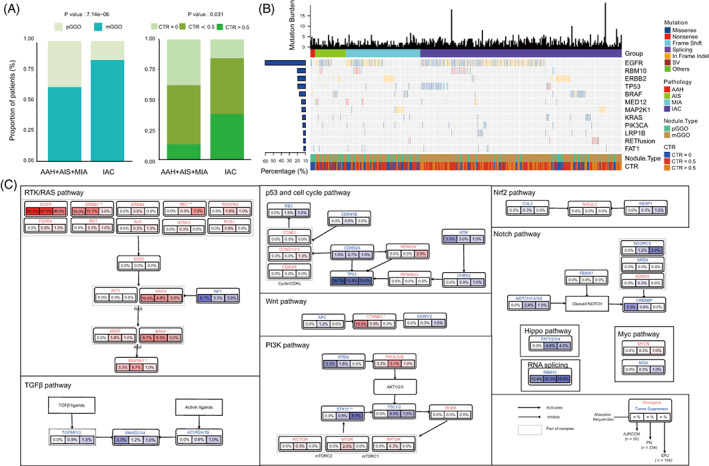
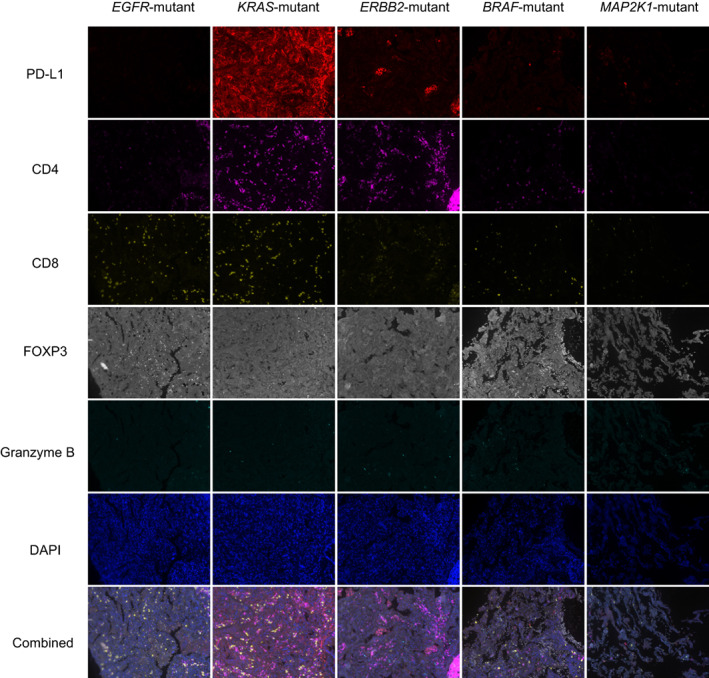
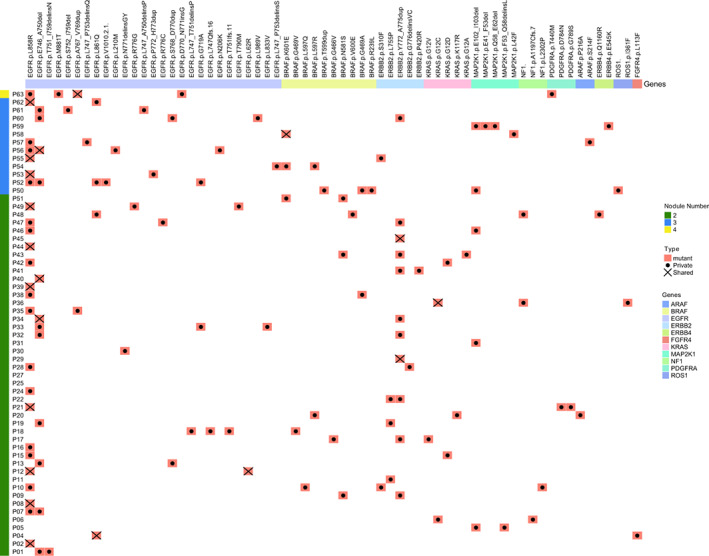
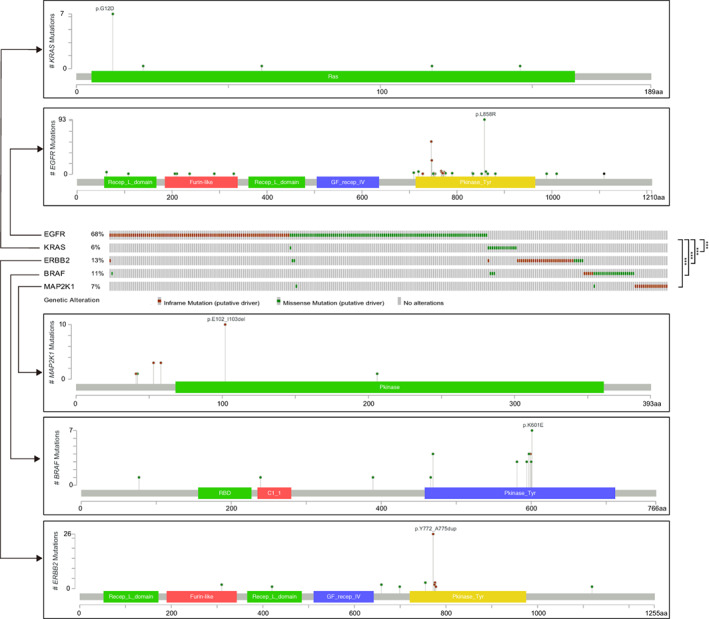
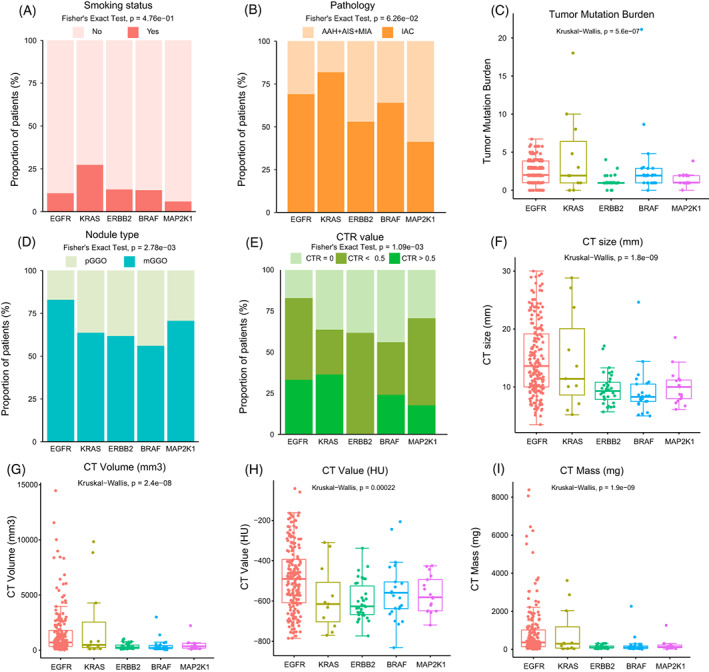
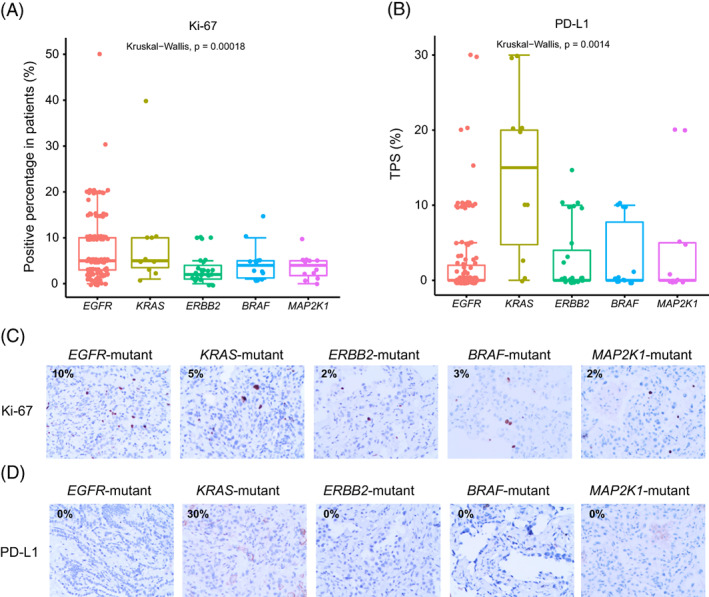
Ground-glass opacity (GGO)-associated pulmonary nodules have been known as a radiologic feature of early-stage lung cancers and exhibit an indolent biological behavior. However, the correlation between driver genes and radiologic features as well as the immune microenvironment remains poorly understood. We performed a custom 1021-gene panel sequencing of 334 resected pulmonary nodules presenting as GGO from 262 Chinese patients. A total of 130 multiple pulmonary nodules were sampled from 58 patients. Clinical-pathologic and radiologic parameters of these pulmonary nodules were collected. Immunohistochemistry (IHC) and multiplex immunofluorescent staining (mIF) were applied to analyze proliferation and immune cell markers of GGO-associated pulmonary nodules. Compared with pure GGO nodules, mixed GGO nodules were enriched for invasive adenocarcinoma (IAC) (182/216 vs 73/118, P < .001). Eighty-eight percent (294/334) of GGO-associated nodules carried at least one mutation in EGFR/ERBB2/BRAF/KRAS/MAP2K1 of the RTK/RAS signaling pathway, and the alterations in these driver genes were mutually exclusive. The analysis of multifocal pulmonary nodules from the same patient revealed evidence of functional convergence on RTK/RAS pathways. Nodules with ERBB2/BRAF/MAP2K1 mutations tended to be more indolent than those with EGFR and KRAS mutations. IHC and mIF staining showed that KRAS-mutant GGO nodules displayed higher infiltration of CD4+ T cell and CD8+ T cell as well as stronger proliferation and immune inhibitory signals. Our study demonstrates a driver landscape of radiologically detectable GGO-associated pulmonary nodules in Chinese patients and supports that different driver patterns in RTK/RAS pathway are corresponding to different radiologic features.
磨玻璃密度(GGO)相关肺结节已被认为是早期肺癌的一种影像学特征,表现出惰性的生物学行为。然而,驱动基因与影像学特征以及免疫微环境之间的相关性仍知之甚少。我们对 262 名中国患者的 334 个表现为 GGO 的切除性肺结节进行了定制的 1021 基因panel 测序。58 名患者共采集了 130 多个多发肺结节。收集了这些肺结节的临床病理和影像学参数。应用免疫组化(IHC)和多重免疫荧光染色(mIF)分析 GGO 相关肺结节的增殖和免疫细胞标志物。与纯 GGO 结节相比,混合 GGO 结节中浸润性腺癌(IAC)更为丰富(182/216 比 73/118,P < 0.001)。88%(294/334)的 GGO 相关结节至少携带 EGFR/ERBB2/BRAF/KRAS/MAP2K1 中的一个突变,这些驱动基因的改变是相互排斥的。对同一患者的多灶性肺结节的分析显示,在 RTK/RAS 通路中存在功能趋同的证据。携带 ERBB2/BRAF/MAP2K1 突变的结节比携带 EGFR 和 KRAS 突变的结节更惰性。IHC 和 mIF 染色显示,KRAS 突变的 GGO 结节显示出更高的 CD4+ T 细胞和 CD8+ T 细胞浸润以及更强的增殖和免疫抑制信号。我们的研究展示了中国患者可检测到的 GGO 相关肺结节的驱动基因图谱,并支持 RTK/RAS 通路中的不同驱动模式与不同的影像学特征相对应。