Department of Biochemistry and Molecular Biology, The Pennsylvania State University College of Medicine, Hershey, PA, 17033, USA.
Nat Commun. 2022 Aug 27;13(1):5063. doi: 10.1038/s41467-022-32756-5.
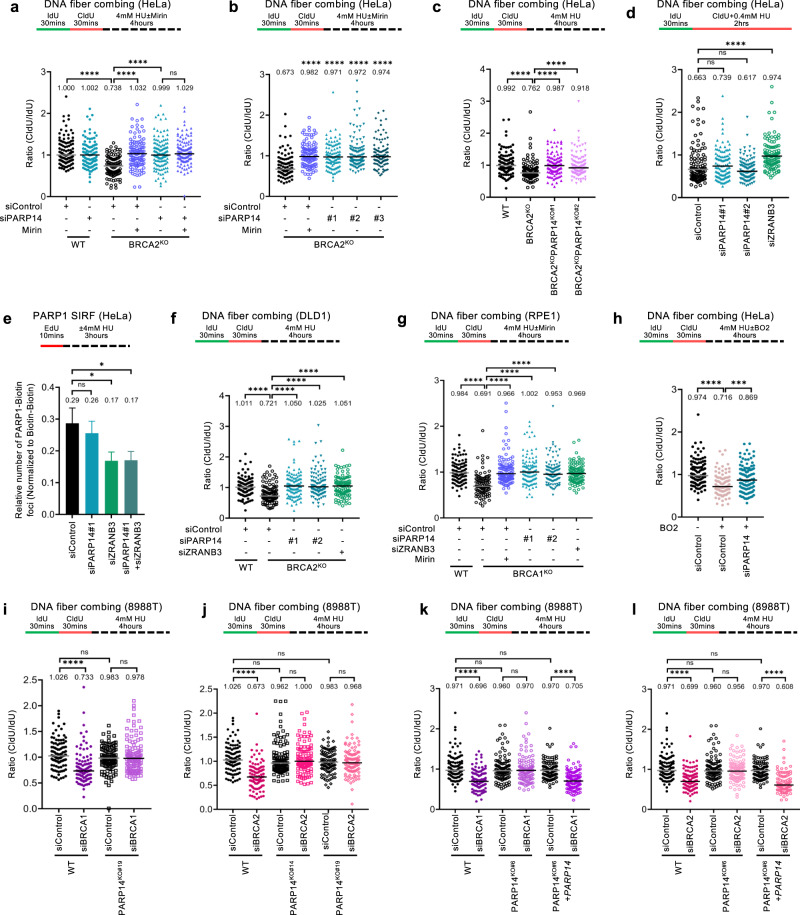
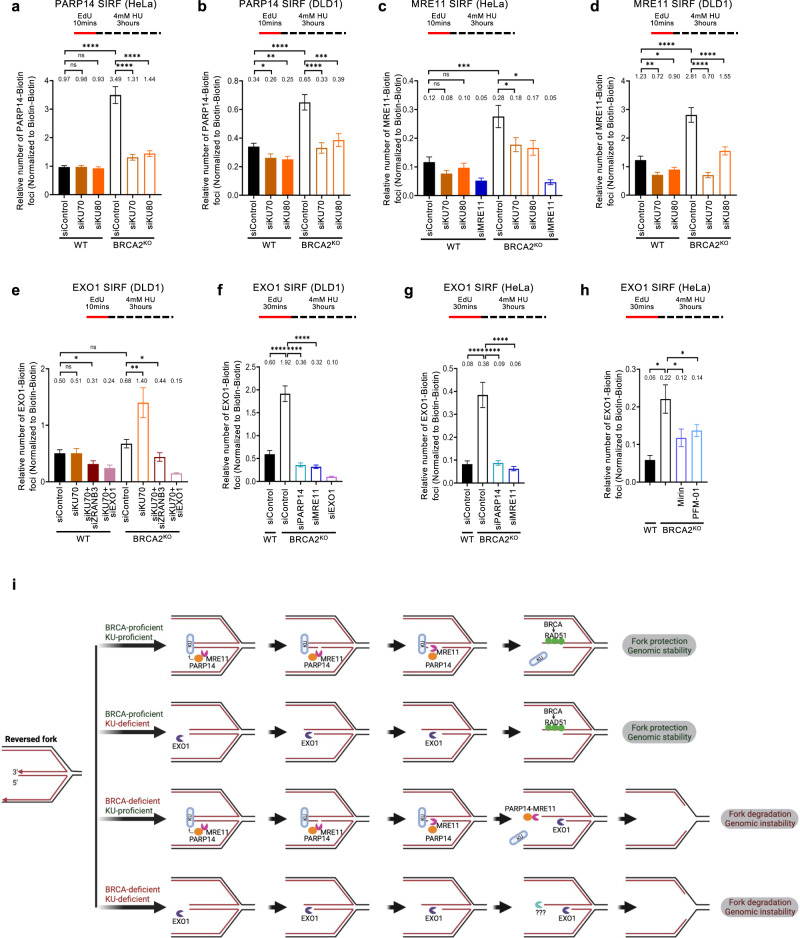
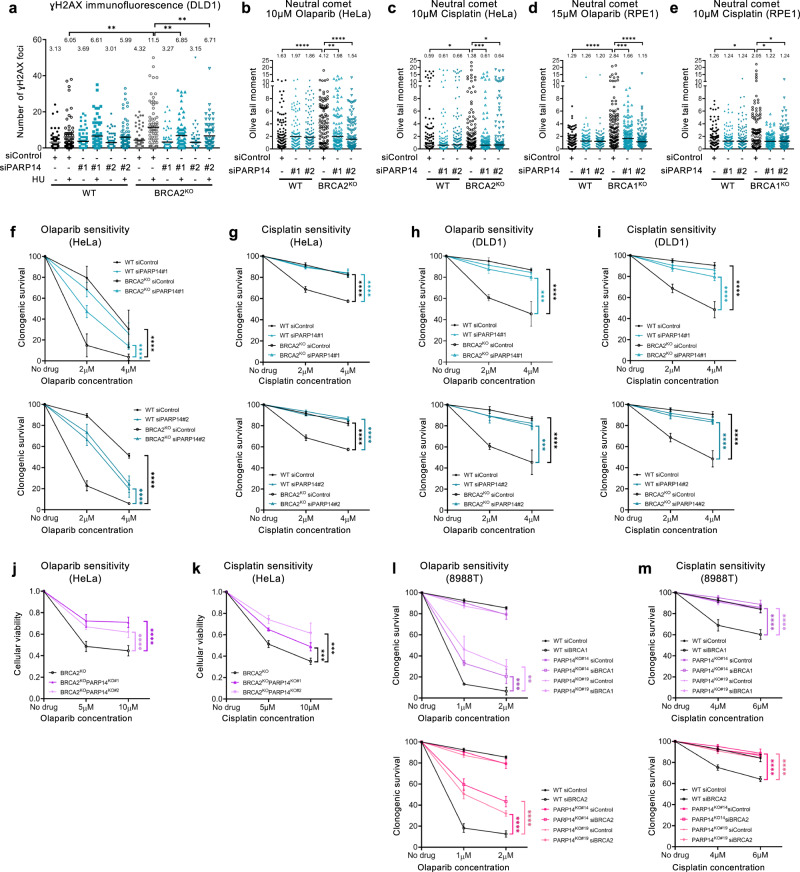
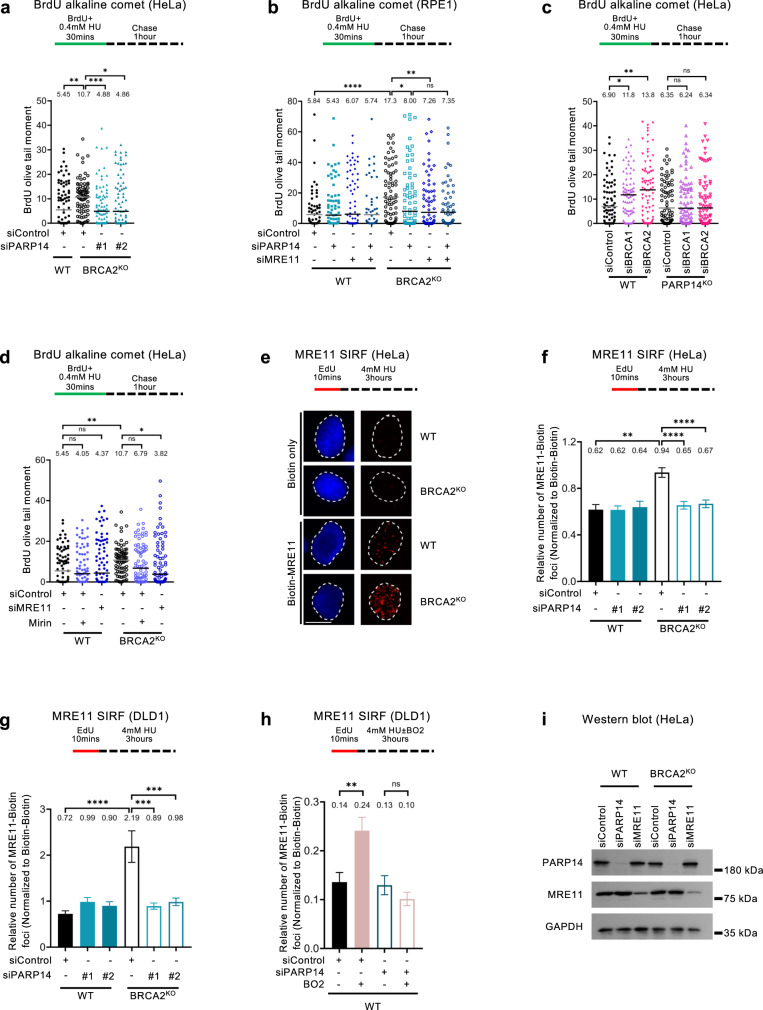
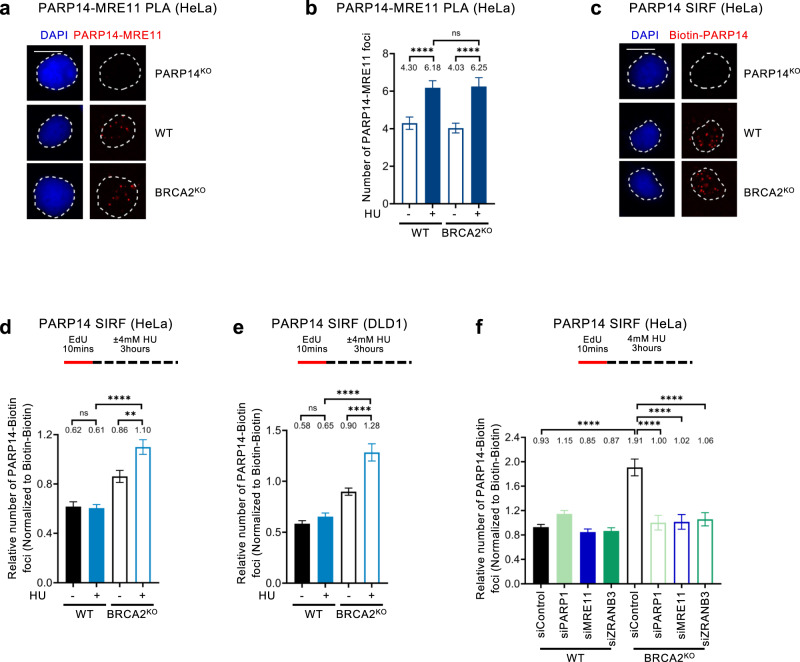
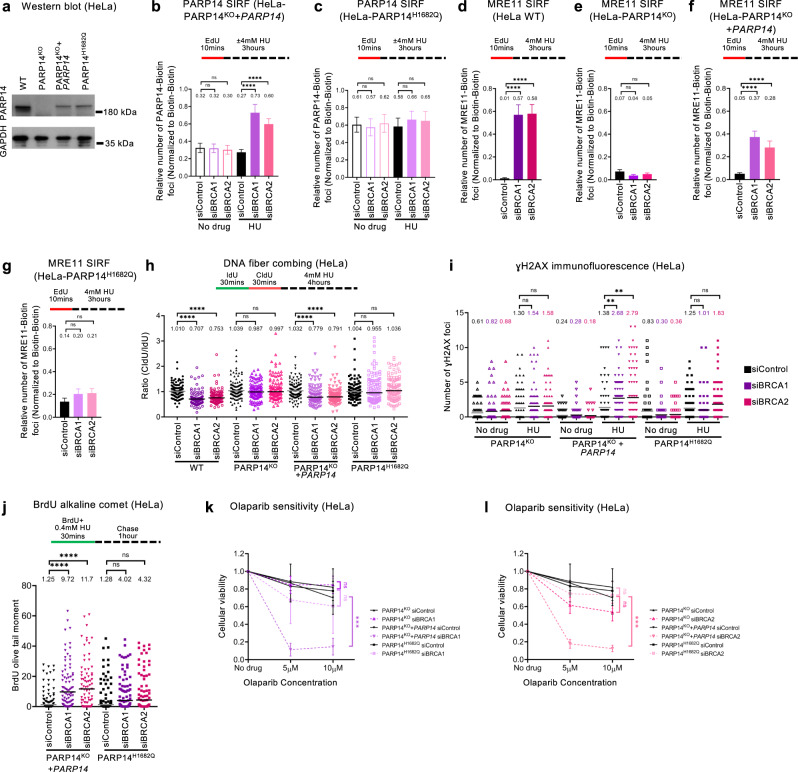
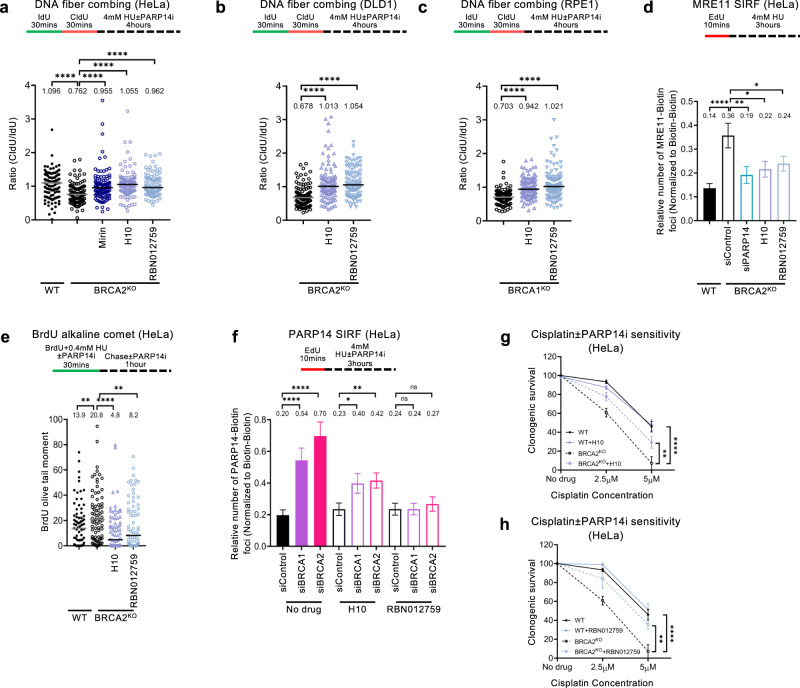
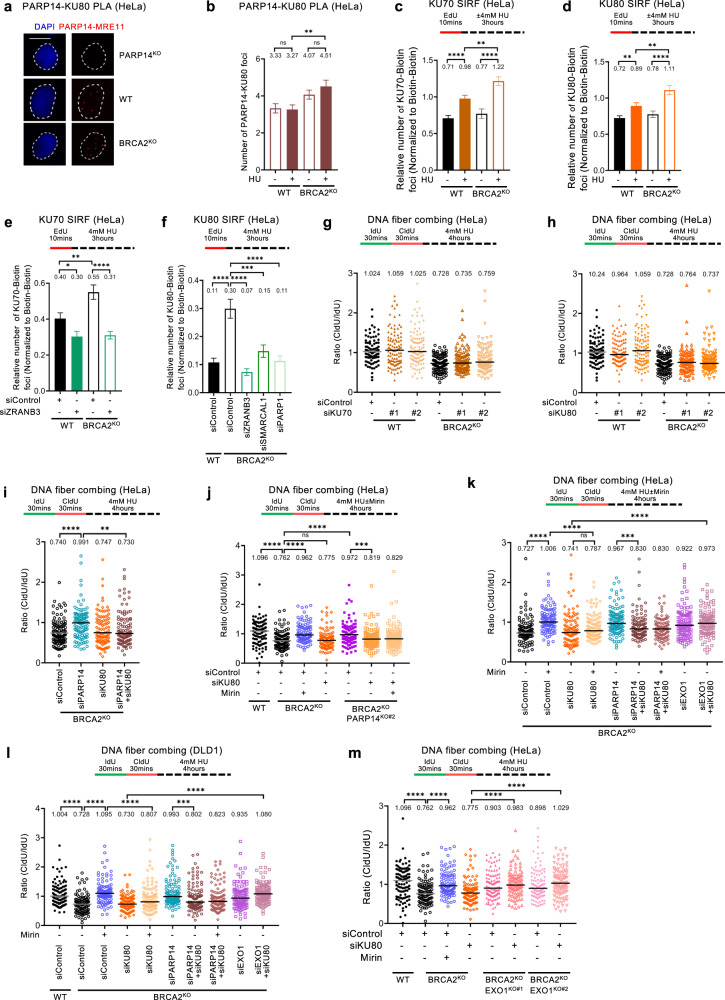
Suppression of nascent DNA degradation has emerged as an essential role of the BRCA pathway in genome protection. In BRCA-deficient cells, the MRE11 nuclease is responsible for both resection of reversed replication forks, and accumulation of single stranded DNA gaps behind forks. Here, we show that the mono-ADP-ribosyltransferase PARP14 is a critical co-factor of MRE11. PARP14 is recruited to nascent DNA upon replication stress in BRCA-deficient cells, and through its catalytic activity, mediates the engagement of MRE11. Loss or inhibition of PARP14 suppresses MRE11-mediated fork degradation and gap accumulation, and promotes genome stability and chemoresistance of BRCA-deficient cells. Moreover, we show that the KU complex binds reversed forks and protects them against EXO1-catalyzed degradation. KU recruits the PARP14-MRE11 complex, which initiates partial resection to release KU and allow long-range resection by EXO1. Our work identifies a multistep process of nascent DNA processing at stalled replication forks in BRCA-deficient cells.
抑制新生 DNA 的降解已成为 BRCA 途径在基因组保护中的一个重要作用。在 BRCA 缺陷细胞中,MRE11 核酸酶负责切除反向复制叉,并在叉后积累单链 DNA 缺口。在这里,我们表明单 ADP-核糖基转移酶 PARP14 是 MRE11 的关键辅助因子。在 BRCA 缺陷细胞中复制应激时,PARP14 被招募到新生 DNA 上,并通过其催化活性介导 MRE11 的结合。PARP14 的缺失或抑制可抑制 MRE11 介导的叉降解和缺口积累,并促进 BRCA 缺陷细胞的基因组稳定性和化学抗性。此外,我们表明 KU 复合物结合反向叉,并保护它们免受 EXO1 催化的降解。KU 招募 PARP14-MRE11 复合物,该复合物启动部分切除以释放 KU,并允许 EXO1 进行长程切除。我们的工作确定了 BRCA 缺陷细胞中停滞复制叉处新生 DNA 加工的多步过程。