Department of Pediatric Dentistry and Orthodontics, College of Dentistry, Taibah University, Medina, Kingdom of Saudi Arabia; Department of Restorative Sciences and Biomaterials, Boston University Henry M. Goldman School of Dental Medicine, Boston, Massachusetts, USA.
Department of Restorative Sciences and Biomaterials, Boston University Henry M. Goldman School of Dental Medicine, Boston, Massachusetts, USA.
Int Dent J. 2022 Dec;72(6):859-865. doi: 10.1016/j.identj.2022.06.016. Epub 2022 Aug 26.
The aim of this research was to assess the efficiency of 4 restorative glass ionomer cements (GICs): Fuji IX (GC), ChemFil Rock (DENSPLY), Riva Self-Cure (SDI), and Ketac Nano (3M ESPE).
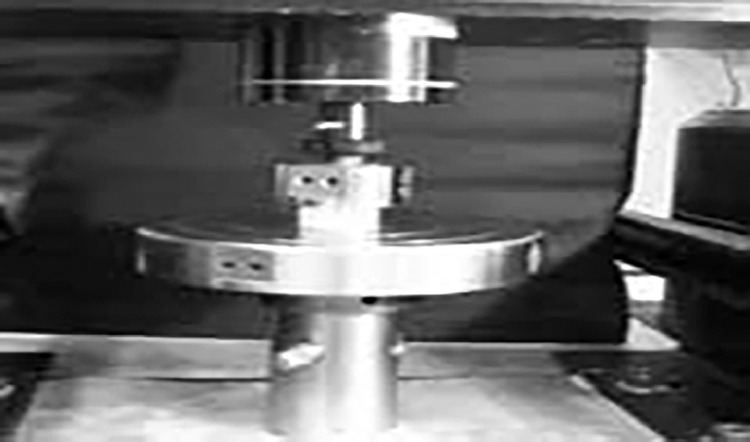
The 4 restorative glass ionomers' diametral tensile and compressive strengths were evaluated at room temperature for 24 hours and then stored in distilled water. The universal testing machine (INSTRON 5566A) was used to record the maximum load necessary to fracture specimens. Surface wear, diametral tensile strength, and compressive strength against dental ceramic were compared using analysis of variance followed by the Bonferroni method at a significance level of 0.05.
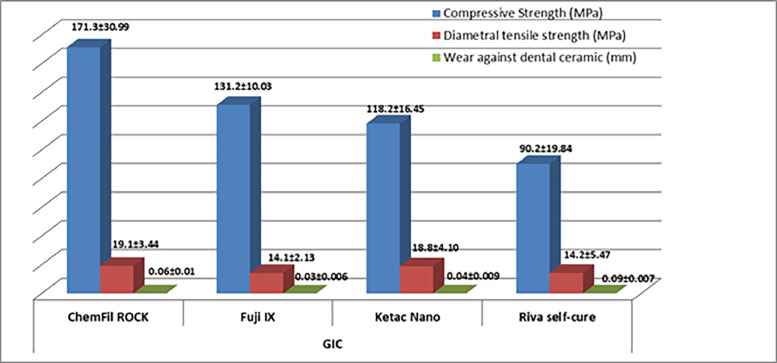
Ketac Nano and ChemFil Rock were found to have better diametral tensile strength than Riva Self-Cure and Fuji IX. The significant difference between ChemFil Rock and Fuji IX (P ≤ .005) and ChemFil Rock with Riva Self-Cure (P ≤ .005) was shown by post hoc analysis. Ketac Nano had better tensile strength than Riva Self-Cure and Fuji IX. Fuji IX showed the lowest material loss of the GICs as revealed by wear against VITABLOCS Mark II (VITA Zahnfabrik).
This study indicated a significant difference in the compressive strengths of ChemFil Rock and Riva Self-Cure. ChemFil Rock had the highest tensile strength. The diameter tensile strength of all 4 materials was statistically insignificant. Finally, Fuji IX had the least amount of material loss. ChemFil Rock was proven to be more effective than Fuji IX.
本研究旨在评估 4 种修复性玻璃离子水门汀(GIC)的效率:富士 IX(GC)、ChemFil Rock(DENSPLY)、Riva Self-Cure(SDI)和 Ketac Nano(3M ESPE)。
在室温下,评估了 4 种修复性玻璃离子水门汀的直径拉伸和压缩强度,然后将其储存在蒸馏水中。使用万能试验机(INSTRON 5566A)记录断裂试件所需的最大负载。使用方差分析比较表面磨损、直径拉伸强度和对牙科陶瓷的抗压强度,然后使用 Bonferroni 方法在 0.05 的显著水平下进行比较。
发现 Ketac Nano 和 ChemFil Rock 的直径拉伸强度优于 Riva Self-Cure 和 Fuji IX。事后分析显示,ChemFil Rock 与 Fuji IX(P≤0.005)和 ChemFil Rock 与 Riva Self-Cure(P≤0.005)之间存在显著差异。Ketac Nano 的拉伸强度优于 Riva Self-Cure 和 Fuji IX。通过与 VITABLOCS Mark II(VITA Zahnfabrik)的磨损比较,Fuji IX 显示出 GIC 中最低的材料损失。
本研究表明 ChemFil Rock 和 Riva Self-Cure 的抗压强度存在显著差异。ChemFil Rock 的拉伸强度最高。所有 4 种材料的直径拉伸强度均无统计学意义。最后,Fuji IX 的材料损失最少。ChemFil Rock 被证明比 Fuji IX 更有效。